
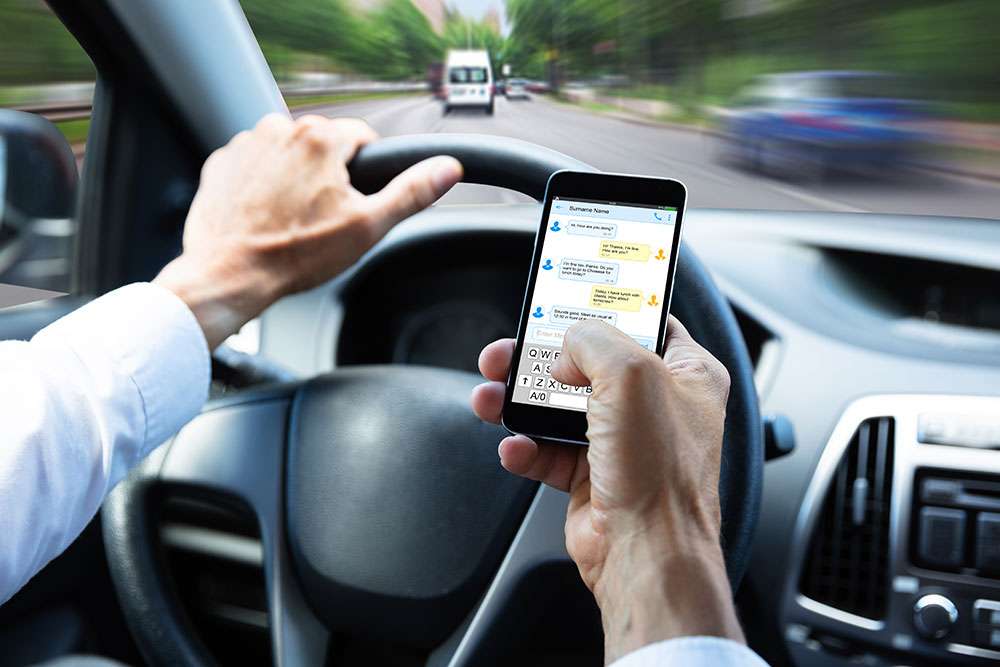
Distracted driving deaths can devastate victims’ families
Studies have proven that cellphone use while driving can lead to serious auto accidents. In Kentucky, national and local ad campaigns have tried to spread that message for years. These efforts have surely convinced many Louisville residents to put their phones away when they drive. But there are plenty of others who have not gotten the message.
A motorist who takes his or her eyes and attention off the road for a few seconds to read or type a text puts everyone around them in danger. The distracted driver can drift out of a lane, miss a stop sign or red light, or fail to notice a bicyclist or pedestrian in time. The resulting car accident can cause lifelong disability or even fatalities.
How Serious a Problem is Distracted Driving?
A report released by the National Distracted Driving Coalition NDDC included the results of a survey of consumers. They include that 67% of respondents are “concerned” about hand-held phone use, and driving while texting was a concern of about 80% of those responding.
A 2022 survey by the Travelers Insurance company asked drivers what they did while driving:
- 77% admitted to using a phone while driving
- 74% used maps
- 56% read emails or text messages
- 27% updated or checked social media
- 19% shopped online
The driver of every fifth vehicle around you may not be focused on driving but looking online for deals on copy paper or their next vacation.
Without Accurate Information, It’s Hard to Make the Right Choices
We can’t solve a problem until we understand how it’s caused. There are piles of data collected about the nation’s vehicle accidents, but that large quantity may not be high quality when it comes to distracted driving.
Data collection methods concerning distracted drivers have so many problems, according to Bruce Landsberg, the vice chairman of the federal National Transportation Safety Board he said, reliable estimates are difficult, if not impossible, reports the Los Angeles Times.
Landsberg argues that deaths and injuries caused by unsafe smartphone use and other distractions will continue without better data. These accidents, injuries, and deaths are preventable because they involve actions we choose to take. Landsberg is part of the NDDC, which was formed two years ago. They’re trying to fix data problems to help convince distracted drivers, legislators, cellphone, motor vehicle, and software makers that this public health crisis deserves action.
The NDDC and the federal National Highway Traffic Safety Administration, which regulates car and truck manufacturers, are trying to use cutting-edge technologies to better determine how common distracted driving is on US roads.
State and federal lawmakers and regulators often resist stricter laws on distracted driving partly because drivers don’t care about or want them. One reason these groups don’t prioritize this might be that they don’t appreciate how big a problem distracted driving is.
For 2020, NHTSA estimates there were 38,824 roadway deaths, with 3,142 (less than 10%) due to distracted driving. The agency also determined that about 324,652 injuries were caused by distracted driving.
The NDDC estimates the actual share of distraction-caused deaths is between 25% to 30%, but the actual number is unknown. Why such a big gap?
- The country’s car crash data system is decades old and lacks the latest technology
- Different states and police departments collect data differently. Sometimes forms without a checkbox for distracted driving are used
- Distracted driving is rarely apparent at crash scenes, unlike drunk driving, which may be evidenced by empty bottles and cans in a vehicle and a driver smelling like alcohol
- Proving a driver was using a smartphone at the time of the crash can take a long time and is complicated
- Drivers, fearing civil and criminal liability, may not admit to it
- The driver and other witnesses may be killed in the crash or can’t remember details before the impact due to the trauma of the accident
- Distraction isn’t a black-and-white issue like going over the speed limit. You may be distracted, but not so much that it caused the accident
Many states have distracted driving laws, but they have different requirements, penalties, and enforcement. The NDDC gathers data from academic researchers, safety groups, and commercial operations to better identify and understand the issues.
More Aggressive Approaches to Getting Better Data and Preventing Distracted Driving
Instead of relying on surveys and incomplete information gathered by police departments, new sources of possibly more accurate data include:
Video cameras and artificial intelligence could assess driver distraction in real-time. Cameras mounted over or to the side of roadways could focus on drivers and try to determine if a smartphone’s being used. Information and photos that could identify drivers and passengers could be obscured. The purpose could be to gather information, not law enforcement.
Service providers and smartphone suppliers could disable the most distracting features while the vehicle operates. Newer vehicles, especially electric-powered ones, have large computer screens. Manufacturers could make them less distracting while a vehicle’s in motion.
NoCell Technologies in California sells its services to commercial fleets with incentives to enforce safe driving, like reducing workers’ comp claims by injured drivers and limiting accident lawsuits that raise their insurance premiums.
Their system can disable a smartphone, disable some features, or limit how long it can be used. The phone is automatically silenced, so a driver won’t respond to a call or text message.
A Distracted Driving Crash Can Change a Family Forever
A deadly distracted driving crash causes two tragedies: the preventable death of the victim, and the devastation the death causes the family. Most people who die in car accidents are somebody’s parent, child or spouse. Now their loved ones will no longer enjoy their companionship, affection, guidance or financial support.
The experience of two women from Arizona reflects what happens all too often here in Louisville. Their children were in their early 20s and in a relationship when a distracted driver rear-ended their car at full speed. The car was sent into oncoming traffic in front of a pickup truck, which crashed into them. Both victims died. Nearly a year later, both of their mothers say they cry every day.
Police later noted that the driver that started the deadly wreck had sent and received text messages about a baseball team practice seconds before impact. The vehicle left no skid marks on the road, suggesting the driver did not even try to brake before hitting the couple.
A Way to Seek Justice
The purpose of a wrongful death lawsuit is to help victims’ families receive necessary financial compensation from the negligent driver and the auto insurance company. Damages can include the victim’s medical and funeral costs, as well as the family member’s loss of companionship and support.
If you or a loved one are injured by a distracted driver, Satterley & Kelley, PLLC has decades of experience representing motor vehicle accident victims. To discuss your situation with a knowledgeable Louisville lawyer, contact our law offices online or by telephone at 855-385-9532.