
Lower Your Asbestos Exposure When Working on a Vehicle
Asbestos-containing car parts are still sold in the US, decades after most products containing the cancer-causing mineral fiber went off the market. If you repair vehicles professionally or work on them at home, the federal Environmental Protection Agency (EPA) has guidelines on safely performing repairs.
Satterley & Kelley, PLLC attorneys represent those in Louisville, throughout Kentucky, and around the country who developed mesothelioma and other asbestos-related conditions while repairing and maintaining vehicles. If you worked on vehicles and are diagnosed with an illness caused by asbestos, call us at 855-385-9532. We can discuss your potential compensation for your medical costs, pain, suffering, and other damages.
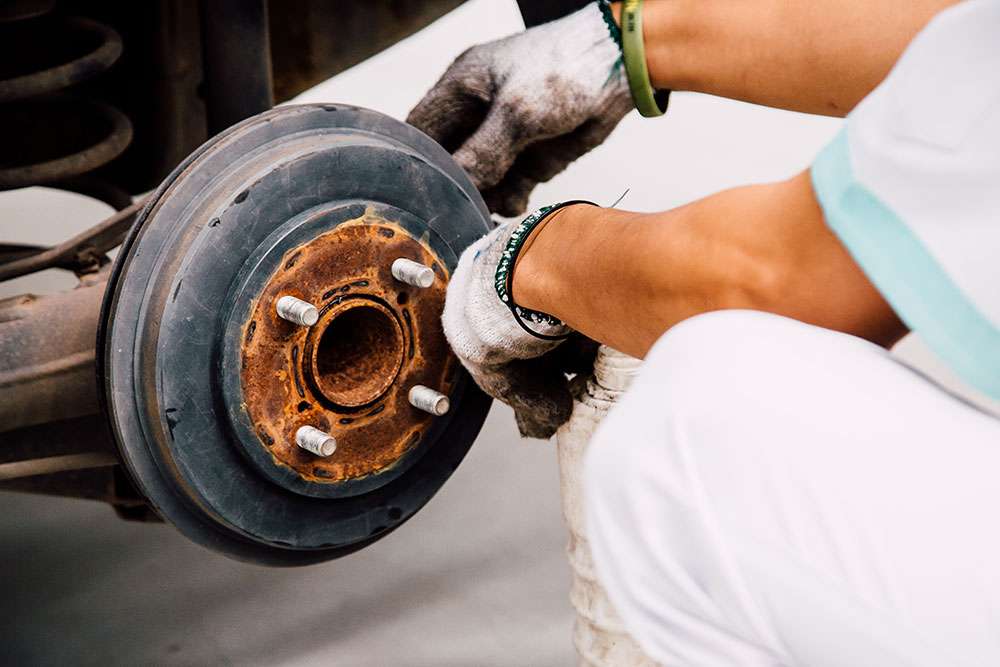
Some, but not all, automotive brakes and clutches may contain asbestos, so those working with or near them may be exposed to asbestos fibers in dust that’s produced as parts wear down and degrade. Brake and clutch dust is visible after a brake disk, drum, clutch cover, or wheel is removed from a truck, car, or other equipment. If asbestos in that dust becomes airborne, it can be inhaled or swallowed, starting down a path that could lead to severe and potentially fatal diseases.
What is Asbestos?
Asbestos is a light, strong, durable mineral fiber that was used in thousands of products over centuries because it’s resistant to the following:
- Heat
- Hire
- Chemicals
- Electricity
If fibers are airborne, people can inhale or swallow them. Asbestos fibers may never leave the body or be destroyed by its immune response.
Why is Asbestos Dangerous?
Asbestos’ microscopic fibers, when released into the air and inhaled or swallowed, can pose serious health risks. The primary reasons why include:
- Easily Inhaled or Swallowed: Asbestos fibers are tiny and lightweight, so they’re easily airborne. When people breathe in these fibers, they can become trapped in the lungs and other parts of the respiratory system. When the fibers get into the mouth and are ingested, they threaten the digestive system, abdominal organs, and the abdomen’s lining
- Health Effects: Prolonged or repeated exposure to asbestos fibers can lead to various severe health conditions, including asbestos (a chronic lung disease causing breathing difficulties, coughing, and reduced lung function), lung cancer (those who smoked have a particularly high risk), mesothelioma (a rare and aggressive cancer that primarily affects the lining of the lungs (pleura) or the abdominal cavity (peritoneum)), and other cancers
- Long Latency Period: Asbestos’ health effects often take years or decades to develop
- Fiber Durability: Asbestos fibers in the body can remain for a long time, possibly for a person’s lifetime, causing continued health risks after initial exposure ceases
- There’s No Safe Exposure Threshold: There is no known safe level of asbestos exposure. Even small amounts over time can potentially lead to health issues
- Secondary Exposure: People who come into contact with asbestos-exposed individuals or environments (such as asbestos workers’ family members) can also be at risk, as fibers can be carried on clothing, skin, and hair
Compared to the period of asbestos’ peak use (Industrial Revolution through the 1970s), overall, few new products contain asbestos for sale. Asbestos-containing vehicle parts were widely used for decades. They’re less common now, but they’re still used.
What Guidance is Available to Help Me Repair Vehicles Safely?
The EPA reports that most businesses that repair vehicles must comply with the Occupational Safety and Health Administration’s (OSHA) regulations (29 CFR 1910.1001 and specifically paragraph (f)(3) and Appendix F). Those repairing vehicles for government entities must follow an identical EPA Asbestos Worker Protection Rule. Those making repairs at home don’t fall under these regulations, but you can take steps to limit your asbestos exposure.
These required measures are for automotive clutch and brake inspection, disassembly, assembly, and repair. They are contained in this brochure you can print. OSHA also has a bulletin on safely working on vehicles with asbestos-containing parts.
How Can I Tell If Brake or Clutch Parts Have Asbestos?
You can’t tell by just looking at them. If you’re working on a newer vehicle or parts, auto manufacturers, packaging labels, or Material Safety Data Sheets (MSDS) may inform you if asbestos is present. For older vehicles or those that have had their brakes replaced, such materials may not be available, so, as a practical matter, knowing for sure may be impossible.
A best practice is to assume all brakes have asbestos shoes or pads. Whether they have asbestos or not, worn brake shoes appear the same. If you think a shoe doesn’t have asbestos and you don’t use brake dust control procedures, you may expose yourself, your co-workers, and through your work clothes, those who live with you at home.
What Should I Do at Work?
If your job is in a commercial shop that does more than five brake or clutch jobs each week, OSHA requires the use of one of the following or an equivalent method:
- Negative-Pressure Enclosure/HEPA Vacuum System Method: This vacuum and enclosure system has a clear plastic box that fits tightly around a clutch or brake assembly to prevent asbestos exposure
- Low Pressure/Wet Cleaning Method: This low-pressure water spray equipment wets the brake assembly. The runoff is caught in a basin to stop brake dust from spreading in the area
If your shop does five or fewer clutch or brake jobs weekly, OSHA regulations allow the “wet wipe method.” You use a spray bottle or another device that delivers a fine water (or a combination of water and detergent) mist at low pressure to wet all clutch and brake parts. You can then use a cloth to clean the area.
What Should I Do and Not Do at Home?
If you don’t know if what you’re working on contains asbestos, consider having the work done at a commercial automotive shop equipped to do the job safely. If you’re unwilling or unable to do so, use the wet wipe method.
Other things you should do include:
- When you buy parts, find out if they have asbestos. If they do, don’t buy them
- Use parts that are pre-ground and ready-to-install
- If your brake or clutch lining will be cut, drilled, grooved, lathe-turned, or beveled, use low speeds to reduce the amount of dust created
- Use machinery with a dust collection system with high-efficiency particulate air (HEPA) filtration to avoid dust exposure and contaminating your work area
- After you’re done, change into clean clothes before going inside your home and wash these clothes separately
- Keep bystanders, food, and drinks away from the work area
Some things you should not do are:
- Clean an area with compressed air, which may blow dust and asbestos through the area
- Clean clutches or brakes with a brush (wet or dry), a dry rag, or a garden hose
- Use a wet/dry vac to clean up dust if it doesn’t have a HEPA filter. If you do so, asbestos may stay in the air and on your clothes for a long time
- Take work clothing inside your home, or track dust in your home after the work is done. If you do, you may expose your family to dust particles and asbestos fibers
If you follow this advice, you may still be exposed to asbestos, but the level may be significantly reduced.
How Should I Dispose of Parts or Rags That May Have Asbestos In or On Them?
If you work at a commercial shop, parts you’ve removed and any rags used to clean the area should not simply be thrown out. They must be disposed of in sealed, impermeable containers with appropriate labels. The EPA recommends waste from home auto repairs be double-bagged and disposed of by local rules to minimize exposure.
Call Us Today For A Free Initial Consultation
If you repaired vehicles in the past and are diagnosed with mesothelioma or another asbestos-related disease, you may receive financial compensation for the harm you suffer. Call us toll-free at 855-385-9532, in Louisville at 502-589-5600, or contact us online to schedule a free consultation with a Satterley & Kelley, PLLC attorney.