
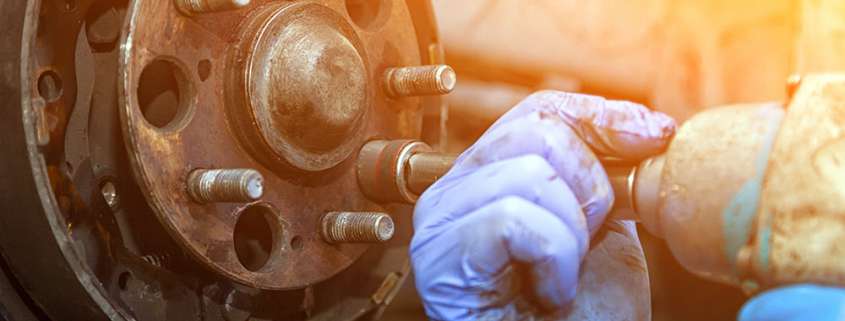
If you work on brakes or have worked on brakes in the past, you may have been exposed to asbestos, a mineral fiber known to cause cancer. These brakes could be on any vehicle, train, or aircraft. Because of their health risks, most asbestos-containing products are not sold in the US, but brake parts with it are still on the market.
Satterley & Kelley, PLLC lawyers represent those who live locally, across Kentucky, and throughout the country who developed asbestos-related conditions, including mesothelioma, while repairing and maintaining vehicles.
If you worked on vehicles or lived with someone who did and are diagnosed with an asbestos-related condition, call us at 855-385-9532. We can discuss potential compensation for your pain, suffering, medical costs, and other damages.
What are Brake Linings?
Brake linings are parts of a braking system that are crucial in slowing down or stopping a vehicle. Brake system parts include brake pads and shoes, rotors, and calipers.
When the brakes are applied, brake linings create friction against the rotating brake drum, generating the force that slows or stops the vehicle. Due to the heat and friction created by braking, brake linings wear down, so they need periodic replacement to keep a vehicle safe.
What is Asbestos?
Asbestos is a group of mineral fibers known for their heat resistance, strength, durability, and insulating properties. “Asbestos” refers to six different types of minerals belonging to two mineral groups. Over time, asbestos was used in about 3,000 different products.
Why Would Asbestos Be Used in Brake Linings?
Asbestos is in brake linings because of its unique properties that make it effective in this application. Asbestos provides the following benefits in brake linings:
- Heat resistance: Asbestos can withstand high temperatures without significantly degrading. This durability is crucial in braking systems, where friction generates heat and wears down parts. Asbestos helps prevent brake fade and maintain braking efficiency under demanding conditions
- Durability: Asbestos fibers are durable and resistant to wear, so they may last longer than brake linings with other materials. This durability is essential for the brake’s effectiveness and reliability over time
- Friction stability: Asbestos fibers help maintain consistent friction levels during braking. This ensures predictable and reliable stopping power
- Cost-Effective: During its industrial peak, asbestos was relatively inexpensive compared to alternate materials, making it a lower-cost choice for manufacturers and purchasers
Despite these advantages, the use of asbestos in brake linings has significantly dropped and is, in many places, banned due to health and safety concerns. Modern brake linings use safer alternatives such as non-asbestos organic (NAO) materials, semi-metallic compounds, or ceramic fibers.
Why is Asbestos Hazardous?
Asbestos is dangerous primarily due to the health risks of inhaling or swallowing its fibers. The main reasons include:
- Respiratory health risks: When asbestos-containing materials are disturbed or damaged, they can release tiny asbestos fibers into the air. If inhaled, fibers may become lodged in the lungs and respiratory system. The body has difficulty expelling these fibers, leading to tissue scarring, inflammation, and long-term, often fatal, health issues
- Asbestos causes cancer: Asbestos is a known human carcinogen by health authorities in Kentucky, the US, and across the globe. Extended exposure boosts the risk of developing lung cancer, mesothelioma (a fatal and aggressive cancer of the linings of the lung, chest, heart, abdomen, and abdominal organs), and other cancer types
- Invisibility and durability: Asbestos fibers are microscopic and can stay in the air for long periods without being visible. This makes it difficult for individuals to detect their presence and take precautions. Asbestos fibers’ durability means they can stay in the environment for a long time, posing a continued risk of exposure to anyone in the area
- Cumulative and delayed effects: Asbestos’ health effects may not appear for many years or decades after exposure. Asbestos-related diseases typically have long latency periods, often ranging from 10 to 40 years. A person unaware of the illness developing inside them may continue asbestos exposure and worsen their condition
One reason asbestos became so popular over the years is that many companies involved in its sale and manufacture actively concealed knowledge of its dangers for decades so they could remain profitable and stay in business as long as possible.
How Do Asbestos Brake Linings Endanger Those Working on Them?
Some brakes available or used today contain asbestos, so professional automotive technicians and home mechanics may be exposed to asbestos dust while doing brake work. Brake dust, possibly containing asbestos, is visible when removing a brake drum, brake disk, wheel, or clutch cover. Because fibers are so small, airborne asbestos may not be noticed as brakes are taken apart and put together again.
There are several ways to repair brakes while reducing asbestos exposure risks.
Why You Should Contact Satterley & Kelley, PLLC If You Have an Asbestos-Related Disease
Our clients are in good hands because Satterley & Kelley, PLLC trial lawyers pride themselves on obtaining the best possible results for their cases:
- We always prepare for trial so the defendant and their attorneys know we’re serious about getting our clients what they need to get back to their lives
- Our lawyers put their considerable experience to work getting the maximum settlements for our clients
- We care about our clients. We listen to their stories and meet their needs. Satterley & Kelley, PLLC seeks compensation that makes sense for our clients, not someone else
- We regularly try cases against Fortune 500 companies and have a list of case outcomes that prove our tenacity in challenging situations produces results
Contact us and find out for yourself what makes us special.
Call Us Today For A Free Initial Consultation
If you repaired vehicle brakes in the past or worked with those who did and are diagnosed with an asbestos-related disease, including mesothelioma, you may be compensated for what you’ve endured. Call us toll-free at 855-385-9532 today, or contact us online to set up a free consultation with a Satterley & Kelley, PLLC lawyer.
Click here for more information about other products that contain asbestos