
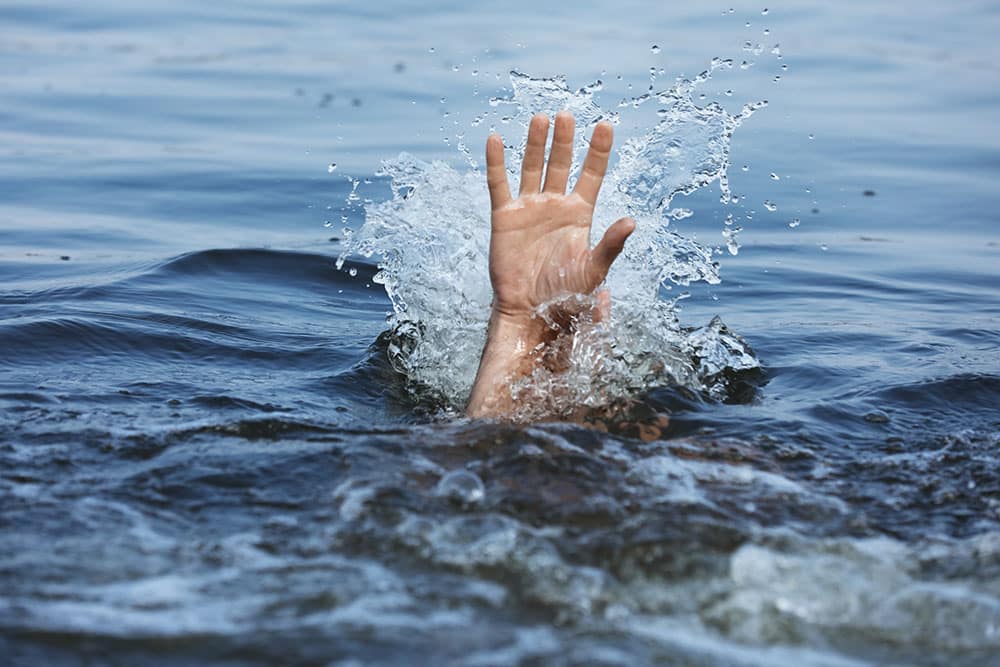
Drownings are Preventable Accidents That Can Disable and Kill
If it’s hot, humid, and miserable, one way to get relief is to go swimming, whether that’s in a pool, pond, or lake. Swimming can bring back childhood memories but can also endanger your health and life if things go wrong. If you’re injured in a swimming accident or a family member drowns because of the negligence of another party, you may be entitled to compensation.
What is Drowning?
Drowning, according to the US Centers for Disease Control and Prevention (CDC), is experiencing respiratory impairment due to submersion or immersion in a liquid. It happens if your mouth and nose are under water for too long, and you can’t breathe.
Fatal drowning causes death. Nonfatal drowning occurs if you survive a drowning incident. You may end up without injuries or severe ones that permanently disable you, like the consequences of brain damage.
The CDC reports the following:
- Drowning is the top cause of death for children ages one to four
- It’s the second leading reason for deaths due to unintentional injury for children five to fourteen years old
- It’s estimated there are more than 4,000 accidental drowning deaths in the US annually
Kentucky has a higher fatal drowning rate than average for the country. From 2018 to 2021, there were 1.35 to 1.57 drowning deaths per 100,000 population. The nationwide rates vary from 0.74 to 4.4.
How Does a Person Drown?
You may imagine drowning as a violent event where the victim splashes about and screams for help. The reality is it can be quiet and calm, according to University of Utah emergency physician Scott Youngquist, MD.
A well-trained lifeguard should notice signs of drowning, but a parent may not. Half of kids drown within 25 yards of a parent. About 10% of these drownings happen while a parent watches them, unaware of what’s happening. It appears the child is doing fine.
There can be thrashing and screams for help, but more quiet drownings occur, which aren’t recognized unless people there are trained. Behavior may be very quiet to virtually silent, but someone who’s watchful could see the problems and save the person. The following may occur before a person drowns:
- The person often doesn’t kick their legs
- Their face is near the top of the water
- Their head tilts back
- Their mouth is at water level
- They’ll bob up and down and open their mouth
- They may hyperventilate or gasp
- They’ll be unable to scream because they don’t have enough energy
- Their arms often extend out, and they’re used to bring them to the surface like they’re climbing invisible stairs
- Their hair may be over their forehead and eyes, which is abnormal and a sign of trouble
- Their eyes may be closed. If they’re open, they may have a glassy appearance, and the person seems to be staring into space
- They may try to roll onto their back before trying to swim without success
Drowning is usually directly caused by exhaustion. Poor swimming skills, intoxication, and muscle cramps can contribute to the problem. Risk factors are extreme youth and age.
How Could Negligence Cause a Person to Drown?
Negligence is the legal theory that’s the foundation of most personal injury claims. To have a successful case, you need to prove the following:
- There was a relationship between you (the plaintiff, the one filing the insurance claim or lawsuit) and the party responsible for the accident (the defendant)
- Because of that relationship (customer or guest and business owner or host), the defendant owed you a legal duty or obligation of reasonable care (to make the pool or swim area reasonably safe)
- That duty was breached by the fact they did something inappropriately or nothing at all in the situation, which was the factual or legal (or proximate) cause of the drowning
- Due to that breach, under Kentucky law, the defendant owes you compensation for the harm you suffer (your brain damage due to the lack of oxygen or the death of your spouse or child)
That negligence could be:
- Lack of proper supervision at a public pool, a private gathering, or a water park
- Inadequate safety equipment, including fencing around pools, life-saving equipment, and ensuring water conditions are safe
- Malfunctioning or improperly maintained equipment like pool drains or electrical wiring
- Failing to post warnings of deep water or the absence of a lifeguard
If the accident happened at a business like a hotel or water park, you may have signed a waiver form that claims the company can’t be sued for injuries caused by negligence. That form may or may not be enforceable, so don’t assume you have no legal rights to compensation.
Speak To A Louisville Accident Attorney Near You
Whether a drowning occurred in Kentucky or out of state, we can be your boots on the ground if you or a family member were injured or killed. Call Satterley & Kelley PLLC to speak with a skilled personal injury lawyer at our Louisville office toll-free at 855-385-9532 or complete our online contact form to get started.