
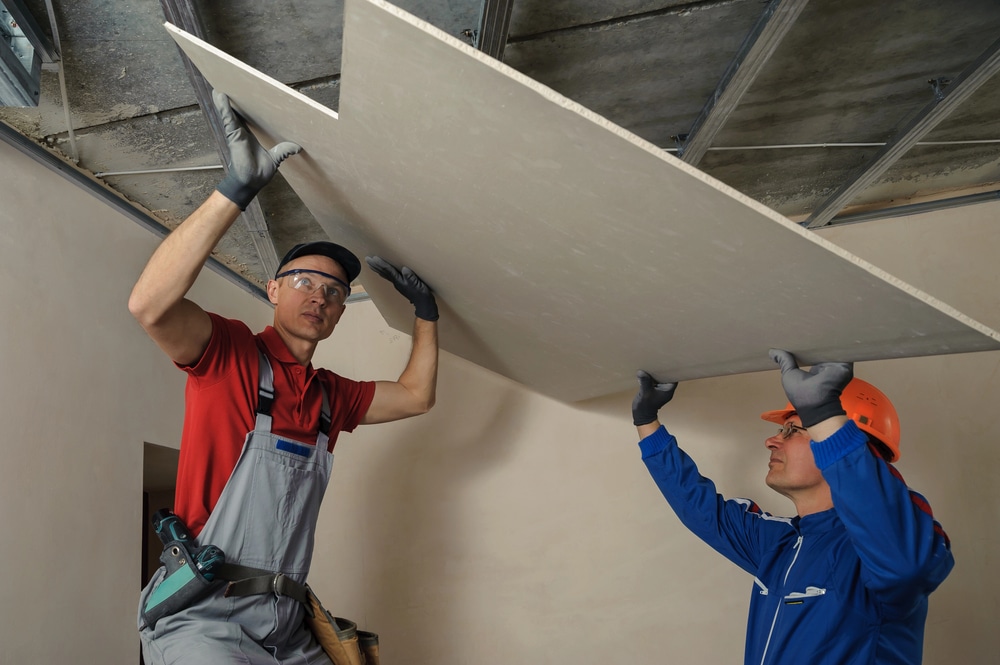
Drywall Workers and Mesothelioma Risks
If you’re in an older building, you’re probably surrounded by drywall or wallboard. If it was created before the 1980s, it probably has asbestos in it and on its surface due to asbestos-containing joint compounds and tape. Drywall workers installed these boards, exposing themselves to asbestos fibers, which, decades later, may have caused them to develop cancer, including mesothelioma.
Asbestos was incorporated into about 3,000 different products over time. While asbestos is more commonly associated with insulation and fireproofing, it found its way into homes, offices, schools, and hospitals in drywall, joint compound, and drywall tape.
What is Asbestos?
Asbestos is a naturally occurring mineral fiber occurring in rock and soil. It was incorporated into many construction materials because of its strength, durability, and resistance to fire, heat, electricity, and chemicals. In addition to drywall, drywall tape, and joint compound, some other asbestos-containing products include:
- Paint
- Roof shingles
- Ceiling and floor tiles and mastics used with them
- Paper and cardboard used as insulation
- Cement
- Vehicle brakes, clutches, and transmission parts
- Gaskets
- Electrical products
- Appliances
- Protective clothing and oven mitts
If not for the potentially deadly consequences of being exposed to it, asbestos might still be widely used today.
Why is Asbestos Dangerous?
Potential asbestos exposure exists in our workplaces, communities, and homes. If products with asbestos (like wallboard) are disturbed, asbestos fibers are released into the air. This can happen if drywall with a joint compound on it is cut, torn, sanded, or smashed during demolition.
After inhaling asbestos fibers, they may be trapped in the lungs and remain there for decades. Swallowed fibers may end up stuck in the digestive system. As time passes, fibers accumulate, scar surrounding tissue, and cause inflammation. When this happens in the lungs, it can affect breathing and lead to asbestosis, lung cancer, and pleural mesothelioma.
Asbestos is classified as a carcinogen (it causes cancer) by the following:
- U.S. Department of Health and Human Services (DHS)
- U.S. Environmental Protection Agency
- International Agency for Research on Cancer (IARC)
The IARC states there’s enough evidence asbestos causes mesothelioma (a rare cancer affecting the thin membranes lining the chest and abdominal cavities and the organs in them), as well as cancers of the larynx (voice box), lung, and ovary.
Asbestos exposure can also increase your risk of the following:
- Asbestosis: An inflammatory condition of the lungs that causes coughing, shortness of breath, and lung damage
- Pleural plaques: Changes to the membranes around the lung
- Pleural thickening
- Pleural effusions: Abnormal amounts of fluid between the tissue layers lining the lungs and the chest cavity wall
Asbestos causes lung cancer and different types of mesothelioma, according to the US Department of Health and Human Services. The risk of developing one of these conditions varies on many factors, including the following:
- How many fibers were inhaled or swallowed
- How often and how long the person was exposed
- The exposure’s duration
- Whether there are other breathing conditions
- Whether the person smoked tobacco
Inhaled asbestos fibers can lodge in the lungs and irritate their tissues. The immune system tries but fails to destroy the fibers, causing scarring and inflammation. Asbestos fibers that are swallowed can travel through the digestive system. The resulting cancers include the following:
- Lung cancer is a malignant tumor in the lung’s air passages. Smoking plus asbestos exposure dramatically increases the risk of lung cancer
- Pleural mesothelioma is a cancer of the membrane lining the lungs and chest cavity (pleura). It may take 30 to 40 years before symptoms appear
- Peritoneal mesothelioma is a cancer of the membrane lining the abdominal cavity and the organs in it
- Pericardial mesothelioma involves the membrane covering the heart
If you were a drywall worker when asbestos-containing drywall was used or present, you should get medical attention to see if you show signs of these conditions.
What Do Drywall Workers Do?
A drywall worker (or finisher or taper) measures, cuts, and places drywall sheets on walls. Finishing is part of the job and ensures the joints and edges are smooth and ready for paint or wallpaper. Joints in the sheets and screw heads are covered with special joint compound (or spackle) and tape. The boards are sanded, and more compound may be applied and sanded again as needed.
Drywall (or sheetrock) replaced lath and plaster, which are how interior walls of wood-frame buildings were finished for centuries. Installing and finishing drywall is much faster and more economical. By World War II, virtually all new buildings used drywall. Demand for it took off in the post-war building boom. Much of the material used by drywall workers at the time could contain asbestos.
How Were Drywall Workers Exposed to Asbestos?
Through the 1980s, drywall manufacturers used asbestos to improve its strength, absorb sound, and improve fire resistance. Like other asbestos-containing products, drywall, compound, and tape aren’t hazardous when intact.
Fibers are released into the air when the drywall is cut and trimmed. The compound is applied as a wet “mud” that dries over time. Fibers are released when the installed, compound-covered wallboard is smoothed by sanding, potentially several times.
Research published in an industrial hygiene journal in 1979 states:
“The use of a variety of spackle and taping compounds is shown to be associated with significant asbestos exposure; air samples taken in the breathing zone by drywall tapers during sanding of taping compounds show fiber concentrations exceeding, by several times, the maximum level permitted by United States Government regulations. These findings are given together with the result of a clinical field survey of drywall construction workers demonstrating that asbestos disease may be an important health hazard in this trade.”
The method of finishing wallboard is a perfect way to put asbestos fibers into the air at a work site.
How Harmful is Mesothelioma?
Pleural mesothelioma is a rare, treatable, but incurable cancer that grows around the lungs and chest, according to the Cleveland Clinic. It’s caused by asbestos fibers that lodge in the pleura after being inhaled into the lungs. They start a chain reaction of cell mutations that result in the condition. About 3,000 Americans are diagnosed with mesothelioma annually, and about three-quarters involve the pleura.
Treatment may prolong your life and provide a better quality of life, but life expectancy for most people with pleural mesothelioma is one to four years after diagnosis. A study of 108 peritoneal mesothelioma patients is the subject of a European Journal of Cancer article.
Researchers found 43.6% of them survived seven or more years after treatment ended. A study of pericardial mesothelioma patients estimates the average survival was two months after diagnosis.
Call Us Today For A Free Mesothelioma Lawsuit Consultation
If you or a loved one worked with or around asbestos-containing drywall and related products and was diagnosed with mesothelioma or another asbestos-related disease, Satterley & Kelley attorneys can answer your questions, advise you of your rights to compensation, and discuss the necessary steps to protect them.
Call our Louisville office at 502-589-5600 or toll-free at 855-385-9532. You can also fill out our contact form to schedule a free initial mesothelioma case consultation.