
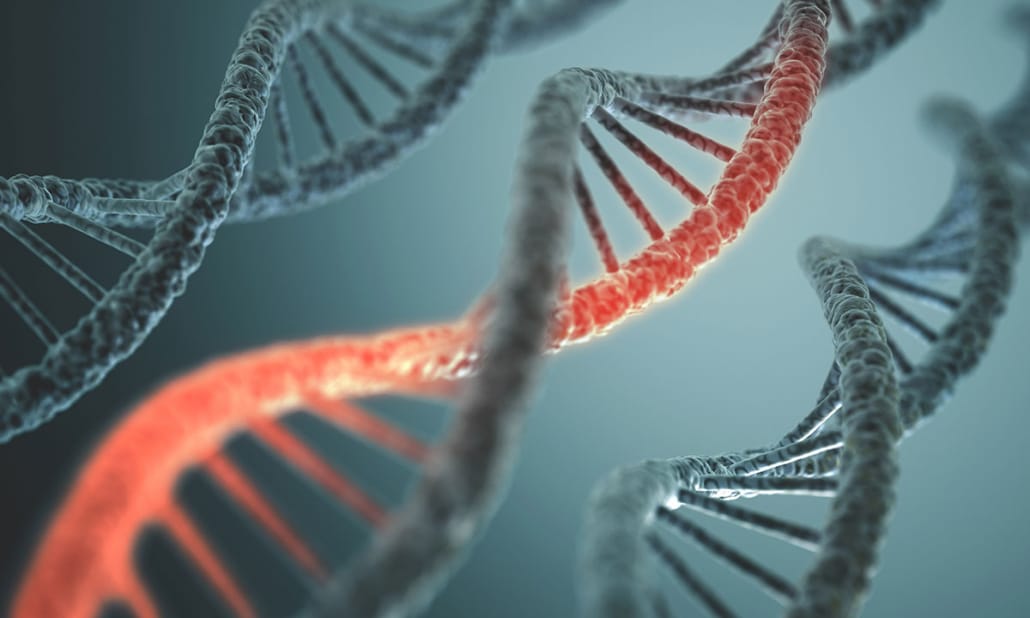
Gene Mutation + Asbestos = Mesothelioma
Recent research shows that even with minimal asbestos exposure, peritoneal mesothelioma may develop if the person has a specific gene mutation associated with cancer development.
Researchers at Fox Chase Cancer Center in Philadelphia, Pennsylvania, have shown that mice with a BAP1 gene mutation with minimal exposure to chrysotile asbestos are much more susceptible to malignant mesothelioma. Results were presented at the American Association for Cancer Research Annual Meeting in April.
What is a Gene?
Genes are the biological blueprints for the chemical processes that keeps cells, and people, alive. They contain information that leads to the creation of every part of our bodies. If a gene becomes mutated, cells become abnormal, and they may harm instead of help us. Gene mutations, for example, can lead to cancer development.
What’s a BAP1 Gene?
Some of us inherit a genetic mutation, which increases our chances of developing cancer. These changes mostly boost the risk slightly, according to GenoMEL, but there are inherited genetic mutations that increase those chances considerably.
These are called “high risk” genes. They include the BRACA 1 and 2 genes, which increase the risk of breast and ovarian cancers. BAP1is another, and it’s been found to boost the chances of cancers of the skin, eyes, kidneys, and mesothelium (where mesothelioma develops in the tissue in the chest, abdomen, and the outer surface of internal organs).
What Does the Research Show?
Chrysotile is a type of asbestos, and it’s been debated whether it can cause mesothelioma or lung cancer. Chrysotile is about 95% of the asbestos used commercially. Researchers wanted to know if low levels of chrysotile and crocidolite (another, more toxic asbestos type) could cause mesothelioma in normal mice or those with an inherited BAP1 gene mutation.
Over four years, researchers examined whether mice with the BAP1 mutation developed mesothelioma more often than normal mice. They learned that no matter the level of asbestos exposure, mice with a BAP1 mutation develop mesothelioma more frequently than normal mice. The findings indicate that those with the BAP1 mutation are highly susceptible to the cancer-causing effects of asbestos, even when minimal amounts of asbestos are involved.
Researchers also found that inflammation started by asbestos, especially chrysotile, in BAP-1 mutant mice, on a cellular level results in an environment where a normal immune response to destroy a tumor is suppressed, making it easier for tumors to develop. This information may help develop ways to boost the immune system’s response to help kill mesothelioma cells.
Contact Satterley & Kelley, PLLC Today for A Free Attorney Consultation
If you or a loved one has mesothelioma or another asbestos-related illness, our team can fight for your right to compensation and give you the attentive service you deserve. Call us toll-free at 855-385-9532 or complete our contact form to schedule your free consultation.