
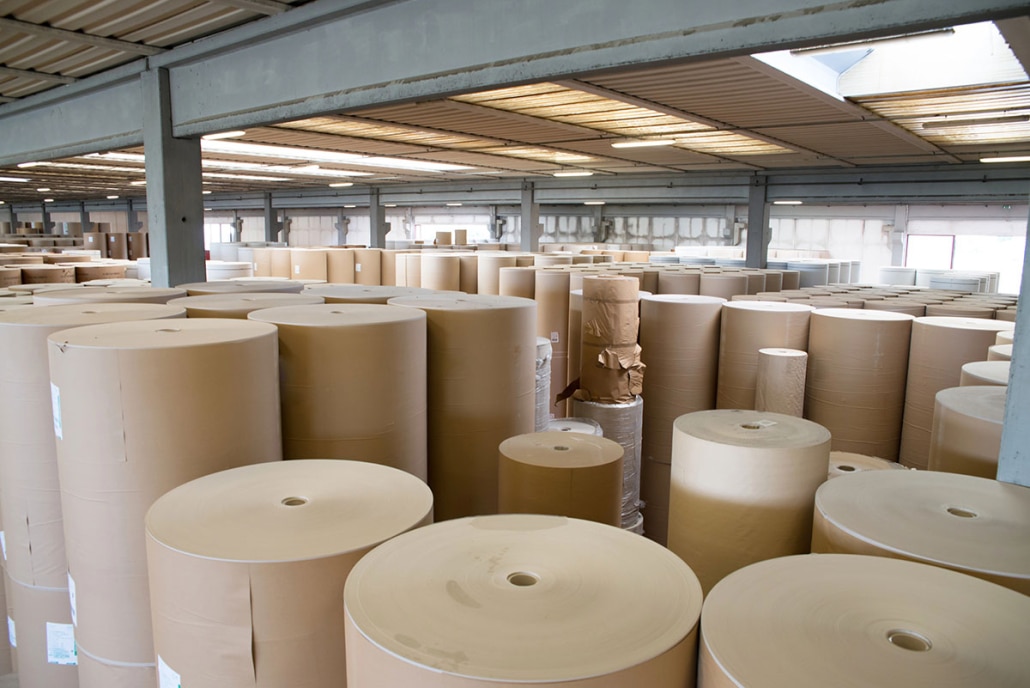
Mesothelioma at Willamette Industries Paper Mill in Hawesville, KY (Podcast)
In this podcast John Maher and Paul Kelley discussed a tragic situation that many former employees, contractors, and visitors of Willamette Industries Paper Mill in Hawesville, KY are facing. This facility had significant amounts of asbestos in it, which puts these people at risk of developing mesothelioma and other asbestos exposure related diseases.
John Maher: Hi, I am John Maher and I’m here today with Paul Kelley. Paul is a partner with the Kentucky personal injury law firm Satterley & Kelley, which has over 45 years of collective experience in litigating mesothelioma and asbestos clams. Today we’re talking about the Willamette Industries Paper Mill in Hawesville, Kentucky. Welcome, Paul.
Paul Kelley: Hey John. How are you doing today?
John: I’m well, how are you?
Paul: Doing well, thank you.
Learn About Willamette Industries Paper Mill
John: So, Paul, tell me a little bit about the Willamette Industries Paper Mill and what they do and where they’re located.
Paul: Well, Willamette Paper Mill, it’s now owned by a company called Domtar. But back in the day it was Willamette. They started building that facility in Hawesville, Kentucky in 1967. It’s a paper mill. They make all kinds of different paper products. The first plant was constructed and came online, and it was called the Kentucky Medium Mill. That was in 1967, thereabouts.
And then the second mill was the Bleached Pulp Mill. That came online in the ’69 ’70 timeframe. And then a little bit later, in the early ’80s, came the Fine Paper Mill. All three of these mills were massive facilities.
And the first two for sure, the Kentucky Medium Mill and the Bleached Pulp Mill, they were built at a time where industrial plants were manufactured or constructed with asbestos products. That mill still operates today. So going on almost 50 years now that company has manufactured paper products. It’s a pretty big operation and it provides paper to a lot of industries. And unfortunately, we have seen it as a defendant in several asbestos cases.
How is Willamette Industries Paper Mill Related to Asbestos and Mesothelioma Cases?
John: Yeah. Tell us a little bit more about that, and how the Willamette Industries Paper Mill is related to asbestos and mesothelioma claims.
Paul: Sure. We know from past experience that the first two mills, the Kentucky Medium Mill and the Bleached Pulp Mill, were constructed with lots of asbestos insulation in the facility. There were miles of pipes that ran through the plant, and all those pipes were insulated with asbestos thermal insulation. Again, in 1967, that’s what the industry used to insulate piping in places like that. And then when they built the Bleached Pulp Mill in the ’69-’70 timeframe, the same deal.
There were some other equipment there that had piping connected to it, and the piping to this equipment was all asbestos-insulated. All the piping in the plant usually connected, and there was lots of gaskets that contained asbestos. And there was some tanks that were in the facility that were insulated with asbestos.
There was pumps and motors and valves that all contained asbestos packing or other types of insulation, and just a wide variety of equipment that had to be insulated with asbestos at one point or another.
What Types of Employees at Willamette Industries Paper Mill were Exposed to Asbestos?
John: So then what types of employees might’ve been exposed to asbestos, because of all of this insulation on the piping and gaskets in various places?
Paul: Sure. Predominantly it’s the people that constructed the various plants. We have represented a number of the millwrights, insulators, and electricians that participated in constructing these facilities.
The millwrights, for example, they installed conveyors and some of the actual paper machines themselves. And then they were there during the installation of the piping and the insulation of the piping.
The electricians, a lot of the equipment contained electrical wire and cable. They contained asbestos. And so they were there and stripped and installed a lot of this wire and cable. They were also there during the other installation of the facility. Of course, the insulators, that’s what they did.
The pipe fitters usually installed the gaskets. They were there for the insulation part of it. Sometimes the pipe fitters actually did the insulation of the piping.
So, all the crafts that participated in constructing the facilities: people who worked during the operation of the plant, predominantly your maintenance folks. There were lots of people that just had to tear out a piece of pipe here or there, tear off the insulation. They get exposed. Sometimes they put new on, get exposed.
You had the people who came in and did some of the more substantial overhauls of equipment. That would happen on a fair amount of occasion, where they get the millwrights to come back in and tear out a conveyor and put a new one in. Or they’d get pipe fitters to come in and tear out a whole line of pipes and put new pipes in. And that would happen on occasion.
The pipe insulation and other thermal insulation just deteriorates over time. Sometimes it would fall on plant workers; it just hits these old concrete floors and dust proliferates everywhere. It’d fall on their equipment and dust gets all over their equipment. They used compressed air at the end of a shift to clean off their work space. And all that dust that came from the insulation would fly all over the place.
The plant superintendents and managers and engineers that worked in these facilities; office workers that had to walk through the plant; custodians that had to clean up various parts of the plants, in offices. I mean, all those kinds of people would get exposed on occasion.
And the level of exposure is varied, depending on what you did. If you were in maintenance, you were very heavily exposed: maybe not daily, but frequently. And if you were a office worker, less so but certainly frequently exposed over the course of five, 10, 15 years, for people that worked that long.
They would have people come in later on and conduct asbestos abatement in the facility. So people were actually removing it. They were supposed to be using the safest methods. And I’m not suggesting they didn’t, but there’s still always potential for exposure under those circumstances.
I mean, they’d have fires and things that would happen that would necessitate a need for a short-term repair. And it’d be all hands on deck: “Let’s get the maintenance staff, let’s get outside contractors in to do work.” And then certainly anytime they renovated, anytime they tied on.
For example, when they built the Bleached Pulp Mill, they tied that into the original mill, the Kentucky Medium Mill. So that meant that they had to tie the old pipes into the new pipes and disturb all that insulation, then reinstall the insulation.
So, if you worked in that plant; either as one of the people that constructed it, one of the people that maintained it, one of the people that operated the equipment, or people who supervised and worked in an office setting; there is a virtually guarantee that you’re exposed to asbestos for some period of time. It just varied depending on what your job was.
What Should You Do if You Were Exposed and Now Have Mesothelioma?
John: Right. So if you were an employee of Willamette Industries, or maybe you were one of those outside contractors that was hired to construct the paper mill or come in and do maintenance or something like that, and now you have mesothelioma, what should you do next?
Paul: Well, a couple things. I mean, first of all, most of the people that we see were diagnosed with mesothelioma. It’s a fatal cancer. There is no known cure for it. So it’s really important for you and your family to develop your medical plan and determine how you’re going to fight this cancer. That’s by far more important than anything that I could ever do for you.
But you have legal rights, and that you developed a cancer that is very uniquely associated with asbestos exposure. And it’s important for you to explore and understand what your legal rights are. And it’s important that you do that as quickly as you can.
Time is of the essence. It’s important both from a health standpoint, because you don’t know how long you’re going to have to be able to provide the information to your lawyers necessary to help.
But it’s also important because we have statute of limitations in Kentucky, like most states. And you want to make sure that you get your case, if you file one, that you get it filed on time.
I highly recommend doing your research. We live in a great time where you can learn a lot of information about mesothelioma. You can learn a lot of information about the lawyers that want to work for you and what their experience is. And you should use all those tools that are available to you and find the lawyer that you’re most comfortable with.
My advice is certainly this is a pretty specialized area, and there are a lot of great lawyers out there. But there’s only the relatively small amount of us that do this kind of work. And it’s important to hire somebody who has experience with asbestos, and also has experience with the job sites and the type of products that you were exposed to. And certainly as it relates to Willamette Paper Mill, I mean, my law firm, we’ve handled a number of cases there.
But regardless of what you do, you want somebody that you’re comfortable with. And you want somebody that hopefully will hit the ground running, getting your case filed as quickly as possible, start collecting evidence, start doing all the things necessary to achieve the outcome that you and your family deserve.
It takes time. Despite our best efforts, these lawsuits can take anywhere from 18-months to two years, maybe even longer. So we want to get that case filed pretty quickly to try to shorten that time as much as we can on our end. There’s so many things that we can’t control, but we can control that.
And obviously you want to participate in your case. You want to be able to testify. We want you to be able to testify. Lots of times the best evidence of your exposure is going to come through you. And getting your case filed as quickly as possible is going to give you the best chance.
Also, getting your case filed as quickly as possible is going to give you your best chance to appear at trial, so that you can tell the jury directly what it is that’s happened to you and how this has impacted you.
So it’s critically important that you determine all of your available medical options. And I’m sure that most people are going to have a great medical team and determine the best plan for you and your family. But you really shouldn’t wait to figure all that out before you talk to your attorney, because it might take a few months to figure out your medical care. And that’s a few months that we could spend working, investigating, getting a case filed. So that when you’re ready to dedicate whatever time you need to the lawsuit, we’re ready to do that.
And once you do your part, once you tell us where you’re exposed, how you’re exposed, and you give your deposition, you’ve done what you need to do from a legal standpoint. And you turn it over to us. You let us worry about the case; you worry about your medical care. You spend your time with your family. You do the things that are truly important for your life and for your family and loved ones. And let us worry about your case.
What is the Statute of Limitations for Mesothelioma Cases in Kentucky?
John: Yeah. Then finally, can you talk a little bit about the statute of limitations in Kentucky, and how that relates to a mesothelioma cancer case like this?
Paul: I can, and it’s a little harsh in Kentucky. We only have a year from the date that we know or should know we have an injury, and know or should know what the cause of that injury is. It goes by fast.
Now typically, what we always try to do is file that case within a year from the date of diagnosis. That way there’s no risk that a court would dismiss it on statute of limitations grounds. But really, you want to get that case filed as quickly as possible for all the reasons I’ve discussed. The passage of time; just a lot of negative things can happen. You could pass away or become unable to testify. Coworkers could pass away or become unable to testify. Evidence is lost.
So you have a year, and that’s good. I mean, have some time to be able to investigate and figure out what you want to do. But really, we don’t want to get anywhere close to that year. We want to get your case filed as quickly as possible so that we can A), you can participate as much as possible. And B), so that we can get to a quicker resolution, however that’s going to be.
John: All right. Well that’s all really great information, Paul. Thanks again for speaking with me today.
Paul: Thank you, John. I appreciate it.
Get More Information About Mesothelioma and Asbestos Exposure Cases in Kentucky
John: And for more information about mesothelioma and asbestos exposure, visit the law firm of Satterley & Kelley at Satterleylaw.com, or call 855-385-9532.