
Holding Faulty Teen Drivers Accountable
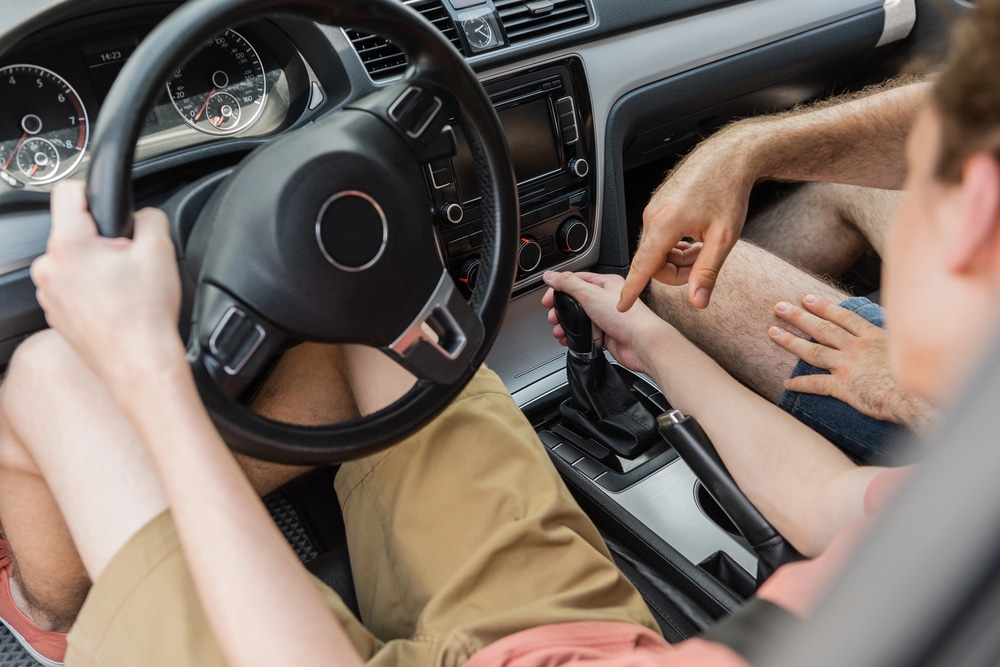
Young, inexperienced drivers and those aged 80 and older are statistically the most dangerous drivers. Teen drivers cause more accidents than they should, given how many there are. If a young driver causes a vehicle accident that injures you, we can help.
Satterley & Kelley, PLLC, advocates for those injured by others’ negligence, including people harmed by young drivers who make too many mistakes behind the wheel. We will provide you with the skilled, aggressive legal representation you deserve. Learn more by calling our Louisville office at (855) 385-9532.
Car Crash Involving Teen Driver Leaves One Dead, Three Injured
An April vehicle accident is a recent reminder of this playing out. A seventeen-year-old driver on Bullittsville Road in Hebron, Kentucky, hit a curve, overcorrected, and the Honda he drove went off the road and struck several trees. There were three passengers in the car.
WLWT reports that a 16-year-old was thrown from the vehicle, became trapped under it, and died at the scene. The others in the car were injured. Neither the deceased nor the driver used a seatbelt. Police state excess speed played a role in the crash.
Are Teen Drivers More Dangerous Than Other Drivers?
The fatal crash rate per mile driven for 16 and 17-year-old drivers is about three times the rate for drivers 20 and older, according to the Insurance Institute for Highway Safety/Highway Loss Data Institute (IIHS/HLDI). The overall crash rate per mile is about four times the rate.
National Highway Traffic Safety Administration (NHTSA) data show that drivers aged 15 to 20 were only five percent of licensed drivers in 2023, according to Autoinsurance, but they were:
- 8.9 percent of drivers involved in fatal crashes
- Two percent of those involved in police-reported traffic crashes
The Kentucky State Police report that in 2024, teens were about seven percent of the state’s drivers, but were involved in nearly ten percent of reported vehicle collisions, and almost nine percent of crashes causing injuries.
Male teen drivers are more likely than female drivers to cause accidents, and they’re especially hazardous when other teens are in the car and when they’re using smartphones.
Why Are Teen Drivers More Dangerous Than Other Drivers?
Most serious teen driver crashes are caused by their “critical errors.” The three most common leading to nearly half of their accidents, according to the Children’s Hospital of Philadelphia, are the following:
- The lack of scanning needed to see and respond to hazards
- Traveling too fast for the road conditions
- Being distracted
Teens are more likely than older drivers to underestimate or fail to recognize dangerous situations, and are also more likely than adults to make critical errors that lead to serious crashes, according to the federal Centers for Disease Control and Prevention.
The reasons for these problems aren’t just a lack of experience, patience, or emotional maturity. There are physical reasons teen drivers are, as a whole, more dangerous drivers, including the following:
1. Underdeveloped Prefrontal Cortex
The brain’s prefrontal cortex, our judgment control center, is where:
- Information from your eyes, skin, and internal organs is processed
- Information is evaluated
- Muscle movement is controlled
- Decisions are made
This valuable real estate isn’t fully developed until our early twenties, according to National Driver Training.
Our “executive functions” (how we make judgments, control impulses, plan, organize, and pay attention) are in the prefrontal cortex, which is still under construction during our teen years. If nothing stressful or distracting is going on, most teens function well. But this capacity can be easily overwhelmed during driving situations.
2. Incomplete Myelination/Slow Nerve Transmission
Myelination is one of the last developments in the nervous system. It’s the insulation of nerves that makes information travel faster. During the teen years, nerves connecting the parts of the brain that control impulsiveness, support good judgment, and regulate emotion are finally being insulated.
Nerves that usually lack this insulation directly influence driving skills, challenge teens’ abilities to maintain full attention, make it more difficult to recognize potential dangers, evaluate risky situations, and make good decisions.
3. Immature Working Memory
Working memory, which develops through adolescence into the twenties, is a frontal lobe process associated with complex, moment-to-moment tasks essential to driving.
Safe driving involves scanning, monitoring, and updating information about the vehicle and environment while managing multiple tasks and distractors. They all challenge working memory, especially when a young driver has not yet fully learned to automate many basic driving routines, according to the Annenberg Public Policy Center.
Researchers have found that crash risk is inversely related to age during the early years of driving. Among equally new drivers, a 17-year-old has a higher crash risk than a 20-year-old, suggesting that cognitive development (not just experience) is a key factor.
4. Sleep Deprivation and Biological Vulnerability
Teens biologically need more sleep but typically sleep less than they should. An article in PLOS One reports that young drivers are overrepresented in sleep-related crashes due to:
- Decreased sleep opportunities
- Lower tolerance for sleep loss
- Ongoing maturation of brain areas associated with driving-related decision-making
Younger drivers also suffer more physical harm due to sleep loss than older drivers. Following sleep deprivation, driver safety was more affected for younger drivers compared to older ones:
- 62.5% of younger drivers had near-crash events following sleep loss, compared to 17.6% of older drivers
- Younger drivers had 7.37 times more lane departures
This was reported in a 2021 Science Reports article.
No matter the reason, if a teen driver was negligent and made serious errors, causing an accident and your injuries, you may be entitled to compensation. As sympathetic as we may be to inexperienced drivers, that doesn’t excuse the harm they cause.
Speak to a Satterley & Kelley, PLLC Car Accident Injury Lawyer Today
If you’re the victim of an accident caused by a teen driver, Satterley & Kelley PLLC lawyers can protect your interests and rights to compensation. Schedule a free initial consultation to discuss your case.
Call our Louisville office at 502-589-5600 (toll-free at 855-385-9532) or contact us online.