
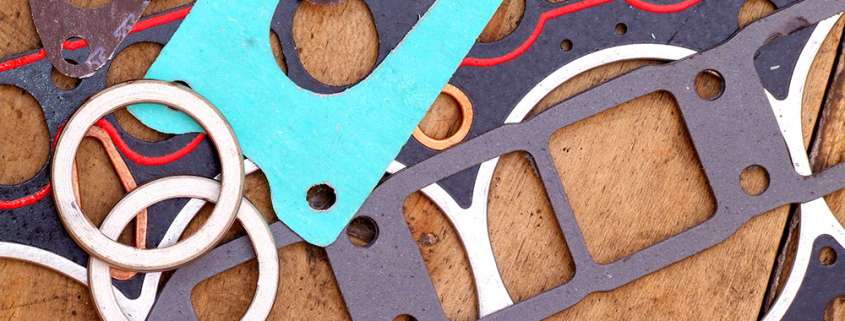
Asbestos was used in about 3,000 products. Those who made and sold asbestos-containing products came up with solutions to customers’ problems while causing widespread, deadly diseases. Gaskets are used to seal one thing from another, and those using asbestos were sold for decades, sickening and killing many of those working with them.
What is a Gasket?
A gasket is a seal filling the space between two or more surfaces to prevent leaks from or into the joined objects while under strain or pressure. They play a critical role in the functioning and integrity of mechanical systems by preventing leaks and maintaining the separation of fluids or gases.
Gaskets are commonly used in engines, pipelines, and various industrial applications where there’s a need for a tight seal between two components. They can be made from multiple materials, including rubber, cork, paper, metal, and composite materials. For decades, they also contained asbestos. The choice of material depends on the application’s issues, such as temperature, pressure, and the type of fluids or gases involved.
For example, gaskets seal joints between engine components in vehicle engines, preventing oil, coolant, or other fluids from leaking. Plumbers use gaskets to create watertight seals in pipes and fittings.
What is Asbestos?
Asbestos is a mineral fiber that was widely used for centuries in various industries because its fibers are durable, strong, and resistant to electricity, chemicals, heat, and fire. Because of asbestos’ health hazards, it was phased out of use starting in the 1970s, but some uses are still allowed in the US today.
Why Would a Gasket Contain Asbestos?
Asbestos was often used in gasket manufacturing because of its qualities, including:
- Heat resistance: Asbestos is suitable for use where gaskets are exposed to high temperatures, such as in engines and exhaust systems
- Chemical resistance: Asbestos is useful where gaskets may come into contact with corrosive substances
- Flexibility: Asbestos fibers are flexible and can conform to irregular surfaces, allowing gaskets to create effective seals on uneven or irregular surfaces
- Durability: Asbestos can withstand wear and tear, extending gasket life and reducing the need for replacement
Modern gaskets are made with alternate materials with similar properties without the health risks of asbestos.
Why Would Asbestos-Containing Gaskets Endanger Someone’s Health?
Asbestos-containing gaskets pose significant health risks due to the release of its toxic fibers into the air, which could occur when gaskets were first used and when they’re removed. Gaskets, over time, wear out and may fall apart when they’re taken out of equipment or machinery.
When gaskets with asbestos are disturbed or damaged, asbestos fibers may become airborne and be swallowed or inhaled by those in the area. Over time, these fibers may cause several fatal health conditions, including:
- Asbestosis: Asbestos fibers become stuck in the lungs, causing scarring and inflammation. If severe enough, this can cause asbestosis. This is a progressive lung disease involving severe breathing difficulties and reduced lung function, disabling those with the condition
- Lung Cancer: The risk of lung cancer increases if you’re exposed to asbestos. Smoking makes that risk greater. It can take decades between breathing in asbestos and lung cancer developing
- Mesothelioma: This is an aggressive, rare, and fatal cancer. The most common forms affect the lining of the lungs, abdomen, or heart. Like lung cancer, it usually takes decades before the disease develops and is diagnosed
Before the dangers of asbestos became widely known starting in the 1980s, those working with gaskets weren’t aware their lives were being threatened, and went about their jobs.
Can Those Injured by Asbestos-Containing Gaskets Be Compensated for the Harm They Suffer?
Those injured by asbestos and family members of those killed by an asbestos-related condition may be able to obtain compensation for what they’ve endured. They can seek damages, a dollar figure for the harm they suffered.
They may be able to seek recovery from companies that are still in business or from trust funds established by companies that received bankruptcy protection. Some of those damages include:
- Current and expected future medical expenses
- Reimbursement for past and future income and benefits lost due to the inability or reduced capacity to work
- Physical pain, emotional distress, and overall suffering caused by the illness and its treatment
- Surviving family members may be able to file wrongful death case and seek compensation for the loss of guidance or companionship, medical bills, lost income, and expenses like funeral costs
The damages and amounts vary from case to case.
Call Us Today for A Free Consultation
Satterley & Kelley, PLLC, lawyers can be your boots on the ground if you or a family member in Kentucky suffers from mesothelioma or another asbestos-related illness. Call our Louisville office at 855-385-9532 or fill out our website’s contact form to schedule a free initial consultation so we can discuss the situation, your rights, and how we can help.
Related Resources
- Annealing Furnaces and Asbestos: Mesothelioma Lawsuits
- Asbestos and Transite: Mesothelioma Lawsuits
- Asbestos and Zonolite Insulation: Mesothelioma Lawsuits
- Asbestos-Containing Auto Parts Are Still a Danger
- Asbestos-Containing Boilers and Mesothelioma Lawsuits
- Asbestos-Containing Switchgear and Mesothelioma Lawsuits
- Asbestos Flooring and Mesothelioma Lawsuits
- Asbestos in Electrical Panels: Mesothelioma Lawsuits
- Asbestos in Shipyard and Maritime Products
- Asbestos Pipe Insulation and Mesothelioma
- Asbestos Products in the Home: Kentucky and Surrounding Areas
- Asbestos Products Used on Trains and Locomotives
- Cosmetic Talc and Asbestos Lawsuits
- Electrical Products Containing Asbestos
- Gaskets, Asbestos, and Mesothelioma Lawsuits
- Turbines and Mesothelioma Lawsuits
- Vehicle Clutches and Mesothelioma Lawsuits
Click here for more information about other products that contain asbestos