
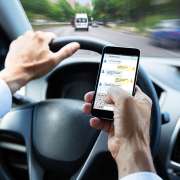
What makes texting and driving so dangerous?

We’ve heard it before — texting while driving behind the wheel is a dangerous thing to do. And yet, most of us still do it from time to time.

While there are equally hazardous things to do when driving — such as changing the radio station, reaching for something in the back seat or putting on makeup — texting and driving may be one of the most dangerous. Here’s why.

Three types of distractions

There are three distinct categories of distracted driving:

  • Manual: Distractions that take your hands off the wheel
  • Visual: Distractions that take your eyes off the road
  • Cognitive: Distractions that take your mind or attention away from driving

Many distractions are a combination of all three types, and texting behind the wheel is one of them. You use your eyes, mind and hands in order to read or send a text message. Often, the reward of reading or sending a message is not worth the risk that it poses to yourself and other drivers.

Texting and driving – an epidemic

Unfortunately, even though most people understand the dangers of texting while driving, many people still do it. You may find yourself thinking that it only takes a few short glances to check your messages and that nothing of consequence could possibly happen during that time.

However, when you look at your phone for a mere 5 seconds while traveling at 55 mph, you cover the length of a football field. Within that distance and within those short seconds, anything can happen.

The most recent statistics from 2018 reveal that almost 3,000 drivers were killed as a result of texting behind the wheel, and more than 400,000 people were injured. Not to mention, there are countless more bicyclists and pedestrians who fall victim to distracted drivers.

In the event of an accident

You might think you are capable of texting while driving, but you are not a safe driver unless you put away all distractions and keep your focus on the road and your surroundings.

Regrettably, some people maintain the “It’ll never happen to me” mindset. Although you can do your part to keep yourself safe by putting the phone away, other drivers might not follow suit. If you get into a car accident caused by another driver’s negligence, don’t hesitate to protect yourself and explore your legal options.



Is Kentucky a dangerous state for teen drivers?

According to a AAA report, traffic crashes are one of the leading causes of death for teens aged 16 to 19 in the US. Teens are six times more likely to be killed in car crashes compared to drivers aged 20 and older.

But in Kentucky, teens are 140% more likely to die in car crashes than the national average.

Kentucky is the Most Dangerous State For Teen Drivers

Kentucky is one of the most dangerous states in the country for teen drivers. In fact, Kentucky has the highest fatality rate for teen drivers in the US.

A recent study found that Kentucky has 114.25 driving deaths per 100,000 teenagers. This is nearly double the teenage fatality rate of the second-worst state (Mississippi), with 66.15 fatalities per 100,000 teen drivers.

The Commonwealth of Kentucky Transportation Cabinet (KYTC) just released new data for 2025, showing teen driving on Kentucky roads from the last three years. The report found:

  • 47,000 crashes involving teenage drivers
  • 13,000 injuries
  • 210 deaths

As a result, the KYTC is taking steps to encourage safer driving habits for young drivers in Kentucky.

Why is Kentucky Such a Dangerous State For Teen Drivers?

On March 25, 2025, Kentucky House Bill 15 was signed into law, lowering the age for individuals to obtain a learners permit from 16 to 15. This new law is putting even younger drivers on the road and potentially making things even more dangerous.

But this doesn’t account for the high crash and fatality rate in previous years. So what makes Kentucky so dangerous?

According to recent crash data, these are the leading causes for teen driving deaths:

  • Speeding
  • Driving under the influence of drugs or alcohol
  • Distractions like texting or talking to friends

But there are other factors that may contribute to why Kentucky has been so dangerous for young drivers, like rural roads, lack of public transportation for teens, and longer drives to work or school.

According to the data, just 1% of teens in Kentucky over 16 years old utilize public transportation for work, compared to 4.9% national average.

In addition to speeding, driving under the influence, and distracted driving, AAA says that the following factors also increase the risks of teen driving accident injuries:

  • Driving at night
  • Driving with passengers
  • Driving drowsy
  • Not wearing a setbelt

Safe Driving Tips For Teens and Parents

Despite passing driver’s education and behind-the-wheel training, many teens are still inexperienced behind the wheel. These are a few safety tips parents can give their teens:

  • Limit the number of passengers they can have in the car
  • Abide by the speed limit at all times
  • Don’t drive or get in the car with someone who is under the influence
  • Keep music at a reasonable volume
  • Only drive with close-toed shoes
  • Tell mom or dad when the car is not running well

No parent wants to get a knock on their door from the Kentucky state trooper saying their child died in a crash. Luckily, parents can reduce these risks by being open and honest with their teen about the dangers they could face out on the road.

Safest Vehicles For Teen Drivers

While a thorough education can be crucial in protecting new drivers, the car they drive could also make a big difference. The NHTSA rates vehicles on how effective they are at protecting occupants by looking at essential factors like front and side crash tests.

Combing through all the available safety options can seem daunting, but the Insurance Institute for Highway Safety (IIHS) looks to help in the process. They use the NHTSA ratings, along with other determiners, to single out a few affordable selections from the top of the charts:

  • Toyota Corolla
  • Toyota Camry
  • Honda Civic
  • Mazda 3 and Mazda 6
  • Subaru Legacy
  • Volvo S60
  • Mazda CX-5
  • Nissan Murano
  • Acura RDX
  • Chevrolet Trailblazer
  • Ford Explorer
  • Kia EV6
  • Nissan Maxima
  • Subaru Forester

These cars were all selected based on a few important distinctions. The vehicles must earn good ratings for front, side and roof strength, and for restraints. Braking distance and emergency handling must also meet certain qualifications to merit consideration.

Trusting Technology

It can be hard to know if you’ve done everything to keep your children safe when they’re driving on their own. A reliable automobile is a good head start and can works wonders when paired with a solid driver’s education and proper licensing. Make sure you know what makes for a safe ride, and you can rest easy when your kids grab for the keys.

Call us at 855-385-9532, locally 502-589-5600, or contact us online if you need help.