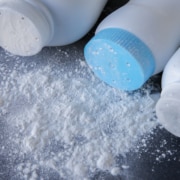
Record-Breaking $1.5 Billion Asbestos Verdict Against Johnson & Johnson

December 2025 was a tough month for Johnson & Johnson, which is dealing with about 67,000 plaintiffs claiming the company’s baby powder, contaminated with asbestos, caused their cancers, or those of deceased family members.

The company was just warming up with a $40 million California verdict earlier in the month, then a $65.5 million verdict against it in Minnesota on the 19th, when the following Monday, a Baltimore jury ruled the company should pay $1.5 billion to a plaintiff.

Satterley & Kelley, PLLC lawyers represent people diagnosed with mesothelioma and other cancers caused by their exposure to asbestos-containing talcum powders. Call us at 855-385-9532 to learn more.

Record-Breaking Jury Verdict Combines Compensatory and Punitive Damages

A Baltimore jury ordered Johnson & Johnson and two subsidiaries on December 22 to pay more than $1.5 billion to plaintiff Cherie Craft, who claims decades of asbestos exposure due to the company’s talc-based baby powder caused her peritoneal mesothelioma, an aggressive and fatal cancer. She was diagnosed in 2024, according to Reuters.

Circuit Court for Baltimore City jurors found the company, a subsidiary, and a spinoff entity created to handle its baby powder business liable for failing to warn her that its baby powder was contaminated with asbestos. This may be the largest-ever sum awarded against Johnson & Johnson for a single plaintiff. The company announced it will appeal the jury’s decision.

The damages award is as follows:

  • $59.84 million in compensatory damages and $1 billion for punitive damages against Johnson & Johnson
  • $500 million in punitive damages against Pecos River Talc, a subsidiary

Compensatory damages compensate plaintiffs for their losses. Punitive damages punish plaintiffs for their extreme behavior and are meant to deter similar conduct in the future.

Erik Haas, Johnson & Johnson’s worldwide vice president of litigation, blamed the decision on “junk science” and “gross errors” by the trial court. He stated the outcome is “squarely at odds” with most talc trials, which have gone in the company’s favor.

The company has put aside billions of dollars to pay for litigation and settlements as it contests claims in courts nationwide. Johnson & Johnson stopped selling talc-based baby powder in the US in 2020 and globally in 2023, when it switched to cornstarch-based alternatives.

Take Legal Action Now — Contact Satterley & Kelley, PLLC

If you have mesothelioma or another cancer that talcum powder may have caused, you and your family may receive compensation for the harm you suffer. Let us be your boots on the ground seeking maximum compensation for you and your family.

Call us at 855-385-9532, locally 502-589-5600, or contact us online to schedule a free initial consultation with a Satterley & Kelley PLLC attorney.

$29 Million Settlement for South Carolina Dram Shop Claim

 A tragic South Carolina case highlights the dangers of illegal alcohol sales. In that case, a gas station sold alcohol twice to an underage driver earlier in the day. The driver later caused a crash that killed a father and severely injured his son. The resulting dram shop claim against the gas station settled for $29,273,000, demonstrating the serious liability businesses can face when they sell alcohol to someone who should not have been served.

Under Kentucky dram shop law, businesses that sell or serve alcohol—including bars, restaurants, liquor stores, and gas stations—can be held responsible when illegal alcohol sales lead to serious injuries or deaths. These cases often involve serving alcohol to minors, overserving visibly intoxicated individuals, or violating alcohol licensing laws.

Satterley & Kelley, PLLC’s dram shop lawyers represent people injured by negligent alcohol service. Our attorneys understand the complexities of Kentucky bar liability laws and work to hold businesses accountable when their illegal alcohol sales cause catastrophic harm.

If you or a loved one has been injured by a drunk driver or by someone who should not have been served alcohol, a Kentucky dram shop attorney at Satterley & Kelley can help you pursue compensation. Call our Louisville office at (855) 385-9532 to learn more about your rights.

Driver Kills Two Who Were in Their Yard

Most drunk driving accidents involve people inside vehicles. This fatal accident killed a father and severely injured his son in a place they probably thought was safe: their own yard, according to the South Carolina Lawyers Weekly. The publication didn’t name the parties to the lawsuit or the accident’s location. The son suffered a traumatic brain injury, and his mother witnessed the crash.

Their attorneys claim this is the largest dram shop act settlement in the state’s history and the largest such settlement by a US gas station.

Police arriving at the scene recorded video from a dash camera. In one video, the driver, who was younger than 21, stated he bought alcohol at a gas station. Based on evidence obtained from the station’s owner, it was determined that the driver bought alcohol there twice before the accident.

The underage customer presented a fake ID to the cashier. It was scanned through their point-of-sale system, which didn’t indicate a problem, although it contained a falsified birthdate. The driver didn’t have his fake ID with him for the second sale but the gas station clerk  sold him more alcohol anyway. The clerk didn’t ask for an ID and overrode the register’s ID-checking function.

Law enforcement initially investigated the accident, and the gas station wasn’t cited for breaking the law. The lawsuit investigation found they didn’t provide police with the complete video of the second alcohol sale.

The clerk told police investigators that he recognized the customer from the initial sale and that the customer’s ID was approved by their system. He said he followed company policy by not obtaining an ID for the second sale because he remembered the customer.

Police determined that, based on the realism of the driver’s fake ID and the shortened surveillance video provided by the gas station, no criminal violation took place. Plaintiff’s attorney provided the complete video to the police. They reinvestigated the incident and issued a violation notice.

The Gas Station’s Technology Used to Screen Drivers’ Licenses Wasn’t Up to the Job

The police used the driver’s fraudulent identification and scanned it with an iPhone app that confirmed it was fake. The gas station’s scanning system only read the fake birth date encoded in a fake barcode. It couldn’t determine whether an ID was genuine. The gas station’s scanner was useless when a sophisticated fake was used, so the underage driver was allowed to buy alcohol twice on the day of the accident.

Gas Repeatedly Sold Alcohol to Underaged Consumers Despite Repeated Fines

Before the accident, the gas station chain had 15 violations for selling alcohol to underage customers. The company didn’t dispute the findings. Instead, it chose to pay fines. It did the same for the violation related to this fatal accident. The plaintiff’s attorney used this history to tell the gas station owners they faced liability.

The company settled the case at a mediation session before it was added to a lawsuit against the driver.

Kentucky Dram Shop Act Allows for Recovery in Two Situations

The Dram Shop Act covers an entity licensed to sell alcohol when it provides alcoholic drinks to someone who subsequently drives and injures someone. Under state law, if the customer is the legal age to drink or older, the injured party seeking compensation must establish that the licensee negligently served them:

  • They knew, or should’ve known, that the person was intoxicated
  • They should’ve stopped them from drinking more, but didn’t do so

Proving a dram shop case when a driver is younger than the drinking age is much simpler. It’s illegal for a Kentucky licensee to provide alcohol to someone younger than 21. The plaintiff (the injured party filing the lawsuit) would show the following:

  • The person was too young to legally drink alcohol
  • The defendant served them alcohol
  • The person later caused the accident

When the driver is old enough to drink and is intoxicated, but served alcohol anyway, and causes an accident and injuries, often the defense is that the defendant didn’t know the customer was intoxicated and shouldn’t have known that, given the situation.

These cases can revolve around witness testimony and surveillance videos to determine whether the person was acting and talking like they were drunk. It’s an opportunity for the defense to cloud the issues and plant doubt in the jury members’ minds.

That’s not the case when the person served isn’t yet 21 years old. It boils down to the person’s birthdate and whether the defendant served them alcohol. Given the ease of establishing liability, a defendant, such as a gas station chain, may be more likely to settle a case and avoid a potentially larger jury verdict.

Dram shop act cases can involve punitive damages if a defendant’s negligence is extreme or if they acted intentionally. Punitive damages aren’t meant to compensate a plaintiff for their injuries. They are intended to punish the defendant for its  actions and discourage it and others from repeating their mistakes.

A defendant with a long history of selling alcohol to minors, like the gas station chain in this case, may risk punitive damages if it doesn’t settle a case.

Speak With an Experienced Dram Shop Lawyer

Satterley & Kelley, PLLC attorneys have decades of experience handling vehicle accident and dram shop claims. You can discuss your situation, how Kentucky law may apply, and how we can help with a knowledgeable Louisville attorney. Contact our law offices online or by telephone at 855-385-9532.

Hunting Accidents: When Tradition Turns to Negligence

Hunting is more than a pastime in Kentucky. It’s a tradition passed down through generations. But if safety is ignored or mistakes are made, a hunting trip can turn tragic in an instant. A member of a hunting party or another person in the area can be severely wounded or killed if a rifle or shotgun is negligently used.

Satterley & Kelley, PLLC attorneys in Louisville get results. We have recovered hundreds of millions of dollars in verdicts and settlements for clients throughout Kentucky. If you have questions about how you can obtain compensation for your injuries or the death of a family member caused by a negligent shooting, call us at (855) 385-9532.

Kentucky Hunter Shot and Killed

Daniel Wilson, a 67-year-old Kentucky man, was fatally shot while scouting for deer on family property in Lincoln County in October. WKYT reports that a teenager participating in a youth hunt thought Wilson was a deer, fired his rifle, and shot him in the leg. Wilson later bled to death. This tragedy shows how quickly an accidental, and possibly negligent, shooting in the field can lead to irreversible loss.

Accidental shootings can occur in many ways. They include the following:

  • Failing to properly identify a target
  • Unsafe firearm handling and accidental discharges
  • Poor communication with others

These incidents are almost always preventable, and when they occur, they may involve legal negligence that can make the responsible party liable to pay compensation.

What is Negligence?

Negligence is the legal framework most often used in personal injury claims. It determines responsibility for injuries or deaths, including those caused by accidental shootings during hunting trips. The plaintiff (you, the injured party) has the burden of proof. Each case is unique, and legal claims are based on the available evidence.

Whether negligence can be shown depends on proving these four elements:

1. Duty of Care: What Hunters Owe to Others

Those hunting and using firearms must exercise reasonable care to prevent causing foreseeable harm to others. During a hunting trip, this duty includes the following:

  • Ensuring they’re a safe distance away from residences and shooting away from them
  • Correctly identifying a target and what lies beyond it before firing
  • Keeping firearms pointed in a safe direction
  • Engaging safety mechanisms when appropriate
  • Avoiding alcohol or drugs while handling weapons
  • Communicating clearly with other members of the hunting party
  • Following basic firearm safety practices

Potentially, someone other than a person in a hunting party may have been negligent and contributed to the shooting.

2. Breach of Duty: Unsafe or Careless Conduct

A breach occurs if a hunter fails to act as a reasonably careful person would under the circumstances. This can be doing something when they should not have, refraining from doing something when they should’ve acted given the situation, or doing something so poorly that it triggers liability. Common breaches include the following:

  • Firing at movement or sound without confirming it’s game
  • Mistaking a person for an animal
  • Failing to communicate positions during a group hunt
  • Disregarding known hunting-zone boundaries
  • Handling a firearm carelessly during transport

Calling a shooting “accidental” doesn’t absolve someone of responsibility. If the conduct fell below reasonable safety standards, the legal duty has been breached.

3. Causation: Connecting the Breach to the Injury or Death

To establish negligence, the victim must show that the breach of duty caused the injury. The injury would not have happened but for the hunter’s negligent conduct, and it was the foreseeable result of the negligent act.

4. Damages: Actual Harm Done

The injured person must show damages (harm done measured in dollars), such as:

  • Medical expenses
  • Permanent injuries or disability
  • Lost wages or earning capacity
  • Pain and suffering
  • Emotional distress
  • Funeral and burial expenses in fatal cases

In fatal accidental shootings, the deceased person’s estate  may bring a wrongful death claim, which also relies on negligence.

A negligence case can be strengthened if the responsible party is determined to be guilty of committing a crime related to the shooting, like hunting while impaired by alcohol.

In rare cases involving extreme recklessness, punitive damages may also be available. They’re not meant to compensate you for losses, but to punish the wrongdoer to discourage them, and others, from taking the same actions in the future.

Do I Have a Case If I’m Partially to Blame for the Shooting?

Kentucky has a pure comparative fault system. That means:

  • You can recover compensation even if you’re partially at fault
  • Your award is reduced by your share of the blame

This could be an issue if you didn’t wear adequate visibility gear or failed to communicate your location.

Who May Be Held Responsible for a Negligent Shooting?

Depending on the circumstances, responsibility for a hunting-related, negligent shooting may include the following:

  • The shooter
  • Other participants
  • Landowners
  • Hunting guides
  • Firearm or equipment manufacturers

Determining liability requires a careful investigation and knowledge of Kentucky personal injury law. Critical evidence can be quickly lost after a hunting accident.

After getting medical attention, contact Satterley & Kelley, PLLC as quickly as possible so we can discuss your legal rights and how we can help. After we’re retained, we can start our investigation to determine why and how the shooting took place and who may be responsible for your injuries or your family member’s death.

Lawyers Experienced in Kentucky Injury Law

Satterley & Kelley, PLLC attorneys take on responsible parties and their insurance companies and win. If you have questions about the legal system or compensation for your accidental shooting, or are seeking legal representation, call us at 855-385-9532, locally 502-589-5600, or contact us online to schedule a free initial consultation with a Satterley & Kelley PLLC lawyer.

Asbestos and Mesothelioma at Olin Mathieson in Brandenburg, KY

In this episode, John Maher interviews Paul Kelley about the Olin Mathieson facility in Brandenburg, Kentucky, where asbestos was reportedly present throughout the plant. They discuss the types of work that may have led to exposure and the legal steps mesothelioma patients should consider as soon as possible.

John Maher: Hi, I’m John Maher. I’m here today with Paul Kelley. Paul is a partner with the Kentucky personal injury law firm Satterley and Kelley, which has over 45 years of collective experience litigating mesothelioma and asbestos claims. Today, we’re talking about asbestos and mesothelioma at Olin Mathieson in Brandenburg, Kentucky. Welcome, Paul.

Paul Kelley: Hey, John. How are you doing this morning?

Olin-Mathieson Plant History in Brandenburg

John: I’m doing well, thanks. Paul, tell us a little bit about Olin Mathieson and what it is that they do.

Paul: So, Olin Mathieson is a chemical company. It was formed in the early 1950s. It was a combination of a company called Olin Industries and Mathieson Chemical. It, I think, still operates. The company, Olin Mathieson, I think is still open. The particular plant that we’ll be talking about today was in an area called Brandenburg, Kentucky. It’s south of where I’m at in Louisville. And it specialized in turning natural gas into, or processed natural gas into, several organic chemicals. I think propylene or propylene oxide, ethylene oxide. So a lot of chemical processes. The plant at issue, I think, was open around 1954, in the early 1950s. And the plant, the physical structure, still exists today, but it’s operated by a different company called Monument Chemical, which purchased the plant in 2013. The period of time that we’re going to be most focused on today is going to be in the 50s through the 1980s and 1990s, and that’s when Olin Mathieson was the owner and operator of the facility.

Where Asbestos Was Present at the Olin Mathieson Facility

John: And so how was Olin Mathieson and their facility related to asbestos and mesothelioma cases?

Paul: So this particular facility, to my knowledge, asbestos was not utilized in the production process, at least not as a component of anything they made or specifically used. But this is an old facility. It’s a very significant plant that has a production area. It has offices. It has a power plant. And given the timeframe that it was built, in the 1950s, it contained asbestos and it was, quite frankly, loaded with asbestos and all kinds of different asbestos products from pipe insulation, insulating materials on your boilers from the thermal insulation to fire brick, refractory material, gaskets. There was insulation that was associated with some of the equipment that was used in the plant, typically thermal insulation.

There are valves, tons of valves. You’ve got chemicals flowing through pipes all throughout the plant. Valves frequently had what we call valve packing. It was like a gasketing material that contained asbestos. We had insulating cement that was used in the plant that was frequently on walls and covering equipment. There was something called Transite that was likely used in the facility. Transite was something that frequently was a corrugated cement material that frequently walls were made of. So there was a great deal of asbestos at that plant and it would have, probably in 2013, if somebody went into that building today, you’d probably still find asbestos in there.

How Workers May Have Been Exposed to Asbestos

John: And so when and how were the employees and people that worked at Olin Mathieson exposed to this asbestos that was in the facility?

Paul: So I would say that the main way that people were exposed would certainly be your maintenance kind of workers. A plant like that, I mean, it had to stay in operation, and it was a massive size, and things went wrong frequently. And so they would have maintenance employees that would do certain things. And we recently worked on a case for a gentleman that was involved in maintenance. And if they had a small problem with a pipe, they didn’t hire an outside contractor to come in, they had their maintenance staff, and that piping was frequently insulated with asbestos.

So the maintenance employee would tear the asbestos off, repair the pipe, replace the pipe. And sometimes, depending on the timeframe, it might have been reinsulated with asbestos or it could have been reinsulated with something else. So we certainly see a lot of maintenance people, and that would be true with the gaskets and the valves, and perhaps even the boilers.

But frequently, when significant projects had to occur, they hired outside contractors. They would hire boilermakers to perform boiler work. They would hire pipe fitters to perform major pipe projects. They would perform sheet metal workers to perform duct work and other kind of sheet metal work. Mill rights who frequently worked on all kinds of different types of equipment, tanks, things that were located throughout the plant. And so all those workers would frequently have to be involved in asbestos in some way.

If you’re a pipe fitter, frequently, just like the maintenance employees, you’re tearing asbestos insulation off of pipes. If you’re a boiler maker, lots of times they came into the plant every two or three years and they rebuilt those boilers, not the physical steel, but the things that went inside the boilers, which would be the insulation and the fire brick and the refractory and gaskets and those people would be exposed.

Lots of times your skilled laborers would have to replace valves or replace the packing in the valves and the packings would contain the asbestos. Sometimes they would have major renovation projects where they’re adding onto the plant that would require tear-out of materials and they’re tearing all of these things out.

But there were even people who just worked in the plant, that did things that had nothing to do with disturbing or working with any of the asbestos materials directly. They were involved in production, they were office workers, they were supervisors, they were warehouse employees, and they were exposed. Well, how could folks like that be exposed? It’s an old plant, and the asbestos, particularly the thermal insulation, the pipe insulation, it was located…there’d be miles of pipe in this plant. And it would carry steam, it would carry chemicals that were hot, carry gas, and a lot of these things were insulated. And over the years, those things deteriorate and the insulation deteriorates and it would fall on people, it would fall on machines, it would fall on the floor and asbestos gets in the air that way. People are trying to clean areas and they use compressed air and they blow that stuff all over the place.

Once asbestos gets into a space it’s there forever, or at least there for many, many years, unless the company hired specialty companies to come in and perform a thorough industrial hygiene cleaning of the facility. And I’ve been doing this a long time and I’ve never seen that happen. I mean, maybe in the 2000s and closer to the time that we’re in now, maybe they hired companies to come in and do a real…not just take the asbestos off the pipes and the boilers and the equipment, but to actually do a thorough cleaning of the plant.

I never saw that done back in the 70s, 80s, and even into the 90s. So even what seems to be innocuous, fleeting, intermittent types of exposures turn into something bigger when the asbestos is just in the plant and it’s being moved around all day, every day. And then maybe not every day, but frequently new asbestos is introduced in the air in some way, whether it’s the result of a maintenance project or a contractor performing a project or the deterioration situation where it fell from 50, 100 feet up in the air and hit the ground and proliferated all over the place.

So your maintenance employees, your contractors and specialty workers that were specifically to have direct involvement, those were certainly the people that had the most significant exposures in a place like Olin, but I believe that people that worked there for 20, 30 years, they were frequently exposed from asbestos just being in the plant and being disturbed in some way, on some basis, and then it’s in their environment. And just through natural conditions, the asbestos gets swirled around and gets on some people’s clothes, in their breathing zone.

And what we have learned, what medical and scientific literature has told us is that it does not take a great deal of asbestos exposure to cause mesothelioma. There are reports that one day of exposure has been sufficient to cause people to develop cancer. So it’s certainly not unusual or unlikely that someone that worked in a facility that contained asbestos for 30 years gets diagnosed in their 60s or 70s, despite the fact that they had no personal interaction or involvement with any of the asbestos containing materials that were in the plant.

What Mesothelioma Patients Should Do Next

John: And so if you were an employee of Olin Mathieson and you worked at that facility, or maybe you were a contractor who was hired to come in and do some of these maintenance types of jobs, and now you have mesothelioma, what should you do? What are your next steps?

Paul: So mesothelioma is a terminal cancer. There is no known cure. From our standpoint, of course, our job is to try to help you and your family obtain compensation and justice for this cancer that is completely, entirely preventable. The biggest problem that families are facing when someone is diagnosed with cancer is the shock of being diagnosed with something terminal, which…the impact’s no less whether somebody’s 40 or whether somebody’s 80, but to deal with the emotional impact of that, to deal with how you’re going to attack the cancer. There’s a lot of different treatments that are available and you and your family would discuss that with your medical team and determine what’s the best system for you to deal with it.

But, unfortunately, time doesn’t stop for you to pursue your legal rights. And in Kentucky, we don’t have very much time. We only have a year from the date that you know or should know you have an injury and know or should know the cause of your injury. Typically, I tell folks, you need to pursue something within a year of being diagnosed, and that’s not very much time.

And we want to be able…as lawyers who represent people like this, we have a lot of goals. And goal number one is to investigate and get the case filed as quickly as possible, identify as many parties as we think that are responsible. Someone who worked at Olin Mathieson for their entire life, that may be the only way that they were exposed, the only place they were ever exposed at. But for contractors that were exposed there, they may have been exposed at a lot of different places. And so we want to be able to investigate that and identify all the ways that you could have been exposed to asbestos. Once the case is filed, then we have a singular mission, and that’s getting your deposition in.

We do the deposition as early as possible so that, if something happens to you before the case gets to trial, we’ll have your deposition on video and you can testify and tell your story, which is so important. Not only are you the best source of information of your exposure, but you’re the best source of information concerning how this cancer has impacted you.

So we’re hoping…and this frequently happens, where our clients are able to come to trial and testify at trial, but if not, we want to be able to get that deposition in so that we can have that proof and be able to provide the information to the jury. But a lot of our clients also find that process, while a little unnerving, to be somewhat therapeutic, because it gives them the opportunity to really say how this cancer impacts them. So our advice to everybody is you need to certainly investigate and undergo the medical care that you feel comfortable with.

And that could be chemotherapy, immunotherapy, surgeries, radiation. It may be doing nothing under the circumstances, and that’s really important. And obviously that’s something for you and your family and your medical team, but you should pursue your legal rights and potential compensation benefits. Again, this cancer is devastating and the outcome is rarely good and medical expenses can go through the roof and people who are working have to stop working and their family members sometimes have to stop working to help care for [them], to take [them] to medical care.

So obtaining compensation is important. And in order to do that, you should move quickly, you should investigate and utilize all the resources that are out there now. 30 years ago, we didn’t have the robust internet that we have today. We didn’t have a lot of the information that’s available today. And you can find information, like what we’re doing today on this podcast, but identify lawyers who have experience doing this work, have experience in the area in which you think your case would likely be pursued, and of course, people that you feel comfortable with.

These cases…I would like to tell you that it’d be over in six months, but that’s not realistic. It could be two years, it could be three years, it could be five years, and you’re going to be in constant communication with your lawyer. And so you want somebody that, when you see their number on the phone, you’re not rolling their eyes and, gosh, you’ve got to talk to this person. Most of my clients, I consider them my very best friends for many years, and we have enduring relationships with them and their families for years to come after their case is completed.

And that’s ultimately what you want. And so I recommend to everybody to hit the ground running, attack the cancer with energy and vigor and enthusiasm and optimism, and attack your case the same way. And while no one on this planet can guarantee you terrific results, you at least give yourself the best chance you possibly can, both from a health standpoint and from a legal standpoint, and that’s what we’re here for.

John: All right. Well, that’s really great information Paul. Thanks again for speaking with me today.

Paul: Thanks, John.

John: And for more information about mesothelioma and asbestos exposure, visit the law firm of Satterley & Kelley at satterleylaw.com or call 855-385-9532.