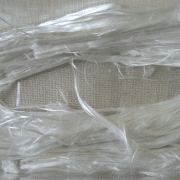
In this episode, John Maher and Paul Kelley discuss a Kentucky Supreme Court opinion involving take-home asbestos exposure and what it may mean for families affected by mesothelioma. Paul explains how asbestos dust can travel from workplaces into homes on clothing, why foreseeability matters in Kentucky claims, and how the ruling may help workers’ families seek accountability.
John Maher: Hi, I’m John Maher and I’m here today with Paul Kelley. Paul is a partner with the Kentucky Personal Injury Law Firm, Satterley & Kelley, which has over 45 years of collective experience in litigating mesothelioma and asbestos claims. Today we’re talking about take home asbestos and a Kentucky Supreme Court opinion. Welcome, Paul.
Paul Kelley: Hey, John, how you doing today?
John: I’m doing well, thanks. How are you?
Paul: I’m doing great, thank you.
Background on the Kentucky Take-Home Asbestos Case
John: Paul, give us some background about this particular case. And then for people who have not read the opinion, what did the Supreme Court in Kentucky actually decide here?
Paul: So Vickie Williams came to us in 2016, 10 years ago. Lovely lady. She was only 54 years old at the time that she was diagnosed with mesothelioma. She had a beautiful family, her husband, Paul, and her kids. And she worked for many years as a nurse or nurse’s assistant at a hospital in Lexington, Kentucky. And quite frankly, it was very surprising that she was diagnosed with mesothelioma, a disease that is very uniquely associated with asbestos exposure.
And when we met with Vickie and talked to her and interviewed her and her family, we determined that the most likely source of her exposure to asbestos was through her adopted father who worked at a company in Lexington called Square D. And her background is very interesting. She was ultimately adopted by this family and she moved into the family home when she was six years old and lived there until she went to college and ultimately left and started her own life.
Her father worked in management, actually. During her time in the home, he worked in management at Square D. Square D was, or still is, a company that manufactures a lot of electrical equipment. It manufactures circuit breakers and things that go into electrical boxes at your homes, large manufacturing plants and things of that nature. And back in the 50s, 60s, 70s, when Vickie was living in the family home — she moved in with her adoptive parents in the mid 1960s — SquareD manufactured a lot of those products using something called phenolic molding compounds, and it had a whole molding operation there.
And these molding compounds usually came in either bags or 55 [gallon] drums. They poured the compounds into giant hoppers. The hoppers used heat and pressure to form plastic parts. And this was a daily operation that occurred for many years at the Square D facility. Her adopted father, he was an engineer, and he was heavily responsible for overseeing some of this process.
Exposure to Asbestos at Square D
And so, he’d spend some time in an office, but he spend the bulk of his time out on the floor in the plant, and a frequent amount of time he spent in the molding room. And unfortunately, even though he wore a shirt and tie to work every day, he was exposed to asbestos. He got on his clothing and he drove home in his car and got home to his family. And unfortunately, Vickie and other people in her family were exposed to asbestos. And then fast forward to 2016, she was diagnosed with mesothelioma.
So we filed a lawsuit against Square D as well as against the companies who supplied the asbestos containing molding compounds to that facility. And that lawsuit was filed right around the time of 2016. And quite frankly, it has been the longest ongoing case that I have ever had in my 25 years of practicing law.
I won’t bore everybody with all of the details, but the case has gone on appeal twice. One of those appeals is very relevant to what we’re talking about today. Ultimately, companies like Square D and Union Carbide that was the most prevalent phenolic molding supplier to this facility, they argued that they did not owe a duty to Vickie. She did not work there. She was not directly exposed to their product on a occupational basis. And they said, we don’t owe a duty to family members or other people that could come into contact with the contaminated clothing of people who did work in the facility.
And one judge, a trial judge in our case, agreed with us and said there was a duty owed to Vickie and people like Vickie. And that judge ultimately did not win his election for the upcoming term and the issue was revisited by his replacement judge, or the judge who took over the case after him, and she rendered a different opinion and she believed that they did not owe a duty. And her position was, or her ruling was, that there was no duty owed because the injury was not foreseeable, that Vickie was not a foreseeable victim of exposure to asbestos from either the employer, Square D, or from the manufacturers like Union Carbide.
And that resulted in the case going on appeal and it went to the Kentucky Court of Appeals and we won at the Court of Appeals level. The Kentucky Court of Appeals, three years ago, held that there was a duty of these companies to Vickie and to people similarly situated. And under Kentucky law, the court of appeals is not the last decider of issues. The Kentucky Supreme Court can decide whether it wants to hear a case. And in this instance, the Kentucky Supreme Court took this case and decided that it wanted to be the final determination as to whether there’s a duty owed to people like Vickie in similar circumstances.
And so that’s what the case was all about. We went to Lexington in December and seven justices heard argument and asked questions. And in March, they rendered their decision. And it’s not a terribly complicated decision, but it certainly has wide sweeping implications for people like Vickie because this is a common occurrence.
What The Decision Means
I’ve been doing this for a long time, John, and I’ve probably represented 15, 20, maybe even 25 people like Vickie who were not exposed occupationally, but they were exposed to asbestos brought home by a family member who did work in such a setting.
The Supreme Court decided that in this case, Union Carbide and Square D owed Vickie a duty because she was a foreseeable victim of their conduct. And what was their conduct? Union Carbide’s conduct was manufacturing a product, and manufacturers always have a duty to manufacture and sell a safe product. Square D had a duty just because everybody in Kentucky owes everybody a duty of ordinary care not to cause other people harm.
And the case was not based on premises liability. It was not based on anything other than the duty that I owe to you, that you owe to me, that I owe to my neighbor, you owe to your neighbor. But in this particular instance, Square D owed this duty because the court determined, based on the evidence in our case, a jury could determine, that Vickie’s injuries were reasonably foreseeable to both Union Carbide and Square D.
Now, that’s a very important holding and it’s probably more important what the court didn’t hold. What the court didn’t hold is that there’s never a duty, and that’s what these parties wanted the court to decide. That’s what they asked when they sought discretionary review. And throughout this case, they’ve argued, we should just make a policy decision that people like Vickie, injuries to people like Vickie, are never foreseeable and that there will never be a duty and therefore there’s not going to be this crazy scenario where a drinking buddy or someone that had contact with a worker’s contaminated clothing at a church or a store or some setting outside of the normal familial household relationship. And because of that threat, there shouldn’t be a duty to anybody.
And the Supreme Court made clear that it was not going to make such a policy decision that there would never ever be a duty under any circumstance because we’re not going to cut off duties to people whose injuries are foreseeable because there might be some random folks whose contact with asbestos would not necessarily be foreseeable because their relationship wasn’t close, it wasn’t a frequent exposure, it wasn’t routine.
And ultimately, this decision’s going to be made, for the most part, on a case by case basis, based on certainly the individual facts of that case, but the Supreme Court did give us substantial foundation and give trial courts and lower appellate courts a substantial foundation as to how to make the decision.
And perhaps we could talk about some of that later, but it all comes down to, for this defendant, for this plaintiff, for this person like Vickie, was the injury foreseeable? Was it foreseeable that someone could be exposed to either this manufacturer’s product or this employer’s products that this employer directed, required, to be used? Is it foreseeable? And it doesn’t have to necessarily be actually foreseeable. They didn’t have to perceive Vickie Williams. They didn’t necessarily even have to foresee all the particular facts of the case. But generally speaking, could it be foreseeable?
Could a jury determine that these parties knew or should have known that what they were doing would expose someone like Vickie to asbestos and ultimately cause her disease. And the court said that if the evidence is sufficient for a jury to draw that conclusion, then there’s a duty, and the case will proceed, or should proceed, to trial for the jury to ultimately make those decisions.
Why the Kentucky Supreme Court Decision Matters for Families
John: So why does this decision matter, not just to this one family, to Vickie and to her family, but to other Kentucky families who may have been exposed to asbestos in the home, specifically from a family member bringing home asbestos from their workplace?
Paul: Well, there’s been a lot of question under Kentucky law as to whether this duty exists at all. Until the Supreme Court took this case and rendered this decision a little more than a month ago, we routinely, for other people that we’ve represented similar to Vickie, had to fight all these issues as to whether there’s a duty that exists at all, whether under any circumstances, it doesn’t matter how knowledgeable a particular defendant was, doesn’t matter how the plaintiff was exposed or there just wasn’t a duty.
And my law firm has had more experience on this issue than any law firm in the state of Kentucky. We’ve argued this 15, 20, 30 times in Kentucky courts. And while we had largely been successful until this particular case, it was always a little nerve wracking. What’s going to happen the next case? What’s going to happen when it goes on appeal?
And what this does is this now establishes that A, there is a duty. And whether there’s a duty in a particular instance is still going to rely a little bit on the individual facts of that case. But from our standpoint, the evidence that we used in the Vickie Williams case — and when we take on a case, we always kind of assume worst case scenarios, that we need to put in all of the evidence at the summary judgment stage, the stage where the judge gets to decide things — that we put in everything that we can so that the record is crystal clear as to how our client was exposed, what was generally available in the medical and scientific literature during the relevant timeframe, what information, direct information was available or known by a particular defendant. And when you put it all together, it should become very clear that there was a duty owed by a defendant to someone like Vickie who was exposed in the home.
And what this opinion does is really lay a lot of groundwork and give a lot of guidance to the lower courts that more often than not, far more often than not, the evidence will support a duty owed. And because we’re seeing this so much, because we’ve seen so many people who either their father or their mother worked in a setting where they were exposed to asbestos and brought it home, or a spouse worked in a setting and brought it home to their husband or wife, because we see that so often it makes crystal clear that there’s a duty that these people have a right to bring their case, a right to recover.
And while trial courts still have some discretion, certainly based on the evidence that we choose, that we have control over, to put in front of them, for the most part, I think if anyone reads this opinion and compares it to evidence that I assure you we will always put in, in these cases, it should mean that people like Vickie can always have a chance to recover for the catastrophic repercussions of being diagnosed and developing mesothelioma.
It’s a huge win for Kentucky workers and their families. A right wasn’t taken away. That’s really what it comes down to is we feel that this right has always been out there. That Kentucky has always required and held companies actors accountable for their conduct and these defendants wanted to essentially be immunized regardless of what any facts were. And the Kentucky Supreme Court said, you’re not going to get immunity. You can and will be held accountable, but it’s certainly up to plaintiff’s counsel, people like me, to make sure that the right evidence is presented to the judge and jury in order for that accountability to ultimately be had.
How Asbestos Travels Home on Work Clothes
John: So in this case, we’re talking about what we call “take-home asbestos”, coming home on a worker’s clothes. Are we talking about things like a spouse washing their spouse’s dusty clothes, maybe a child hugging their parents after work before they have a chance to change out of their work clothes, or just the dust getting into the home and just being mixed around in the home and living around that dust constantly. Are those the types of things that we’re talking about?
Paul: So the insidious nature of asbestos is what has made it one of the most catastrophic occupational and paraoccupational substances in the history of our country. Asbestos can get on the clothing of workers and it starts when they get in their cars and dust falls off their clothes and gets into their cars. And then evidence from this case, when Vickie was a child and her dad came home from work, she would give him a big hug, and he had dust on [his] clothes and she’s breathing it in. Lots of times he didn’t take his work clothing off right when he came home and it got into the furniture and the carpet and the floor, and it’s there. Once asbestos is introduced into a setting like that, then it’s going to be there for a long time. And there’s no domestic vacuum cleaner or cleaning equipment that can really remove asbestos dust from a setting like that.
And it’s coming in each and every day for many years. And so when people are being exposed, they might not fully appreciate the level of exposure they’re receiving because sometimes that dust does not…it’s not a big poof, a big cloud of dust. Sometimes it was more profound than other times, but it’s a subtle amount that’s being introduced into the living space, into vehicles on a daily basis.
And so many things can cause the exposure. It could be the direct exposure when you hug your father. It could be washing the clothing. I’ve had so many stories over the years. Vickie did this when she was a teenager. She helped wash the family clothes, shaking dust out. The equipment back in those days, washing equipment was not as good as it is today, certainly. And I’ve heard so many stories over the years from wives and children who said, “I shook out the clothing before we put it in the washing machine to get some of the dust off.”
It’s dust that got into the carpet and you and I are of a certain vintage that we remember shag carpeting and things like that…very popular in the 70s or 80s, real thick fiber carpet. And asbestos gets into that, it gets buried in it. There’s concepts of “reentrainment”, which just simply means that the dust can be stirred up from people walking through, ironically, using a vacuum cleaner to try to clean up just other things that are in the carpet, and things like that causes a reentrainment of the asbestos fibers in the home.
And so it’s not just this isolated exposure where you shook out your dad or your husband’s clothing or an isolated exposure where you hug dad twice a week or three times a month, it’s there. And once it’s there, it’s going to be there for a very long time and the exposure can be daily.
And can the level of exposure be the same as what her father was getting to this factory when he worked there or the people that were doing the actual work? No, it’s not going to be to that level, but all of the medical and scientific information, not today, but what existed back in the 60s and certainly the 70s indicated that this risk was there and substantial and that people weren’t getting these massive occupational exposures. They were getting household exposures, take home exposures, things that were brought home and they were still developing mesothelioma and there was no other explanation why.
And that’s why this has become such a pervasive problem because even though asbestos has been out of most products for almost 50 years now, 40 years for sure, a lot of these people like Vickie were exposed when they were children. So in their 40s and 50s, they developed cancer and it’s unexplainable until you get somebody that has a lot of experience with this and you understand at that point, this is how someone’s exposed to asbestos who had a history of a career, other jobs, where there would be no known exposure.
And so yeah, it was a big problem during a period of time that was substantial, 30, 40 years, kids and spouses could have been exposed to asbestos just living in their home.
Employer Responsibility for Workplace Hazards That Come Home
John: So what does this case and this opinion say about the responsibility that a company has when a workplace danger doesn’t stay at the workplace, but comes home?
Paul: Well, what the Supreme Court said here is that you can’t just abdicate all responsibility. You can’t stick your head in the sand and have no responsibility, particularly when there was information that would have followed and recommendations were implemented, these exposures would have never happened.
It could have been, for somebody like our client’s father who wasn’t using these products, he wasn’t directly involved. There’s a concept called isolation, so he shouldn’t have even been allowed to ever even be exposed. Now, for people who had to do the hands-on work, there are industrial hygiene controls that have been known for a hundred years. One of the big ones is wearing special clothing, not just wearing your t-shirt and jeans, having that clothing stay at work, not taking it home, having separate places, locker rooms or changing facilities for people to be able to change out of work clothes into their street clothes, companies offering laundry, not offering, requiring laundry services for contaminated clothing.
Certainly when OSHA came into effect in the 1970s, it required people who were exposed to asbestos for that clothing to be washed by third party vendors. And then there were all these requirements for how that was going to be handled because it was very well known that if you send that kind of stuff to an outside vendor for them to wash the asbestos contaminated clothing, those people needed to be protected.
And what does it say for today? I hope that people or the companies aren’t really using asbestos anymore, although it’s still legal in some instances in Kentucky, but from our standpoint, there are so many things out there that can certainly cause people harm. Asbestos is one that we have unique experience with. And again, I mean, it was just a 50-year catastrophe in this country, that it was used all the time in so many products, in so many settings.
But today, an opinion or this court opinion makes it clear that whatever it is that companies are using in their facility that can cause harm, that could potentially go home to a employee’s family, you have to follow the law. You have to follow your obligation, your duty, the duty that we all owe to each other to make sure that we don’t cause anyone harm. And in today’s day and age, in the world of information, there are very little excuses, very little rationale or logic to not hold an employer accountable if it allows a carcinogen or something harmful to go home with an employee and expose their families and cause harm.
So from certainly our standpoint, we know, unfortunately, because of the long latency period associated with asbestos, we know that there’s going to be many more children and spouses of exposed workers that are going to call us and we’ll ultimately conclude that their exposure came as a result, and we can hold those companies accountable. For things that are happening today, it sends another clear message to Kentucky employers, to manufacturers of products who sell to Kentucky employers, let’s do things a safe way. Let’s make sure that we’re following the regulations. Let’s make sure that we’re protecting employees. Let’s make sure that we’re giving warnings, that we’re not just saying this is a hazardous product or it could cause harm, that we’re telling people what the real repercussions could be about the health risks associated with these products, let people make their own decisions.
I don’t know necessarily what anybody would have done had they known that asbestos could be carried home to their families, but I believe that most people would either choose to not work in such a setting or they would figure out the best way to prevent their own exposure and their family’s exposure.
And that’s ultimately the goal. And I think the Kentucky Supreme Court ultimately made a landmark policy decision in this case, that if you know or should know that your conduct could cause harm to somebody, you are not going to avoid responsibility by claiming that this is just too remote for us to figure out. Or just as a matter of public policy, our responsibility ends at the door and that there’s no responsibility beyond that. And the Kentucky Supreme Court rejected that argument, and I think this decision has made Kentucky workers and their families safer.
John: All right, well, that’s really great information, Paul. Thanks again for speaking with me today.
Paul: Thank you, John.
John: And for more information about mesothelioma and asbestos exposure, you can visit the law firm of Satterley & Kelley at satterleylaw.com or call 855-385-9532.