
Who’s Liable for Property Damage Caused by Derailments?

Train Derailment in Glendale, KY Brings Up Questions of Property Damage Liability

On Thursday, March 16, 2023, at approximately 2:30 pm, a train derailed in downtown Glendale, Kentucky. There was a semi on the tracks at the Gideon Church Road crossing, and in its attempt to stop to avoid the semi, the train derailed. Luckily, no one was seriously injured, and the train wasn’t carrying any chemicals that pose a threat to the public.

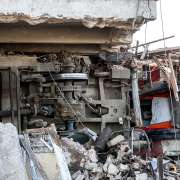
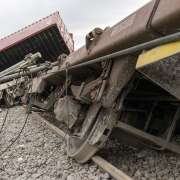
However, there was property damage. The 21 cars that derailed were carrying expensive vehicles that were all totaled and turned into scrap metal as a result of the accident. The derailed cars also hit a vehicle and a store. Additionally, the derailment blocked foot traffic, compromising local businesses, and local officials advised people to avoid the area for a few days, hurting local businesses even more.

This was the second derailment at this crossing in less than a year, and the news brings up interesting issues about train company liability for property damage and other types of losses.

Liability for Derailments

According to Daniel Bancroft of Willis North America as quoted by the Insurance Information Institute, the train operator is usually liable for derailments. They are liable for the damaged freight, and they are also liable for any property damage that occurs as a result of the derailment.

In this instance, the derailed train hit an occupied vehicle as well as an antique store.  Based on Bancroft’s explanation, the owner of the vehicle and the store may attempt to hold the operator responsible for the cost of their damages. However, liability isn’t always that straightforward as multiple parties are often involved.

Additional Liable Parties

Rail transport involves a lot of different companies. This can make it very confusing to assess liability, but if you’ve suffered damages due to a derailment, the number of companies involved can also increase the potential of making a successful claim.

Generally, the railroad operator owns the engine and the tracks, and the company that owns the engine usually owns the transport cars. However, in some cases, engines pull cars owned by other operators, and in other cases, the cars are even owned by the shippers. The freight inside the cars is owned by the shippers — except in cases where ownership passes to the recipient before arrival.

On top of that, you also need to consider which entity controls the crossing. It may be the railroad company, but it’s often a public entity such as a city, county, or state. This can become relevant if unsafe crossing conditions contributed to the derailment.

In other words, depending on the situation, the company that owns the tracks, the engine, the cars, or the freight may bear liability when their property causes damage to another party. If an unsafe crossing caused the derailment, then the crossing owner may be liable.

Railroad Liability Coverage

If you bring a lawsuit for damages against a railroad company, they’ll usually rely on their liability insurance to cover the claim. While they aren’t necessarily required to have this type of coverage, most companies do, and it tends to cover the following:

  • Bodily injury and property damage
  • Cargo coverage
  • Coverage for cars hauled but not owned by the operator (aka foreign rolling stock coverage)
  • Evacuation expense coverage for cleaning up hazardous materials or pollutants
  • Employee liability coverage, which is similar to workers’ compensation specifically for the railroad industry.

What if you suffered damages that are not on this list? That doesn’t mean the railroad company or another party isn’t liable for your injuries. It simply means that if held liable, the railroad company may not be able to use its insurance policy to cover the losses.

Negligence and Legal Violations

When you suffer damages, you usually need to establish negligence if you want to bring a legal claim against another party.

Because this issue is multi-layered and legally complex, you should work with a law firm that has experience with railroad derailments and liability issues. Also, as the laws vary from state to state, you need to consult with an attorney who is well versed on the legal issues in your state.

Schedule a Free Consultation Today

At Satterley & Kelley, PLLC, we are personal injury lawyers based in Kentucky, and we are committed to helping our clients get the justice they deserve. We focus on railroad, asbestos, and truck-accident liability, and we are committed to getting our clients the best results possible, regardless of the size or influence of the corporations we go up against.

Have you suffered property or other financial damages as the result of a rail derailment or any other type of railroad issue? Then, contact us today. We’ll start with a free consultation, and if we can meet your needs, we’ll move forward together. Let us help you get the justice you deserve.
What to Do If You’re Injured While Working for a Railroad Company

If you’re injured while working for a railroad company, you need to follow a slightly different procedure than most people who are injured on the job. Unlike most employees, you won’t make a claim under your state’s worker’s compensation program. Instead, you will need to make a claim based on the rules of the Federal Employer’s Liability Act (FELA).

FELA claims are a bit more detailed and confusing than standard worker’s comp claims, and unfortunately, you have to prove that the railroad was negligent and/or not in compliance with safety regulations. However, under FELA, you have the right to bring a lawsuit against your employees — a right not afforded to people making worker’s compensation claims.

To help you out, here’s what you need to do if you get injured on the job and you’re employed by a railroad company.

What to Do After the Injury

Immediately after you sustain the injury, do the following:

Fill Out a Personal Injury Report

Fill out a personal injury report. Every railroad has a unique form that you should use. Ideally, you should fill out this form as soon as possible after your injury. This ensures that the details are fresh in your head, and it reduces the company’s ability to dispute your side of the story. Unless you get rushed to the hospital in an ambulance, you should fill out this form on site right after your injury.

Seek Medical Attention

Always seek medical attention. Even if you feel like your injuries aren’t that severe, you should get them looked at. Often, the rush of adrenaline that comes in a tense situation can prevent you from feeling or noticing certain injuries. Just because you’re not bleeding does not mean that you’re not injured. In particular, you should make sure that you get examined if you have fallen or hit your head.

Consult With Your Own Doctor

You may be required to see the company doctor, but even so, you should consult with your primary care doctor or another third party. This helps to ensure that you don’t get any bias in your diagnosis or treatment. Also, ask to keep your own copy of any notes or records generated during your appointment.

Make Notes About Unsafe Conditions

To make a successful FELA claim, you will need to prove that the company was negligent or didn’t follow the rules. After your injury, make notes and take photos of the incident. If you’re not able to do this, request another employee or your union rep to help you. In particular, note the equipment you were using, and be very detailed about anything that may have exacerbated the dangers such as poor lighting, inadequate training, lack of maintenance, vegetation by the tracks, unsafe management practices, or other issues.

Keep All of Your Records

Your medical records will be critical for substantiating your claim, while your financial records will help to determine the amount of your claim. Make sure to save absolutely everything. Even if an expense seems small (such as paying a babysitter to watch your kids or filling up your car with gas so that you can drive to the doctor), make sure to keep the receipts.

Damages You Can Recover With a FELA Claim

A FELA claim allows you to recover compensation for missed wages and medical appointments, but it can also allow you to claim compensation for pain and suffering, disfigurement, and loss of limbs. If you die, your family can make a claim for economic losses.

In contrast, if you were only able to make a worker’s compensation claim, you would only be able to recover lost wages and medical expenses. You wouldn’t be able to get anything for pain and suffering.

What Not to Do After a Railroad Employee Injury

To protect yourself, there are a few things that you should avoid doing after a work-place injury at a railroad company. Keep these tips in mind:

1.   Don’t assume that your injury isn’t covered.

FELA covers you for on-the-job injuries, but it may also cover you if you’re doing something related to the job. For instance, if you slip and fall in the company parking lot after clocking out but before reaching your vehicle, you may be covered. Railroad employees have even successfully brought forward claims when they were injured at a hotel while having to stay overnight between shifts away from home.

2.   Do not admit that your actions caused or contributed to the injury.

Under FELA, the railroad company can avoid paying  damages if you caused or contributed to your injury. Even if you think that you may have contributed, don’t make a statement. Talk with an attorney first to make sure that you understand your rights.

3.   Don’t give recorded statements or interviews.

Also, don’t let anyone record you without having an attorney present. Recordings can be twisted and taken out of context.

4.   Don’t accept a settlement without consulting with an attorney.

If the railroad company offers you a settlement, don’t say yes until you consult with a specialist. Generally, companies only offer settlements when they know that they will  likely  have to pay more if the issue goes through the legal process. Even if the offer sounds fair (or even generous), check with someone first. Also, do not sign a release of any kind without consulting with a lawyer.  The release may be overbroad and cover future injuries, which have nothing to do with your current claim. Waiving your right to pursue claims for more serious injuries could have catastrophic consequences.

5.   Don’t claim false injuries.

Don’t ever falsely claim that you suffered an injury. This is illegal, and you are very likely to get caught. The railroad companies may hire someone to perform private surveillance on you when you’re not at work. If you’re doing actions that you claim not to be able to do, you risk getting caught.

6.   Don’t assume that the railroad lawyers work for your best interest.

Remember that the lawyers employed by the railroad companies are always going to prioritize the needs of their client, and of course, that’s the company, not you. To protect your interests, you should obtain your own legal counsel.

7.   Don’t wait to make a claim.

There is a three year statute of limitations for FELA claims. That means that you only have three years from the date of the injury to pursue compensation for your injuries. However, you shouldn’t wait this long. The sooner you take action, the easier it will be to make a claim.

Get Help From a FELA Attorney

An attorney experienced with FELA can help you ensure that you get the full protection offered to you under the Federal Employer’s Liability Act. They can help you through the legal process and ensure that you file all of the right forms. When looking for an attorney, don’t just choose a personal injury attorney or a worker’s comp attorney. Instead, make sure that they have dedicated experience with FELA claims.

At Satterley & Kelley, PLLC we have dedicated experience helping clients who have been injured while working for the railroad companies, and we would love to help you. To learn more, contact us today.

The Toxic Train Wreck in East Palestine, OH

Several months have passed since the tragic derailing of a freight train in East Palestine, OH. But even months later, the citizens of this town are suffering the health effects of toxic chemicals that were spilled during the wreck.

When the freight train crashed on February 3, 2023, the chemicals that it carried contaminated the water, soil, and air in the area. Right now, experts still don’t know how long the area will remain a health hazard for local residents.

The world has heard all about the sad aftermath of the East Palestine train wreck, but do you know what actually happened? Here’s an overview.

What Happened With the East Palestine Train Wreck?

Early on February 3, 2023, a Norfolk Southern freight car was traveling with a massive load of plastic pellets when an axel began to overheat. This caused the rail car to overheat to the extent that the temperature started to melt the plastic pellets.

Two defective detectors failed to notice that the area was hot enough to melt plastic. The bearing temperature gradually grew, and by the time the train went through a third detector, the temperature had grown high enough to trigger an alarm. It was 253 degrees above the target range.

The engineer immediately reacted to the alarm by hitting the brakes harder – he had already been braking because of another train ahead. But at that point, it was already too late. The wheels and bearing had deteriorated from the heat, and when the wheel bearing failed, its car — Car 23 — derailed.

In all, 38 freight cars went off the tracks in East Palestine. Eleven of those cars were tank cars that carried toxic, flammable chemicals that damaged the cars around them and spread fire everywhere.

Another five freight cars carried over 115,000 gallons of vinyl chloride, which is highly carcinogenic and extremely flammable. Local authorities were worried because some of the freight cars were still getting hotter, and an explosion of vinyl chloride would be devastating. To minimize the risk, workers dug ditches to pour the vinyl chloride into. They planned to burn the vinyl chloride after the rest of the train wreck was cleaned up.

Except the chemical wasn’t destroyed. In fact, by the time officials were ready to deal with it, most of it had already seeped into the environment, including the air, the soil, and the water. The rest would soon break down into metabolites, which also pose dangers to the public.

How Did the Train Wreck Affect East Palestine?

Not long after the wreck occurred, residents of East Palestine started complaining of health problems. Their health issues were nonspecific, including throat pain, dizziness, nosebleeds, nausea, vomiting, and headaches. Some East Palestine residents get so sick that they go to the emergency room.

Local residents weren’t the only ones affected by the wreck. Nearby bodies of water took on the toxic chemicals, and they became toxic. To date, estimates say that at least 40,000 aquatic animals (including fish) died from the chemical spill.

Was the East Palestine Train Wreck Preventable?

According to Jennifer Homendy, chair of the National Transportation Safety Board, the derailment might not have happened if one of the earlier two detectors had gone off in time. That would have given the engineer time to stop the train and figure out the overheating. Stopping sooner would have helped to keep the bearing intact that caused the derailment.

What Happened After the East Palestine Train Wreck?

After the East Palestine train wreck, the Environmental Protection Agency (EPA) ordered Norfolk Southern to clean up the entirety of the wreck, including the water, soil, and debris.

The residents of the nearby area were evacuated immediately, and they were reimbursed for the expense of finding a place to stay. The Norfolk Southern Assistance Center became a hub of resources for people evacuating.

There was also a health assessment clinic designated to help the residents of East Palestine who experienced health problems after the wreck. However, the state has not yet released details about the health effects of the chemicals that were released. To date, the railroad has not compensated many victims for their medical care or injuries.

In addition to dealing with personal injury claims, Norfolk Southern could also face fees of $70,000 each day if it doesn’t comply with delivering a detailed plan about the clean-up process. It must also reimburse the EPA for the cost of cleaning residents’ homes, public places, and businesses. Finally, it  has to attend public meetings to discuss its progress on the cleanup.

As of July 2023, five months after the wreck, over 1 million gallons of contaminated water has been removed from the waterways near the site. The state’s governor is also in the process of removing the railroad tracks to remove the soil underneath the tracks, which is also contaminated.

Get a Legal Expert on Your Side

The East Palestine train wreck emphasizes how a business’s negligence can change your life forever. If you have been harmed by a railroad accident or due to chemicals spilled in a railroad derailment, you should seek help. Even if you’re not sure that the train caused your illnesses, you may still want to consult with a personal injury attorney.

At Satterley & Kelley, PLLC, we focus on helping our clients obtain compensation after railroad injuries, commercial truck accidents, and due to asbestos exposure. Want to know if we can help you or your family? Then, contact us for a free consultation today. Let’s have a conversation about your options.

Common Causes of Motorcycle Accidents

Motorcycles require a lot of you to operate safely. From training, alertness and preparation, it’s important to be ready. But it’s not always in your hands. That’s why it’s crucial to know who dropped the ball when it comes to your accident.

Over 6,300 motorcyclists died in crashes in 2023, according to the most recent information from the National Highway and Traffic Safety Association. Those accidents can happen for many reasons. But when you’re in an accident due to someone else’s negligence, they could be on the hook to contribute to your recovery.

3 Most Common Motorcycle Accident Injuries

If you’re a motorcyclist, be aware of the risks. These are three of the most common injuries motorcyclists sustain in an accident:

  • Head injuries – Even if you’re wearing a helmet, a crash can cause severe head injuries such as a concussion, traumatic injury to the brain, and cuts and bruises. Kentucky only requires those under 21 to wear a helmet while on a motorcycle, but you should consider wearing one regardless of your age to prevent a potentially fatal head injury.
  • Road rash – During a collision, motorcyclists may either fall off their bike or slide across the ground with their bike. Both situations can cause scrapes and bruises to your body as well as significant muscle or nerve damage.
  • Broken bones – If you’re thrown off your bike during a crash, you may land on a hard road and break a bone. Broken legs are the most common for motorcycle crashes.

Busy roads and distracted drivers can cause some of the worst collisions. 

Understand the Risks

No matter how experienced you are on your motorcycle, a single accident can change your life forever. Since motorcyclists are less visible on the road, drivers of a car or truck might not see you until it’s too late. It’s important that motorcyclists take precautions to prevent an accident caused by a negligent driver.

Understanding the risks involved in riding a motorcycle can also help you stay prepared before hitting the road.

Protection From Others

Distractions, high speeds and reckless maneuvers from other drivers can all put you in danger. It’s important to hold others responsible when it causes a potentially deadly accident. But even without an impact, there are many more ways someone else could be at-fault for your accident.

Troubles Beyond Traffic

Motorcycles are finely tuned machines, and shortcomings in production, design or maintenance could put you at risk without you knowing. The same goes for protective gear. A helmet that is properly licensed is crucial for staying safe. Helmets are 67% percent effective in protecting riders from brain injuries, and 37% effective in warding off death, but manufacturing errors can present serious trouble for your brain and spinal cord when support doesn’t come through.

Even with everything working as it should, a rider and their bike can only operate as well as the roads they travel on. If roads are severely damaged, signs are missing or the design isn’t up to code, then it could be the municipality that’s responsible for your damages. Even something as seemingly minor as a shoulder that is too narrow can lead to dangerous situations.

After a Motorcycle Accident Injury

Getting help after an accident can depend on showing these acts of negligence. It’s not an easy task, and many riders require assistance. Make sure you get the recovery you deserve after a serious motorcycle accident by relying on the attorneys at Satterley & Kelley PLLC. Our team is ready to dig into your case to help find any negligence that led to your injuries, so contact us today.