
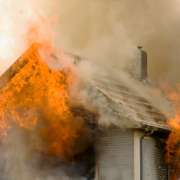
Kentucky Residents More Likely to Die in Fires Than US Average

Thousands of Americans will be injured and die in fires this year. Kentucky residents’ chances of dying in a fire are far higher than the national average, though their risk of being injured in one is less than what’s expected nationwide. Injuries and deaths caused by fires started or worsened by negligence or defective products could be the subject of a wrongful death or personal injury lawsuit.

Lawsuits involving fires can be complex because it may be difficult to determine what caused a fire and who is responsible. But don’t let that stop you from talking to a Satterely & Kelley, PLLC attorney if you believe your injury or a loved one’s death was caused by fire caused by negligence. We can be reached at 855-385-9532.

Fires Regularly Cause Injuries and Deaths Across the US and in Kentucky

Home fires in the US from the start of the year through mid-July caused 1,180 fatalities, reports the US Fire Administration (USFA). During the same time frame, 43 firefighters lost their lives in the line of duty. In 2025 up through mid-July, the USFA reports 32 Kentucky residents were killed in home fires, and two firefighters died on duty.

The USFA states that for 2023, on average, for every thousand fires in Kentucky, there were an average of 3.4 deaths and 4.7 injuries. The national average for every thousand fires is 2.1 deaths and 6.4 injuries. While those in the state are injured less often in fires, they’re about 50% more likely to die in one compared to national averages.

Nationwide, from 2014 to 2023, the number of fires dropped 6% and related injuries decreased by 8%, while the number of deaths caused by fires increased by 5%. For this time frame, there were fewer fires in the US, but more fatalities caused by them.

Where are the Nation’s Fire-Related Death Rates Highest?

From 2015 to 2019, fire-related death rates varied considerably by state. The safest state was 4.7 per million population, and the worst was 23.7. The national average was ten. Nine of the ten states with the highest overall death rates were in the South.

Higher fire death rates are found in states where more people:

  • Have incomes below the poverty line
  • Live where at least 20% of the population lives below the poverty line
  • Are disabled
  • Smoke tobacco
  • Are Native American, Alaskan Native, or Black
  • Live in rural areas

None of the above causes fires or fire deaths, but there’s a correlation between these factors and fire-related deaths.

Older, Black Americans Face a Higher Risk of Dying in a Fire Compared to Whites

When the USFA considered the age and color of those suffering fire-related deaths, they found that Black and White Americans had similar rates (though it was higher for Black Americans) up to age 55, but that difference widened greatly when people were older.

The following are age groups, and the fire-related death rates per million residents:

  • 55 to 64: White 16, Black 25
  • 65 to 74: White 21, Black 36
  • 75 to 84: White 28, Black 55
  • 85+: White 34, Black 88

Poor Americans generally have older possessions, often find it more difficult to pay for repairs or routine maintenance, may work multiple jobs, and are likely to have more stress in their lives. They may also have less energy and money to spend on safety. The poverty rate of American Blacks is more than twice that of White Americans, according to KFF.

In a study published in 2016 of 1988 to 1992 fire death rates in counties with at least 250,000 residents, researchers found that areas with a high proportion of Black Americans and low median incomes tend to have exceptionally high fire death rates.

What are the Most Common Causes of Residential Fires?

The USFA states the top causes of 2023 residential fires are the following:

  • Cooking – 167,800
  • Unintentional, careless acts – 31,500
  • Heating system malfunctions – 27,900
  • Electrical system malfunctions – 23,700

Any of these causes, depending on the facts, could be the basis of a personal injury or wrongful death lawsuit. Negligence is, generally, not using reasonable care in a given situation, and as a result, someone is injured or killed.

An insurance claim or lawsuit for compensation could be based on the following:

  • Unsafe cooking practices, especially if natural gas is used
  • Careless acts, which are almost by definition, negligent
  • Heating or electrical systems that are negligently installed, maintained, or repaired, or that contain defective parts

A fire’s cause can only be determined through an investigation. If you believe your injury or a family member’s death was caused by a fire due to someone’s negligence, it’s critical you contact us as quickly as possible so a thorough investigation can be done before evidence supporting your claim is lost.

Lawyers Experienced in Kentucky Injury Law

Satterley & Kelley PLLC attorneys take on insurance companies and win when accidents injure innocent people. We have recovered millions of dollars for victims and their families in personal injury and wrongful death settlements and verdicts.

Call us at 855-385-9532, locally 502-589-5600, or contact us online to arrange a free initial consultation with a Satterley & Kelley PLLC lawyer.


For Many Young Drivers, Driving is a Great Time for Screen Time

Technology evolves, and modern technology is creating more driver distractions every day. A recent survey found teen drivers knew distracted driving is dangerous, but spend about 20% of their time behind the wheel on their smartphones anyway.

Distracted drivers are a common cause of vehicle accidents. If you or a family member is severely injured or killed by a distracted driver, you may be entitled to compensation. To learn more about your legal rights and how Satterley & Kelley, PLLC can help, call our Louisville office at 855-385-9532.

Is Using a Phone While Driving Illegal in Kentucky?

State law prohibits texting for drivers of all ages while the vehicle is in motion. For those 18 and older, the use of global positioning devices and reading, selecting, or entering a number or name to make a call is permitted.

For drivers under 18, using personal communication devices while the vehicle is in motion is illegal. Using a global positioning system is allowed, but entering information into the device must be done when the vehicle is stopped.

Teen Drivers Use Smartphones to Entertain Themselves While Driving

Brigham and Women’s Hospital researchers had more than 1,100 US teen drivers complete a questionnaire about phone use while driving. They also interviewed 20 high school drivers in person. The survey results were recently published in the journal Traffic Injury Prevention.

Most respondents indicated they understood the dangers of distracted driving, but they also reported spending 21.1% of their car trips on their smartphones. On average, that means they’re interacting with their phones for one out of every five minutes driving. More than a quarter (26.5%) stated they focused on their phone for at least two seconds.

Why all this time on their phones? Respondents stated the following:

  • 65% of the time was spent on entertainment
  • 40% of the time was spent texting
  • 30% of the time was spent on navigation

The fact that drivers need to be entertained shouldn’t be surprising. How many of us listen to music, podcasts, or talk radio while we drive? Chevrolet introduced the first radio-equipped car more than a hundred years ago, according to Techhistorian.

Today’s technology adds video, so we can not only engage our ears, but also our eyes, when we drive. Phone calls, video calls, and texts also require mental and physical effort to engage with someone else.

Distracted Driving by the Numbers

The National Highway Traffic Safety Administration (NHTSA) states that the distance you travel for five seconds while driving at 55 mph is about the length of a football field.

There are many dangers you could encounter in that space, from vehicles cutting into your lane, someone suddenly stopping in front of you, or you might start drifting into another lane without realizing it. Being distracted and unaware of what’s going on while all this happens could easily cause an accident and severe or fatal injuries for yourself and others.

NHTSA also reports that about 324,819 people were involved in distracted-driving-related accidents in 2023, causing 3,275 deaths. That’s about 890 crashes daily related to distracted driving involving the equivalent of more than half of Louisville’s population.

What This Means for Your Insurance Claim or Lawsuit

Insurance policies cover potential liabilities, which are legally required payments because of an obligation. That obligation could be owing compensation to someone harmed by the insured’s negligence.

Negligence is the legal theory behind nearly all vehicle accident and personal injury claims. The plaintiff (the party filing the lawsuit) has the burden of proving the following:

  • Due to the relationship between the defendant (the party sued) and you (you’re using the same roadway near each other at the same time), they have a legal obligation or duty to do or not do something, given the situation
  • The defendant failed that obligation or breached that duty
  • That breach or failure is the factual and legal (or proximate) accident cause
  • The accident caused you harm
  • Under Kentucky law, the defendant must pay your damages (a measure of your injury in dollars)

Someone driving down a Kentucky road or highway has a legal obligation to do so reasonably safely. Using a smartphone while driving is not reasonable, given the distractions it causes and the increased risk of an accident, especially if the driver is an inexperienced teen who is a poor judge of risk.

If we can prove that the driver’s phone use and the resulting distractions led to the accident causing your injuries, you may have a strong case that an insurance company would be willing to settle for an acceptable amount.

Speak To a Satterley & Kelley, PLLC Vehicle Accident Injury Lawyer Today

If you’re the victim of an accident caused by a distracted driver, Satterley & Kelley PLLC attorneys can protect your interests and rights to compensation for your injuries and losses. Call us at 855-385-9532, locally 502-589-5600, or contact us online to arrange a free initial consultation with a Satterley & Kelley PLLC lawyer.

Killing People With Asbestos is Still a Profitable Business

Many companies have no problem poisoning people with asbestos fibers as long as there’s a profit to be made. Despite centuries’ worth of medical information showing asbestos can kill those exposed to it, there are businesses spreading lies about its hazards to boost their bottom lines.

Satterley & Kelley PLLC in Louisville has more than two decades of experience representing clients in Kentucky asbestos and mesothelioma cases. Due to our success, including millions of dollars in verdicts and settlements, we’re known as one of Kentucky’s leading law firms for those with mesothelioma and other asbestos-related illnesses. Call us today at 855-385-9532.

No Good Deed Goes Unpunished

Seventy-three nations have banned the use of asbestos. The US substantially limits its use, and failing a successful legal challenge, a ban should go into effect for all uses in five years. Many third-world countries have little or no asbestos regulation. The Australian Broadcasting Corporation (ABC) reports on efforts in Indonesia to require safety warnings on asbestos products sold in the country and retaliation by asbestos companies.

Last March, Indonesia’s Supreme Court ordered that a label warning buyers of the risks of asbestos exposure be put on products containing it. Health and workers’ rights groups brought the legal action. The country’s asbestos industry is now suing these groups in the Indonesian legal system for lost revenue caused by the decision.

This is seen as an effort by the asbestos industry to silence its Indonesian critics. Companies making money from asbestos include those from Kazakhstan, China, and Russia. The Fibre Cement Manufacturers’ Association (FICMA), based in India, claims that “white” asbestos, or chrysotile fibers, is a harmless chemical. They falsely state the fibers quickly break down in the body and don’t pose a threat.

FICMA demands damages that are the equivalent of $520,000 a month, plus a $463 daily penalty for any failure to pay.

FICMA is also suing three individuals from an Indonesian workers’ rights group, the Local Initiative for OSH (Occupational Safety and Health) Network (LION). It’s demanding that they:

  • Apologize on national television and in newspapers for discrediting chrysotile asbestos
  • Declare that it’s not hazardous

FICMA also wants the website of Indonesia’s Ban Asbestos Network (INABAN) to be cleared of any references to chrysotile.

Leo Yoga Pranata, LION Indonesia’s director of public policy, is one of the individual defendants. He says the legal action seeks a “fantastic, illogical amount of money” that could set a dangerous precedent to discourage warnings of asbestos’ dangers.

Asbestos Hazards, Including Those Posed by Chrysotile, are Widely Accepted

The World Health Organization (WHO) states that all asbestos, including chrysotile, causes cancers, including those of the lung, ovaries, and larynx. It can also cause mesothelioma, a fatal cancer of the linings of the lung, heart, abdominal organs, as well as the linings of the chest and abdominal cavities.

The WHO estimates that about 1,600 Indonesians and more than 200,000 people worldwide die from asbestos-related diseases. The organization estimates asbestos causes more than 70% of the world’s work-related cancer deaths.

The US National Cancer Institute states that when asbestos fibers are inhaled, they can be trapped in the lungs and remain there for the rest of the person’s life. These fibers cause scarring and inflammation. This impairs breathing and may lead to severe health conditions, including cancer.

Asbestos is classified as a cancer-causing substance by the following:

  • The US Department of Health and Human Services
  • The US Environmental Protection Agency
  • The International Agency for Research on Cancer

A 1999 article on chrysotile asbestos in the Industrial Health journal states the following:

“Clinical and epidemiologic studies have established incontrovertibly that chrysotile causes cancer of the lung, malignant mesothelioma of the pleura and peritoneum, cancer of the larynx and certain gastrointestinal cancers…Comparative analyses have established that chrysotile is 2 to 4 times less potent than crocidolite asbestos in its ability to cause malignant mesothelioma, but of equal potency of causation of lung cancer.”

The risk of developing these diseases increases with chrysotile exposure and over time.

Indonesians Pay the Price for Corporate Greed and Indifference to Their Safety

It’s estimated that up to 15% of Indonesian structures contain chrysotile asbestos. The Pacific country north of Australia is made up of more than 17,000 islands. It has a population of about 281 million people, about 50 million fewer residents than the US population.

While many developed nations restricted or banned asbestos’ use, international asbestos corporations worked to keep Asian nations importing and using the toxic fibers. Indonesia’s asbestos use has increased over the past 20 years, and the number of those dying as a result may not peak for many years.

Call Us Today for A Free Consultation

If you have an asbestos-related disease, you may be entitled to compensation. To discuss your situation and how Satterley & Kelley, PLLC can help, call us at 855-385-9532, locally 502-589-5600, or contact us online to arrange a free initial consultation.