
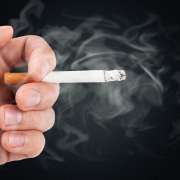
Cigarettes With Asbestos Filters: Two Terrible Things That Are Worse Together
Smoking cigarettes is bad enough for your health, and according to the CDC, you’re 15 to 30 times more likely to get lung cancer if you smoke.
Now imagine what smoking cigarettes containing asbestos would do to your body. This was a reality for smokers in the 1950s.
Kent cigarettes manufactured and sold cigarettes containing cancer-causing tobacco smoke and asbestos fibers from filters that were part of the cigarettes.
Worst of all, these cigarettes were marketed as a healthier alternative to traditional cigarettes. But studies show that smokers who were exposed to asbestos run a higher risk of developing lung cancer than those just exposed to one of those toxins.
Do Cigarettes Contain Asbestos?
No, modern cigarettes do not contain asbestos.
The last cigarettes known to have asbestos filters were manufactured from 1952 to at least the middle of 1956. Even after manufacturing stopped, those cigarettes continued to be sold until the inventory was depleted.
While today’s cigarettes don’t contain asbestos fibers, they still contain toxins that increase your chances of getting cancer, heart disease, diabetes, and other potentially fatal illnesses.
What Types of Cigarettes Contain Asbestos?
Kent cigarettes manufactured in the 1950s contained asbestos filters, and they were marketed as a “safer” alternative to traditional cigarettes.
In 1952, the P. Lorillard Tobacco Company sponsored “scientific” demonstrations on television to show the effectiveness and implied health benefits of Kent Micronite filters that were part of some of their cigarettes, reports the Center for the Study of Tobacco and Society (CSTS).
Their campaign included advertisements in medical journals intended to convince physicians to recommend Kent cigarettes with Micronite filters to patients. One New England Journal of Medicine ad, dated September 17, 1953, claimed the filters didn’t affect “the full pleasure of a really fine cigarette…”
The ad boasted that:
‘…after long search and countless experiments, KENT’s “Micronite” Filter has been developed. It employs the same filtering material used in atomic energy plants to purify the air of minute radio-active particles…tests have…proved that KENT’s exclusive Micronite Filter approaches 7 times the efficiency of other filters in the removal of tars and nicotine and is virtually twice as effective as the next most efficient filter.’
A 1954 ad claimed that the American Medical Association “voluntarily conducted” tests of filters and filtered cigarettes. Results published in their journal reportedly found the Micronite filters were the most effective in removing nicotine and tars. The ad claimed they offered “the greatest protection of any filter cigarette…”
Protection from what is missing from the ad. CSTS states that filtered cigarettes (even those without asbestos) are more dangerous than non-filtered ones. The resistance by the filters makes smokers breathe in deeper, inhaling more toxins into their lungs than they’d get from filterless cigarettes.
Kent Cigarettes Contained Dangerous “Blue” Asbestos
Lorillard didn’t disclose what made their filters so amazing in these ads. It was later determined that they were using crocidolite (or blue) asbestos, one of the most dangerous types.
The filters were 15% to 25% made of asbestos. They were exclusively used in Kent cigarettes from 1952 to 1956.
Penn Medicine’s Abramson Cancer Center states that crocidolite has extremely fine and sharp fibers. This makes them easy to inhale and become stuck in the human body. Over years or decades, the fibers can cause scar tissue, inflammation, and cancers, including mesothelioma.
How Deadly Crocidolite (Blue) Asbestos Can Be
Crocidolite asbestos made it to Mining Technology’s eleven most dangerous minerals. It was primarily mined in Western Australia, Bolivia, and South Africa. “Across the world, many thousands of miners have had their lives shortened by asbestos exposure.”
One Western Australia mining town, Wittenoom, was wiped out because crocidolite mining killed more than 2,000 residents from asbestos-related diseases, including mesothelioma.
The government took it off maps in 2007 to deter tourists from traveling to what was called “The most dangerous town in Australia” and forcibly removed the last residents in 2015. The Aussie Towns website states, “This ghost town located at the mouth of the Wittenoom Gorge is the home of Australia’s greatest industrial disaster.”
Remember, this is the same stuff that was being used in Kent cigarette filters.
Dangers of Smoking Cigarettes With Asbestos Filters
A 1995 study looked at the asbestos exposure a smoker using a Kent cigarette with a Micronite filter would experience:
- The filter contained about 10 milligrams of crocidolite asbestos
- Fibers were found in the smoke from the first two puffs of a cigarette
- Given the observed rates of asbestos being released, a smoker using a pack each day would take in more than 131 million fibers longer than 5 microns in a year
The study’s abstract concludes with, “These observations suggest that people who smoked the original version of this cigarette should be warned of their possible substantial exposure to crocidolite during the 1950s.”
Smoking Tobacco (Without Asbestos) is Bad Enough
Cigarette smoking is the top cause of preventable death in the US, according to the federal Centers for Disease Control and Prevention (CDC). The agency states the following:
- Cigarette smoking causes more than 480,000 deaths annually in the US, or about 20% of all deaths in the country
- More than ten times as many US citizens have died prematurely due to cigarette smoking than were killed in all the wars fought by the US
- About 90% of all lung cancer deaths are related to smoking
- About 80% of all deaths caused by chronic obstructive pulmonary disease (COPD) are smoking-related
- Smokers are about 25 times more likely to develop lung cancer than non-smokers
- Smoking can cause 12 kinds of cancer
If no one in the US smoked, the CDC estimates that the number of cancer-related deaths could be cut by about a third.
Is There a Link Between Smoking, Asbestos, and Lung Cancer?
Research from the National Cancer Institute shows that the combination of smoking and asbestos exposure multiplies lung cancer risk far beyond the risk of each one in isolation. Smoking also damages natural defenses in the lungs, making it easier for asbestos fibers to remain trapped and cause cancer.
Over time, these fibers cause scarring and inflammation, resulting in breathing problems. Over years or decades, they may also cause genetic changes in nearby tissue that result in cancer tumors.
Asbestos is considered a human carcinogen (a substance causing cancer) by the following:
- US Department of Health and Human Services
- US Environmental Protection Agency
- International Agency for Research on Cancer (IARC)
The IARC states that asbestos can cause mesothelioma and cancers of the ovary, larynx, and lungs. There’s some evidence asbestos increases the risk of cancers of the colorectum, stomach, and pharynx.
The NCI states:
“Many studies have shown that the combination of smoking and asbestos exposure is particularly hazardous. Smokers who are also exposed to asbestos have a risk of developing lung cancer that is greater than the individual risks from asbestos and smoking added together…”
The NCI advises anyone who smokes and has a history of asbestos exposure to stop smoking.
When Did Cigarette Companies Stop Using Asbestos Fibers?
Kent cigarettes continued to use asbestos filters from 1952 until 1956. They were sold until the existing stock ran out.
Why Was Asbestos Used in Cigarettes?
Asbestos was used in cigarette filters. Manufacturers claimed that the asbestos improved filtration of tars and nicotine, but the crocidolite asbestos fibers were highly toxic when inhaled.
Get Help If You Were Exposed to Asbestos Fibers by Smoking Kent Cigarettes or at the Lorillard Tobacco Company’s Louisville Plant
Satterley & Kelley, PLLC, lawyers have represented dozens of clients who worked at Lorillard Tobacco in Louisville and those who contracted lung cancer and/or mesothelioma from smoking Kent cigarettes.
No amount of money can compensate you for your lost health or time missed with your family. But we will treat you like family and help you get the justice you deserve. If you’ve contracted mesothelioma due to Lorillard Tobacco or any other company, you deserve compensation. Don’t wait — Call us at 855-385-9532, locally 502-589-5600, or contact us online to arrange a free initial consultation with a Satterley & Kelley PLLC lawyer.
Click here for more information about other products that contain asbestos