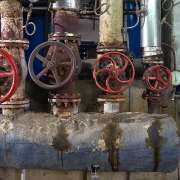
Asbestos is in the Summer Playground of the Rich and Famous

Key Takeaways

  • Martha’s Vineyard Regional High School, built in 1959, contains aging asbestos materials now deteriorating and releasing dangerous fibers.
  • Teachers, students, and visitors risk asbestos exposure from damaged floors, ceilings, and pipes.
  • Despite the island’s affluence, the school struggles to fund a $334 million renovation to fix toxic conditions.
  • Asbestos exposure can cause mesothelioma and lung cancer decades after contact.

Martha’s Vineyard, the world-renowned Massachusetts island, is a summer haven for the wealthy and well-connected. Politicians, celebrities, and business elites enjoy the island each year, drawn by its beaches, boating, upscale homes, and picture-perfect charm. But behind this postcard image lies a troubling truth for those with children who live on the island year-round — asbestos in the local high school.

The island’s only public high school, Martha’s Vineyard Regional High School, has sections in a serious state of decay. Employees and students must cope with mold, leaking pipes, and asbestos hazards, according to the Martha’s Vineyard Times. Countless schools across the country, in small towns and major cities, in famous locations and in areas few of us have heard of, face similar problems.

Despite the island’s wealth and reputation, students and staff at MVRHS walk daily through a building built in 1959 that’s never been replaced or fully renovated. Instead, it’s had decades of band-aid fixes, quick repairs, and cover-ups. As a result, the school has crumbling infrastructure, mold, and flooring layered over aging asbestos in an older section of the facility.

A Tale of Two Vineyards

While multimillion-dollar homes are available across the island, the area’s public high school is plagued by missing ceiling tiles, sagging vents, and water leaks that soak asbestos-containing materials. In some areas, carpets were installed over flooring containing asbestos. This is a common “solution” that becomes dangerous when water-damaged tiles lift off the underlying floor.

What are the Legal and Medical Risks of a School With Asbestos?

Asbestos-related diseases like mesothelioma and asbestosis often develop decades after exposure. It’s not just construction or industrial workers who are at risk. Students, teachers, janitors, and parents visiting the school may unknowingly breathe in asbestos fibers released by damage or decay.

Potential legal liability may extend to multiple parties, including school districts, contractors, and manufacturers of asbestos-containing products. Anyone sickened by MVRHS asbestos may have a right to pursue compensation if it causes injuries like mesothelioma or lung cancer.

What Does This Mean for You?

The Vineyard is a place where millionaires vacation, but the public school system struggles to afford the projected $334.5 million cost to renovate a facility known to contain toxic hazards. Asbestos is not a problem of the past. People live with asbestos-related diseases contracted decades ago, while it endangers lives today, even in the wealthiest corners of the country.

Call Us Today for A Free Consultation

If you or a family member has an asbestos-related disease and worked at a school or other public building, Satterley & Kelley, PLLC, is here to help you through this difficult time.

To discuss your situation and how Satterley & Kelley, PLLC can help, call us at 855-385-9532, locally 502-589-5600, or contact us online to arrange a free initial consultation.

Asbestos & Mesothelioma for Electricians

In this episode, we outline where electricians encountered asbestos across industrial job sites, the diseases linked to exposure, and what workers and families should consider medically and legally after a diagnosis.

John Maher: Hi, I’m John Maher, and I’m here today with Paul Kelley. Paul is a partner with the Kentucky personal injury law firm Satterley & Kelley, which has over 45 years of collective experience in litigating mesothelioma and asbestos claims. Today we’re talking about asbestos exposure and mesothelioma with electricians. Welcome, Paul.

Paul Kelley: Hey, John. How are you doing today?

John: I’m doing well. How are you?

Paul: Doing great, thank you.

Workplaces Electricians Served and Asbestos Risk Factors

John: Paul, what kinds of companies or job sites did electricians typically work at, and still do? And why are those environments high risk for asbestos exposure?

Paul: So electricians, it’s probably a trade that people are very familiar with. Electricians have historically worked in every type of environment you can imagine. Certainly, residential, in people’s homes, office buildings, schools, banks, hospitals, retail facilities. But certainly, what we’ve seen a lot of is electricians that worked in your manufacturing facilities, your factories, warehouses, distribution centers, power plants, the substations associated with the power plants, airports, bus depots, train stations, train yards, shipyards, steel mills, foundries. A lot of those places, depending on when they were built, have historically contained high levels of asbestos. A lot of it depends on the type of work that electricians did. Some folks may say, “Well, I was an electrician, but all I did was residential work, so I must be safe.” Well, the answer to the question is, it depends.

There are homes that contain asbestos or apartment complexes that contain asbestos. And then there are more of, what I call, the industrial electricians that worked on heavy equipment and worked in powerhouses and factories, and had to work on machinery that was lined with asbestos frequently. They worked in those kinds of environments for years. It has been well documented in the medical and scientific literature that electricians have historically been amongst our workforce that’s most at risk for contracting asbestos-related diseases. Electricians that started in that trade in the ’50s and ’60s. I mean, it’s virtually certain that they received significant asbestos exposure over the course of their life.

As new electricians came into the industry in the ’70s and ’80s and ’90s, they’re not off the hook. They worked at places that still had those materials in their facilities in the ’80s and ’90s and 2000s. Depending on the information that was provided to them and depending on the efforts made by those facilities to mark or remove, remediate the asbestos, then that trade has been unfortunately subject to environments for decades where they had significant exposures to asbestos over a long period of time.

John: So it might not be immediately apparent to people how electricians would be exposed to asbestos. Tell me about some of the daily work that electricians did that might most often lead to asbestos exposure.

Paul: So, one that may surprise people is, a lot of your really heavy duty electrical wires and cables were coated with asbestos in the ’50s through ’70s, maybe early ’80s in some instances. So I mean, imagine a very significant cable that might be three, four, five inches in diameter, and it’s 150 feet long, and it’s coated in an insulation. Usually, there’s like a rubber or something over top of it, and then underneath it was a cloth, fibrous material. And the electricians don’t go out to these job sites and just hang it. They have to slice off and cut the insulation in order to make their connections to whatever it is that they’re connecting it to. That cable could be used for so many different things. It could be something that’s put into a piece of machinery, so it might be smaller than what I described, or it could be something that’s very significant in size and being used to connect to machines. It could be power cable, and so there would be a lot of insulation associated with that. They just take a knife out, and they’re just cutting it.

Studies have indicated or demonstrated that you can get a significant exposure that way. Lots of times there were electrical panels and circuit breakers that contain asbestos. Probably, an electrician wouldn’t be exposed to asbestos unless he or she got into the inner components of those things. But frequently, they did, and sometimes drilled and sawed into panels, and were exposed to asbestos. Frequently, conduit, electrical conduit that housed all of the cables, those cables can be very hot, and then the collection of cables can be very hot. So the conduit would frequently be an asbestos material.

I’ll give you a great example. There was a conduit that frequently was installed underground that was made of something called transite pipe. There were several years in the ’50s and ’60s and early ’70s where transite pipe contained not only asbestos, but contained a form of asbestos called crocidolite. The electricians and other crafts that worked with that pipe, they’d have to saw it, cut it. They have to do maintenance work 30 years later, and this stuff’s buried underground. So you’ve got to dig underneath, underground, to get to it, and then you got to crack into it somehow. It’s not like cracking an egg. You’ve got to cut it and saw it and drill it. The studies have shown that they got significant exposure to materials like that.

We’ve seen electricians exposed to transite in all kinds of different ways. We had a client who worked for a phone company. He may not have been an electrician per se, but he worked in environment that involved electrical components every day, installing wire and cable. They had to make sure that the area between the floors were airtight, because with fire on one floor we don’t want it to devastate the entire building. So they would usually cut the holes in the floor, and they put all the wire and cable through the hole on the floor, and they would put a piece of transite over the hole, and then they would put the cables actually through the hole in the transite. Somebody had to cut that transite in order to do it. Every time they put a new cable in, they had to cut the transite a little bit more. So that was a frequent occurrence.

Electricians, they frequently worked around drywall that was finished off with joint compounds. They had to crack the end of the drywall frequently in order to install cable into the walls, install cable through the walls and drywall, or the joint compound that went over the drywall historically contained asbestos for many years. So as you’re cutting through that material, there’s exposure that’s occurring there.

Ceiling tiles and floor tiles, lots of times they had to get into drop ceilings. Those ceiling tiles and a lot of different places were made from asbestos, and sometimes they have to cut the tiles in order to access where they need or in order to make enough room to put their cables in. They use a saw, they use a knife, maybe electric saw, maybe a hand saw, but there would be exposure to the things like that. Floor tiles, we talked about that. Floor tiles, I mean, for many years, floor tiles, in a wide variety of places, whether it was schools, hospitals, office buildings, even manufacturing plants, were made from asbestos. While you’re walking around on them, it’s no big deal, but as soon as somebody cracks into those tiles…and electricians frequently had to do that in order to access things underneath the tiles.

But electricians also worked in a lot of environments where they’re working around people who are working with asbestos products. We talked about the drop ceiling a moment ago. Usually, in a lot of places, whether it’s an office building or a manufacturing plant, there’s a drop ceiling. And then there’s an area above that ceiling that contains all the stuff, the stuff that we don’t see, but the stuff that helps the building operate, and what’s in there? You’ve got all the duct work, and the duct work frequently was insulated with asbestos. You have all the piping that’s up there that frequently was insulated with asbestos. Well, one big one that we haven’t talked about is the big high-rise buildings. Lots of times, the high-rise buildings, kind of the beams, the innards of the building, was sprayed with asbestos. It was a form of fireproofing. And I’ve represented electricians that were there when that was happening.

I mean, I’m trying to think of something, but people have probably seen some insulation sprayed into their walls. I mean, there’s no containment whatsoever. It’s sprayed, and then it falls down, and if you’re working underneath it, it’s going to hit you. And if you’re working above it, some of it’s going to float up. So that was a very heavy exposure. At all these manufacturing plants, there’s just miles of insulated pipe. While the electricians may not be directly working on that insulated pipe, they certainly are working around others who are, and were frequently exposed that way.

Electricians very frequently participated in overhauls of big, large, significant equipment. So turbines and power houses were a big deal, and millwrights would come in and work on the components of the turbine, but electricians would work on all the electrical work. Some of that wiring cable contained asbestos, but even if it didn’t, the insulation that others are working on around them did. So they’re exposed in that way.

And then boilers, boilers contain a lot of asbestos, both inside and outside the boilers. These boilers and power houses, John, were stories tall, I mean seven, eight stories. These weren’t any tiny piece of equipment. The buildings or the room that housed the boilers that frequently electricians had to make electrical connections, both inside the boiler to connect the boiler and some other piece of equipment, and they’re involved in pipe insulation and other insulation. That’s all just around them. So even if they’re not dealing with it directly themselves, they are bystanders to someone else who did.

Large kilns and furnaces that heat steel and metal, those things were frequently lined with fire brick and refractory material that contain asbestos, and electricians work on those pieces of equipment. What I hear a lot is, when companies decided that they needed to do an overhaul of a piece of equipment, or they decided that they needed… “We’re going to shut down for a couple of weeks, and we’re going to do a bunch of work at the same time,” they’re not just bringing the electricians in, they’re bringing all the crafts in. Electricians are being exposed to the plasters, pipe fitters, insulators, boiler makers, millwrights, and all the different things that those types of crafts worked on the disturbed asbestos. The electrician is working there, shoulder to shoulder, and certainly can’t avoid the exposure.

Long‑Term Health Effects from Asbestos Exposure

John: So how has asbestos exposure affected electricians over the years, and what are some of the long-term health effects that they now face?

Paul: Well, for a variety of reasons, electricians were exposed to heavy levels of asbestos, certainly persistent levels of asbestos for many years, particularly those in the industrial and commercial electrical business. But even those in the residential trades and even people who were electricians that were more on the manufacturing side of it, they received decades of exposure in some instances. The medical and scientific studies have shown that electricians are one of our groups that’s at risk for asbestos disease. Unfortunately, the data shows that electricians have certainly been one of the occupations that’s most heavily impacted by asbestos exposure and, in fact, has contracted all of those diseases that they’re at risk of.

You’ve got mesothelioma, which is uniquely caused by asbestos exposure. It’s a cancer of the lining of the lungs, and there’s a form of it that’s a cancer of the lining of the abdomen. And then there’s another form [that affects the ] lining of the heart. There’s lung cancer, which is more involving the lung itself. There’s non-cancer but still a significant disease called asbestosis, and that’s a disease of the “meat” of the lung that can be a very significant, debilitating and frequently deadly disease. So electricians have unfortunately suffered from all of these diseases, and many have died over the years. It’s just been a devastating impact for people that dedicated their lives to helping make all of our lives easier.

Long‑Term Health Effects from Asbestos Exposure

John: So looking back, what did companies generally know about asbestos risks for electricians, and did they let the workers know about that?

Paul: So a lot of companies absolutely knew for many, many years. Knowledge, of course, developed a lot over the years. But the medical and scientific studies, and a lot of these companies were very in tune with what was being published out there, but some of those studies go back to the ’20s, ’30s, ’40s that indicated that asbestos exposure was harmful. And then as we get into the ’50s, when it was absolutely determined that it caused lung cancer, and then in 1960, it was determined to cause mesothelioma. And in 1960, it was also determined to cause not just mesothelioma to people exposed in the workplace, but environmental exposures, what we call household exposures. This industry, or all of these industries, knew this, or certainly should have known this during that period of time.

In Kentucky, where I’m at, we had a statute regulation that regulated asbestos in 1956. So if somebody owned a facility in Kentucky, they needed to know about the law. In 1971 the federal government enacted OSHA regulations, which are still on the books today, and it regulated asbestos exposure in the workplace. If you had a place, a workplace, anywhere in the United States, you were obligated to know. A lot of these companies belong to trade organizations or organizations like the Industrial Hygiene Foundation, National Safety Council. Their whole purpose was to study occupational hazards and to understand the risk to employees and workers and people that worked on their property.

I mean, I would say that better than half of the defendants that we routinely pursue claims against for electricians and other crafts belong to organizations like that, or they belong to other trade organizations that had, or provided, or disseminated information concerning not just the general risk of asbestos exposure, but risk to specific things, risk to electrical wiring cable, risk to turbine insulation, pipe insulation, gaskets, refractory material, turbines, boilers. So that information was not just available; it was information that a lot of these companies had had in their hands. So many of these places, these companies, they didn’t just say, “Oh, we need a building, and please design it for us, and we’ll move in when it’s ready.” They were intimately involved in the design and construction of their manufacturing plant.

I’m here in Louisville, Kentucky, and General Electric has a massive facility here. It’s called Appliance Park. It’s got six manufacturing buildings and some other buildings here. General Electric was intimately involved in the design and the construction. It may not have written the plans, and it may not have put up the brick and mortar, but it knew what was going in. A lot of companies, many companies, were exactly like that.

As you get deeper into the ’80s and ’90s and you see that there was some effort by companies to perform asbestos surveys, inspections, try to identify where the asbestos is, and that’s all fine and good, but the next step wasn’t taken. And that next step was notifying their own employees, and contractor employees. My typical electrician was a contractor employee that worked at a manufacturing plant or a steel mill or a power plant. I mean, I can’t think of one person who ever said anybody from the premises’ owner came to me and said, “There’s asbestos here, and here’s where it is, and this is what you’ve got to do to protect yourself.”

Quite frankly, that would’ve been inadequate, because you shouldn’t have to protect yourself. They should take measures to take care of it. But I mean, generally, there are always exceptions to the rule, as you know. But generally speaking, most of the defendants that we deal with do not have any evidence that they notified people coming onto their property, whether it was their own employees or contractors, about the health risks of asbestos, the presence of asbestos of their facility, where it specifically was. They didn’t take any effort to prevent the exposure. They didn’t have any policies in place, or if they did have policies in place, they weren’t really followed. And I feel strongly that it would’ve worked had they done those things, because every client that I have has always said, “Look, if I had known, I would’ve either taken those precautions or I would’ve chosen to do something else with my life.”

There was a way for all of this to work where our clients and sheet metal workers and all the various crafts that built these facilities, that maintain these facilities, that they could have done their work and they could have done it safely, and the property owners could have had what they needed to have in order to operate their facility. Every now and again, we come across some evidence of companies that did do the right things and did prevent the exposures. And it’s a breath of fresh air certainly when you see it. But I mean, that’s few and far between.

John: Right.

Paul: It just wasn’t well communicated. And as a result, electricians all throughout the United States have developed terrible diseases.

Medical and Legal Steps After a Diagnosis

John: So if someone was an electrician and now has later been diagnosed with mesothelioma, what steps should they take medically and legally?

Paul: So medically, they just need to determine with their doctors and their family what’s the best course of treatment for them. Mesothelioma, which is what I commonly deal with, clients with mesothelioma, it’s a devastating disease, and most people will pass away within 6 to 18 months of that disease. During that period of time, they will receive all kinds of different treatments, whether it’s chemotherapy — there’s some surgeries that can be performed. There’s radiation therapy. There’s immunotherapy. There’s clinical trials. And it’s a lot. Some people, of course, have different views on what they’re willing to do, but that’s something that every person needs to make a decision with their families and their healthcare team to decide what the best course of plan is for them.

While they’re doing that, they also should consider pursuing their legal rights. You don’t have a lot of time to do it. Sometimes, there’s a… Well, there’s always a statute of limitations applicable. Sometimes it’s longer or shorter depending on what state you’re in. In Kentucky, we basically have a year. So it’s important to get on it right away just from that standpoint. But even more so, it’s really important for you to get on it, because if you come to me, I want you to be able to participate in your case. The best evidence I’m ever going to have of your exposure and your pain and suffering, and just about your life in general, is from you.

We can get a lot of information from coworkers and family and friends and that sort of thing, but the best evidence we’ll ever get is from the victim themselves. We want to be able to do that, take the deposition early, develop the evidence that we need, and give our client the opportunity to get off their minds everything that’s happened to them. Tell the defendants, tell the judge, tell the jury, me, anybody, “This is what’s happened to me. This is why it happened to me.” The quicker that you’re able to get your case filed, the better opportunity you have to be able to do those things.

Memories don’t get better. People’s health, unfortunately, deteriorates. If it takes six months to find your lawyer, and then you hire a lawyer that’s not necessarily familiar with asbestos litigation or the job sites at issue, then it may take another two or three months. To be candid, John, I mean, there’s frequently situations where somebody will come to me, and I’ll have a pretty good idea of what I think the exposure is, but it’s a new site, it’s something that’s a little different for whatever reason, and I need to spend a little bit of time investigating to make sure that we get the right parties, and it really puts us under the gun if somebody comes to us eight months after they’re diagnosed, as opposed to two months. We’re going to get the job done no matter what, but I like to be as thorough as possible, and I want to turn over every stone and pursue every potential source of exposure, and giving us more time to be able to do that is certainly ideal.

I get it. There’s a lot of different reasons as to why people don’t get on it right away. Gosh knows that this issue is so personal to people, and everybody kind of behaves differently. But if you’re asking for advice, my advice is, do your research, hire the attorneys that you’re comfortable with, that you feel will give you the best chance of success, and let’s get on with it. And then hopefully, your attorney will hit the road, hit the ground running, and be prepared to seek justice for you and your family.

John: All right. Well, that’s really great information, Paul. Thanks again for speaking with me today.

Paul: Thank you, John.

John: For more information about mesothelioma and asbestos exposure, visit the law firm of Satterley & Kelley at satterleylaw.com or call 855-385-9532.


Why a Kentucky Personal Injury Lawyer Might Decline Your Case

If you’re injured in an accident, seek medical attention and contact our office so we can discuss whether you may be entitled to compensation. We speak with many people but only take a fraction of those potential cases for various reasons. We don’t want to discourage you from talking to us, but there are limits to what we can do.

Satterley & Kelley PLLC, in Louisville, is a law firm that gets results. We have recovered hundreds of millions of dollars in settlements and verdicts for people throughout Kentucky. We take on large insurance companies and Fortune 500 companies and win. If you have questions about how we can help you obtain compensation for your injuries, call us at (855) 385-9532.

You may assume that because you’re hurt, an attorney will take your case and fight for compensation. Satterley & Kelley, PLLC, does not accept every potential client we speak with. There are many reasons why we may decline your case, even if you genuinely feel you were wronged.

We earn our pay by obtaining a share of your recovery. We invest a lot of resources into our cases, and each is a gamble. Before we commit to a case, we make educated guesses on the outcome. Based on our experience and knowledge, we believe that the odds are in our favor and that the financial result will be positive for both us and our clients.

Lack of Clear Liability

For a successful personal injury claim, we must prove that it’s more likely than not that the defendant (the other party) caused your injury. Kentucky’s liability (the other party’s fault and legal obligation to pay a claim) laws are classified as pure comparative negligence. That means if you’re at fault, you can still maintain a legal action, but your recovery will be reduced by your share of the blame for the accident.

Your liability and the amount you’ll recover are intertwined. If you’re determined to be half at fault, a jury will award you half the damages it would have if the defendant was totally to blame. If the fault is mostly yours, it also makes your case less attractive.

A main reason we may turn down a case is that liability is too unclear or difficult to prove. If there is not enough evidence to show who was at fault, and by how much, we may be unable to build a case. A “he said she said” vehicle accident where both drivers blame each other, and there’s no strong evidence either way, can be very challenging to prove.

Minimal or No Damages

Liability is part of the battle. Even if the other party’s fault is clear, there’s no guarantee we’ll accept your case.

Your damages, the financial and non-economic losses you suffer, may not be enough to justify our involvement. In personal injury law, damages include medical bills, lost wages, pain and suffering, and other losses caused by your injuries. If they are minor and without lasting limitations, there may not be enough at stake for us to invest our time, resources, and effort in pursuing your claim.

Expired Statute of Limitations

Even if evidence of liability is clear and you’ve suffered substantial losses, if you waited too long to file a lawsuit, you may not have a case. Unless there are facts that would justify an exception to this rule, Kentucky’s statute of limitations (or deadline) to file a lawsuit is one year from your injury. It is very rare that a plaintiff will be allowed to continue a lawsuit after the statute of limitations passes.

If too much time has passed since your injury, the statute of limitations has expired, and we don’t have a valid reason to ask for an exception to this rule, we won’t get involved. The state’s statute of limitations is a primary reason we ask people injured in accidents to contact us as soon as possible. We want to thoroughly evaluate and prepare a case before we file it. That work takes time.

The Defendant’s Ability to Pay

Even if your case jumps through these hoops, if there’s no viable source of recovery, we will not get involved, or what we can do is limited. If the person driving the other car has limited insurance coverage and not many personal assets that we could obtain through the legal process, your recovery could be much less than the harm you suffer.

This is a reason we advise people to purchase as much uninsured/underinsured motorist coverage as they can afford when buying vehicle insurance. Once they have reached their coverage limit, you can seek compensation from your own carrier.

If evidence of liability is clear but the other driver’s coverage is limited, their carrier may cover the claim up that amount, and their involvement with the case ends.

Unrealistic Expectations or a Poor Fit

You need to decide if we’re a good fit for you, and we will determine if you’re a good fit for us when we talk to you and consider your situation. We stay away from potential clients who:

  • Have relatively minor injuries, but expect a substantial recovery
  • Are very motivated to seek retribution against the other party at a trial and don’t want to settle their case. Most cases resolve through negotiations. Reasonable clients will accept fair and reasonable settlement offers, not go full speed ahead with a lawsuit just to prove something
  • Don’t tell us the truth or try to hide important facts from us

A personal injury case is a team effort. We will put in a good-faith effort into your case. We expect the same from you.

What You Can Do If We Decline Your Case

You’re free to talk to other attorneys about your situation. They may have a different opinion or see things that we do not, so they will take your case. We have successfully accepted clients rejected by others, so being rejected by an attorney shouldn’t necessarily be the end of the road for your case.

Lawyers Experienced in Kentucky Injury Law

Satterley & Kelley, PLLC attorneys take on insurance companies and win when accidents injure innocent people. If you have questions about compensation for your injuries, or are seeking legal representation, call us at 855-385-9532, locally 502-589-5600, or contact us online to arrange a free initial consultation with a Satterley & Kelley PLLC lawyer.

An Improperly Loaded Commercial Truck Can Cause a Deadly Accident

Commercial trucks are essential to Kentucky’s economy and way of life. But if they are improperly and unsafely loaded, they can become some of the most dangerous vehicles you’ll face. Satterley & Kelley, PLLC represents people severely injured in commercial truck accidents. If that’s happened to you, we can help.

Satterley & Kelley, PLLC in Louisville, takes on trucking companies and their insurance companies and wins fair compensation for our clients. They live throughout Kentucky and have been injured by careless truck drivers and their employers. Learn more by calling us at (855) 385-9532.

How is a Commercial Truck Improperly or Unsafely Loaded?

You may not think much about loading a car or a minivan. You’re probably mostly concerned about getting everything to fit. Those driving commercial trucks, including dump trucks and semi-trucks, want everything to fit, too, but their biggest concern should be loading cargo in a way that doesn’t compromise safe vehicle operation or endanger others on the road.

A commercial truck’s safety can depend on how well its cargo is evenly distributed, secured, and inspected. If that process is done carelessly, the truck may become unstable, unpredictable, and dangerous.

Improper loading may happen in several ways, including the following:

  • Each commercial truck has a Gross Vehicle Weight Rating (GVWR), the maximum total weight it can safely carry, including the truck itself. When it exceeds that limit, dangerous stress is put on the brakes, tires, and suspension systems
  • Cargo must be balanced evenly. If not, the center of gravity will shift, making the truck harder to steer and possibly more prone to tipping or rolling over. This is a common problem in dump trucks, where loose materials like gravel, sand, or soil can shift during turns or stops
  • Cargo should be secured with tie-downs, chains, or straps. Without them, the load can move or spill during transit. This can throw off the center of gravity, and cargo may come out of or off the truck or trailer
  • Dump trucks carrying loose material must use covers or tarps to prevent materials from flying out

Drivers are required to inspect their cargo before and during each trip. These inspections are critical to spotting problems such as shifting loads, broken restraints, or loose loads. If a driver skips an inspection to save time or meet deadlines, they risk operating an unsafe truck that may endanger themselves and others.

Often, contractors or shipping companies load trucks, not the driver. If a third party makes mistakes that result in a crash, they may be held responsible for the consequences.

How Improper Loading Causes Serious Accidents

Unsafe loading can trigger almost any type of truck accident. Here are some ways it can happen:

  • Overloaded trucks need more time and distance to come to a stop, making rear-end collisions and runaway crashes on hills more likely. Brake failure and tire blowouts, which can lead to catastrophic loss of control, would also be more likely, especially on hot days or steep grades
  • A top-heavy or unbalanced truck can tip over when turning, braking, or traveling on uneven ground
  • Improperly balanced or shifting cargo can cause the trailer to swing out from behind the cab, creating a jackknife. The truck may block adjacent lanes or strike other vehicles. It may be impossible for a driver to regain control after a semi-truck jackknifes
  • Cargo that’s improperly secured or covered can fall off the truck and onto the roadway. Drivers behind may strike it or swerve to avoid the debris, causing chain-reaction collisions

Because trucks are so large and take so long to stop, a single unsafe load can set off multi-vehicle pileups, especially in heavy traffic. When cargo spills, or a truck rolls over or jackknifes, dozens of vehicles may be involved.

These accidents are preventable. Proper loading, inspection, and adherence to safety rules could stop many of these tragedies from ever happening.

Who Might Be Liable for Injuries Caused by an Improperly Loaded Truck?

A thorough investigation should determine which parties caused the accident and the extent of their liability. Some of those who may be liable include the following:

  • Drivers must refuse to operate a vehicle if the load is unsafe. They must check and secure cargo before and during a trip. If a driver ignores problems, they (or their employer) can be liable for negligence
  • The trucking company owning or operating the vehicle may be liable for its negligence and that of its employees. Problems could include inadequate training, pressuring drivers to ignore safety problems, violating applicable regulations and laws, and not maintaining safety equipment
  • If a separate business loads the truck, that company may be held liable for negligently loading it if they fail to balance the weight or secure the cargo.
  • The truck may be owned by one company but leased or operated by another. If the truck’s brakes, tires, or suspension fail because parts are defective, or the vehicle wasn’t maintained or repaired adequately, the manufacturer, owner, or maintenance company could be at fault

Often, there are multiple causes. A trucking company that won’t adequately train its employees may not want to spend enough to safely maintain its equipment or trucks. If the company knows it’s violating applicable laws, it’ll probably tell its employees to keep quiet about it.

Why These Cases Require Experienced Legal Representation

Proving that a truck was improperly loaded requires a detailed investigation and expert testimony. Crucial evidence may include:

  • Cargo manifests and weight tickets
  • Driver inspection reports and logs
  • Photos of the truck and its cargo
  • Witness statements
  • Expert analysis of load distribution or tie-down failure

A trucking company and its insurance carrier may move quickly to hide or control evidence after a crash. A Satterley & Kelley, PLLC commercial truck injury attorney can act quickly to preserve that evidence to ensure the facts come to light.

Speak To a Louisville Truck Accident Lawyer Near You

If you are injured in a commercial truck accident in Kentucky, we can help you handle legal and insurance matters with confidence. Put boots on the ground with help from Satterley & Kelley, PLLC.

Schedule a free initial consultation at our Louisville office by calling 502-589-5600 (toll-free at 855-385-9532) or complete our contact form today.

Texas Dram Shop Case Ends With $112.9 Million Plaintiff Verdict

A Texas family’s lawsuit against a chain of restaurants and its employees resulted in a $112.9 million verdict against the defendants. It’s based on a horrific accident that was caused by a drunk driver who shouldn’t have been served alcohol before getting behind the wheel of his truck. This case is a good example of a dram shop case and the harm drunk drivers can inflict.

Satterley & Kelley, PLLC attorneys will strongly advocate for those injured by the negligence of those illegally serving alcohol to others. We are well-versed in Kentucky dram shop laws and will provide you with the skilled, aggressive legal representation you need. Learn more by calling our Louisville office at (855) 385-9532.

What are Dram Shop Laws?

Under Kentucky law, if someone, who is intoxicated, injures you in a vehicle accident, they are primarily responsible. If they’re:

  • Younger than the legal drinking age, and
  • A person or business with a liquor license served them alcohol

The license holder may also be held legally accountable for the harm done.

If the drunk driver is 21 years old or older, the licensee may be liable if, before they were served, the licensee (or their employees or agents) knew, or had reason to know, that the person was intoxicated.

An important factor is not whether or not this customer was drunk. The issues are:

  • Whether the person’s speech, words, behavior, or actions 
  • Put the licensee (or their employees or agents) on notice that they are intoxicated

If so, and the person is served anyway, the license holder may face liability for your injuries.

Texas Case Involves Horrific Injuries to a Child by a Drunk Driver, Whom the Defendants Served Alcohol

An Austin, Texas jury in September awarded $112.9 million to the victims of a 2023 highway crash involving a drunk driver, the jury found was over-served at a local restaurant, Wings ‘N More, reports Law.com. According to court documents:

  • Pedro Suarez was a patron at Wings ‘N More
  • He was overserved alcohol in violation of Texas’ Dram Shop Act
  • Suarez’ truck later hit the rear of a car driven by Lorenzo Marquez
  • The impact pushed Marquez’ car under a semi-truck trailer
  • Suarez’ truck ended up on the car’s roof, pushing it down over the back seat, where 6-year-old Willow Walker was strapped in her car seat
  • Bystanders pulled Marquez and Caitlin Carpenter, Walker’s mother, from the car
  • Walker was trapped until first responders got her out of the car
  • Walker was in cardiac arrest and was resuscitated before she was transported to a local hospital. Walker also sustained a traumatic brain injury
  • She has had multiple surgeries, including having part of her skull removed to reduce brain swelling. The force of the accident crushed several facial bones, so she’ll need reconstructive surgery. She is blind in her right eye, and the extent of the damage to her left eye is undetermined

It’s not uncommon for restaurants and bars to serve alcohol to customers who appear to be drunk. These businesses put dangerous drivers like Surez on the road without much thought to the consequences.

Liability for Damages is Split Among the Defendants

Carpenter, individually and on behalf of Walker, and Marquez sued Wings LLC, doing business as Wings ‘N More, two employees, and Suarez. The plaintiffs accused the restaurant and the employees of violating Texas’ Dram Shop Act. It prohibits serving alcohol to a patron who’s obviously intoxicated and a clear danger to themselves and others.

The five-day trial ended with four hours of jury deliberation. They found the restaurant chain, two employees, and Suarez liable for the collision on Interstate 35. The jury divided the liability with Wings ‘N More 37% liable, Suarez 60% liable, and two restaurant employees 3% liable.

The jury awarded Walker compensation for:

  • Past physical pain and mental anguish
  • Future suffering
  • Past and future disfigurement
  • Past and future impairment
  • Past and future medical expenses
  • Lost earning capacity

Carpenter and Marquez were awarded compensation for past and future physical pain and mental anguish.

Plaintiffs Awarded a Substantial Amount That Defendants May Be Unable to Pay

As gratifying as the jury verdict may be for the plaintiffs, it may be partially just a victory on paper.

The jury found Suarez liable for $67.7 million in damages. It’s highly unlikely an individual has that much liability insurance or assets to pay this amount. Two restaurant workers are liable for $33.8 million. They also probably lack the insurance coverage or assets to pay.

That leaves $41.7 million for Wings LLC to pay. They may or may not have enough liability insurance to cover the verdict. Their insurer may pay the limit of the company’s coverage, leaving the rest to them.

If so, the plaintiffs may force the sale of the restaurant chain and its assets to recover what their insurance can’t pay, likely putting them out of business. Though their employees would be laid off, the end of a law-breaking business that severely injured others would be good news for the community.

What’s obtained may never truly compensate the plaintiffs for the trauma they’ve endured, especially Walker, who faces a lifetime of challenges the defendants caused.

Speak With an Experienced Kentucky Dram Shop Act Lawyer

Satterley & Kelley, PLLC lawyers have decades of experience helping injured clients with dram shop cases. We can help you with this type of case, too. If you want to discuss your possible dram shop claim with a knowledgeable Louisville lawyer, contact our office online or call us at 502-589-5600 or toll-free at 855-385-9532.

Asbestos & Mesothelioma for Boilermakers

In this episode, we outline where boilermakers encountered asbestos across industrial job sites, the diseases linked to exposure, and what workers and families should consider medically and legally after a diagnosis.

John Maher: Hi, I am John Maher, and I’m here today with Paul Kelley. Paul is a partner with the Kentucky Personal Injury Law firm, Satterley and Kelley, which has over 45 years of collective experience in litigating mesothelioma and asbestos claims. Today we’re talking about asbestos exposure and mesothelioma with boilermakers. Welcome, Paul.

Paul Kelley: Hey, John. How are you doing today?

John: I’m doing well. How are you?

Paul: Excellent, thank you.

Workplaces Boilermakers Served and Asbestos Risk Factors

John: Paul, what are some of the kinds of companies or job sites that boilermakers typically worked at, and why were those environments high risk for asbestos exposure?

Paul: So certainly the most common place that a boilermaker worked is in a powerhouse, boilers were necessary in a powerhouse. That’s what heated the steam in order to generate or send the steam over to the turbine and the turbine generated the power. But that didn’t just occur in your big powerhouses, it occurred on naval ships. Naval ships had boilers that performed the same function, they were just smaller boilers. Steel mills had boilers that were utilized to heat steam in order to keep the facility warm, but also to operate machinery that was in the building. Railroads or specifically trains, back in the day, many years ago, there were steam locomotives that contained boilers, and those boilers frequently contain asbestos.

But there were certainly all kinds of other types of facilities that utilize boilers. Foundries utilize boilers, schools utilize smaller boilers for heating, paper mills and pulp mills utilize boilers. They were in refineries and petrochemical plants utilize boilers. So boilermakers worked in all of these types of environments. And the typical client that we see is someone that worked in this industry as a boilermaker dating from the ’50s into the 1980s, and then they were into the 1990s, and they worked in very old facilities. Many of the powerhouses were built a long, long time ago in the ’50s and ’60s at a time when powerhouses were constructed with asbestos. Many of them worked on naval ships where the naval ships had asbestos all over them. We’re talking World War II vintage, Korean War vintage naval ships.

Trains…now, I will say that I probably haven’t seen too many train workers that were exposed to steam boilers because that technology was fairly well updated by the ’50s or ’60s. But we’ve come across a couple of those over the years, and any facility that was built before 1980, any ship that was built in the ’50s, ’60s, ’70s, they were loaded with asbestos and boilermakers are probably amongst the highest of the trades of receiving repeated exposure to asbestos over the course of many years, particularly for those who started in the industry back in the ’50s and ’60s.

Daily Tasks that Caused Asbestos Exposure

John: So what was some of the daily work that boilermakers did that exposed them to asbestos?

Paul: Probably the main would have to be the construction, demolition, overhaul of the big boilers and the powerhouses. Those boilers frequently had asbestos on both the outside and the inside. Outside, lots of times, would be more of a block insulation that contained asbestos. The inside would be the fire brick and the refractory material. Again, these are 7, 8, 9 story tall pieces of equipment, and they’re just loaded with asbestos-containing materials. They also had piping that was connected that went both to and from the turbines and the piping, and it’s carrying steam that’s hundreds if not thousands of degrees in temperature. And so they had to be insulated and that insulation contained asbestos. There were gaskets and packing that are connected directly to the boiler. We frequently would hear about the doors. These aren’t little itty bitty doors. These are very large doors, and they had to be maintained, and there were gaskets and packing material that went on these doors and oftentimes had to be replaced.

The problem is that when a gasket has been on a piece of equipment that generates thousands of degrees in temperature, it has to be scraped off. It’s not an easy thing to do. So that’s probably the most common. But certainly when you’re talking about some of what we call the more packaged boilers or smaller boilers in a manufacturing plant, there’s still going to be other pieces of equipment in addition to the boiler itself that were insulated with asbestos. Whether it’s…sometimes you’ll see exhaust equipment that’s attached to the boiler that was insulated with asbestos or contained asbestos. You’ll see fans, exhaust fans that are extremely large, the size of a room, that would have asbestos insulation inside the fan, would also accumulate asbestos within the fan itself. And then the boilermakers are exposed to the turbines that are at these powerhouses.

And the powerhouses or the turbines were loaded with asbestos. Usually there was a blanket and block insulation that covered the turbine, and they were in close proximity to the boiler. And while the boilermakers are working on the boiler, the millwrights are working on the turbines, and they were exposed. They were of course exposed during the insulation process, bricklayers typically put in the brick and refractory material, but the boilermakers were typically there when that happened. They used saws and grinders and wire brushes to do a lot of the work they did, and powerhouses and manufacturing facilities, they’re just not very clean. And because they were loaded with asbestos, based on the timeframe that they were constructed, boilermakers were heavily, heavily exposed, and that exposure went on for decades for many of them.

Long‑Term Health Effects from Asbestos Exposure

John: So how has all of this asbestos exposure affected boilermakers over the years? What are the long-term health risks of asbestos exposure?

Paul: So doctors and scientists have studied various crafts and trades to determine risks for cancer or disease associated with asbestos and various work and boilermakers, they’re up there towards the top. They’ve had a lot of exposure, and those diseases are frequently devastating. I think a lot of people have heard about mesothelioma. It’s fatal cancer, it impacts, most commonly the lungs, or the area around the lungs, but also can impact the heart, can impact the area around the abdomen. And these are terminal cancers, and a lot of boilermakers have contracted that disease. Lung cancer is very common amongst boilermakers. Of course, we know that smoking is a significant risk factor for lung cancer, but asbestos exposure is too by itself. And then you put two together and it’s really increasing someone’s risk of contracting lung cancer and boilermakers have been amongst the high risk group for lung cancer.

There are what we call nonmalignant diseases. Asbestosis is a scarring of the lining of the lungs or the scarring of the lungs, and it impacts the lung’s ability to expand and retract. And if it’s scarred badly enough, then it can’t serve its function and people can suffocate to death. It’s a terrible, terrible disease. And so boilermakers have been studied, and they’re not just at risk for getting the disease. Boilermakers, in fact, frequently have gotten these diseases. And we’ve had the opportunity over the years to represent dozens of them. And it’s unfortunate, but they’ve been at high risk and have suffered the devastating impact of a lifetime of asbestos exposure.

Long‑Term Health Effects from Asbestos Exposure

John: And looking back, what did companies know about the asbestos risks for boilermakers, and did they let the workers know about those risks?

Paul: So, a lot of the companies…and this one’s unique because you’ve got the boiler manufacturers on top of the owners of all these facilities. And so the boiler manufacturers, these were sophisticated companies that designed the boilers. They were experts in that. We’ve seen dozens of specifications for boilers, and they specified it with asbestos. So they knew it was there and they knew that it was harmful. They frequently belonged to trade organizations that studied the health impacts of asbestos exposure. And they studied it, particularly from the perspective of their pieces of equipment. And frequently they became aware that the pipe insulation connected to their boiler put people at risk of disease or the refractory material or the block insulations on the boiler put people at risk of disease. I don’t think I’ve ever seen a warning, ever, associated with asbestos on a boiler that was put out by a manufacturer.

They still maintain to this day that their products were harmless and wouldn’t cause disease. But internally, they told a different story, and internally they acknowledged the significant health risks associated with asbestos. And it wasn’t communicated to people like your average boilermaker. So that’s the manufacturers.

Then you’ve got all the places that these boilers were put into and big-time powerhouses that were owned by very sophisticated companies, manufacturing facilities that were owned by some of the oldest, most respected companies in the United States. And they certainly knew what was present on their property. They knew that there was asbestos on the boilers and the turbines and the piping on the duct work. And they were aware of all that and they were aware of the hazards associated with exposure to asbestos.

And again, I can’t think of any instances where they told the boilermakers, “You need to be careful. You need to do certain things in order to protect yourself from exposure.” And as a result, boilermakers went in and did this work, many of them for decades. And that work, it’s very complicated. Being a boilermaker is not an easy job. It’s physically demanding, it’s intellectually demanding.

And what we hear a lot is that their union put out some information and advised that there’s some health risks associated with asbestos and here’s some ways that you’d be exposed. Well, there’s a couple issues with that. First of all, lots of times these boilermakers have been involved in the trade for years, so wouldn’t have…

John: It would be too late. Right.

Paul: Yeah. And then the other issue is they’re working 60 to 80 hours a week. They have families and they don’t have time to sit around and dissect journals and try to understand sophisticated, complicated medical issues. But the irony of it all is that in most instances, the unions that had no obligation, responsibility, duty whatsoever were the only entity that really tried to give any information to the boilermakers about any hazards associated with their jobs. The property owners didn’t, the manufacturers didn’t, distributors didn’t. So the parties that actually had the duty didn’t do anything, didn’t make an attempt. And then years later, they try to either blame the union or at least say, “Well guys, the union made this information available and you didn’t follow it.”

And it’s like, well, first of all, most of my clients, they never heard about anything that showed up in any sort of journal. But even if they did, there was nothing they could do about it. It required everybody up the chain to do something about it. The union couldn’t stop an unsafe condition. The employee couldn’t refuse to do something. Not unless they chose to just leave their job. But think about that, think about if every boilermaker was actually given actual knowledge, definitive knowledge, and the manufacturers went to great effort to educate, and the property owners and the powerhouses and all these places, they went to great effort to educate and to post signs and those sort of things. Just think about what would happen if boilermakers armed with that information said, “We’re not going to do the work.”

John: Right. It would force change.

Paul: Right. We wouldn’t have electricity. We would pay a heck of a lot more for it. So quite frankly, it’s probably the most disingenuous argument that I’ve ever heard in any case that I’ve ever had, that the union had some responsibility that the manufacturers and property owners didn’t have. It’s not true, but any information that they provided to their members was completely gratuitous and out of the kindness of their heart, really. But the parties that really had the responsibility didn’t do anything and then they tried to hide behind all of these facts. Decades later when somebody gets sick and says, “Well, gosh, Mr. Boilermaker over here should have been aware because of this obscure article that appeared in the 1978 Boilermaker Journal.”

John: Right.

Paul: And that’s not realistic, and it’s not the law. And I think that the juries see through that kind of thing, because the question that they’re always going to be asked is, “What did you do, Mr. Defendant? What did you do, Manufacturer? What did you do, Property Owner, Mr. Powerhouse or whoever? If the answer is you didn’t do anything, we’re not going to let you off the hook because there was an article or two over 30 years in the Boilermakers’ Union’s Journal.”

Medical and Legal Steps After a Diagnosis

John: Right. So if someone worked as a boilermaker and now has later been diagnosed with mesothelioma, what steps should they take medically and legally?

Paul: So medically, the only real advice I can give is to make sure that you’re comfortable with your medical plan. That’s something that’s very unique to you and to your family and to your medical team. And there’s a lot of options out there, which the doctors can certainly talk to you about all of that. But because of the treatments and the opportunities are significantly better now than they were 20 years ago, my advice is to explore them all and make the decision for yourself and that you and your family decides best for you. From a legal standpoint, which is what we do, time is a bit of the essence. We do have a statute of limitations in Kentucky that’s only a year, essentially from the date of diagnosis, but that’s not the only reason to get on it. You really want to pursue your legal rights so that you have an opportunity to participate in your case.

We do have clients that have lived for four to five, six years after diagnosis, but that’s not the typical scenario. The typical scenario is somewhere between six months and a couple years, and it’s just not a lot of time. And you have a lot of important things to worry about, your medical care, handling your personal affairs, spending as much time with your family as you can. But if you want to pursue a claim and you should at least investigate them, I say that to everybody. At least investigate, and investigation requires talking to a lawyer that knows what they’re doing, knows the right questions to ask, hopefully knows, if not the properties that you were involved with, but the kinds of properties and knows the right things to look for, and somebody that you feel comfortable with, somebody that you feel is going to take that extra step for you and your family and try to get the compensation that you deserve.

No two cases are alike. Every case presents unique challenges, and I haven’t seen everything, but I feel like we’ve seen a lot. And universally when we get done with my client’s deposition, which is really my singular focus when you come to me, is when can I get a deposition in? And the weight of the world is taken off their shoulders, sometimes physically, but emotionally, to be able to tell everybody what’s happened to them. And the exposures are important. That’s where the case is at, being able to show the exposure. But I think that most of my clients really feel so much better after they’re able to get it off their chest, what’s happened to them. That two years ago they’re humming along just fine, living their life, usually in retirement, and doing the things they want to do, and now their lives are nothing but doctor’s appointments and procedures and chemotherapy and sometimes surgeries and side effects from the various types of treatment.

And no more vacations and golf and simple activities like going on a walk on a nice day. And they like to have the opportunity to say that. And so that’s what I want for you, I want for you to be able to tell your whole story. And the part of your story that’s going to help us succeed is certainly how you were exposed to asbestos, but the part of the story that’s going to help you emotionally is the part about what’s happened to you. And then also that gives us something to be able to present to a judge and jury to indicate this just isn’t about a faceless person. This is about someone and his or her family who’s been deeply impacted by this cancer. And we’ve represented so many boilermakers who have had that opportunity to do that and not only did they help their case, but I think in some way they helped themselves cope with what it is they’re dealing with.

John: All right. Well, that’s really great information, Paul. Thanks again for speaking with me today.

Paul: Thank you so much, John. I appreciate it.

John: And for more information about mesothelioma and asbestos exposure, you can visit the law firm of Satterley & Kelley at Satterleylaw.com or call 855-385-9532.

Premises Liability: Trespassers, Licensees, and Invitees – Oh My!

Premises liability cases are personal injury actions based on negligence. A critical part of these claims is to establish what duty (or legal obligation) the defendant (the party sued) had to ensure the safety of the plaintiff (you, the injured party). That duty (or degree of care) depends on the relationship between you and the defendant. Depending on the circumstances, your case may be won or lost, depending on which relationship applies.

Satterley & Kelley, PLLC lawyers have recovered millions of dollars for accident victims and their families in personal injury verdicts and settlements. To schedule a free initial consultation at our Louisville office, call 502-589-5600 (toll-free at 855-385-9532).

How Does Negligence Work?

Negligence is the legal theory applied in nearly all accident injury cases. To be successful, you must establish different elements by a preponderance of the evidence (it’s more likely than not that what you allege is true). Those elements include the following:

  • Due to the relationship between you and the defendant, they have a legal obligation or duty to do or not do something to keep you safe, given the situation
  • The defendant failed that obligation or breached their duty
  • That is the legal (or proximate) and factual cause of the accident
  • The accident injured you
  • Under Kentucky law, the defendant must pay you damages (a measure of your injury in dollars) to compensate you for your injury and the related harm that followed

Depending on the facts, some of these elements may be more or less difficult for you to prove.

What are Premises Liability Claims?

They are negligence claims where you’ve been injured because a property owner, landlord, tenant, or business failed to keep their property reasonably safe. The idea behind these cases is that property owners have a legal obligation to maintain their premises so that visitors aren’t exposed to unnecessary dangers.

If that legal duty of care is violated, they should be held accountable. They (or their insurance carrier) should compensate the injured party for their injury and other resulting losses. How careful a landlord should be and how much effort and investment they need to keep people safe depend on the visitor’s legal classification.

Premises liability cases include the following:

  • Trip or slip and fall accidents
  • Negligent security leading to you being victimized by an assault, robbery, or other crime
  • Defective or broken stairs, handrails, or elevators that cause injuries
  • Poor lighting that hides hazards or creates unsafe conditions
  • Swimming pool accidents and drownings
  • Dog bites
  • Exposure to toxic substances causing injuries
  • Fire, explosion, or electrical injuries

These cases are based on evidence that we can begin to develop through an investigation. The earlier you contact and retain us, the sooner we can investigate your case, and the lower the risk that evidence will be lost or that witnesses’ memories will fade.

What Types of Visitor Status Can Affect Premises Liability Claims?

This impacts the first negligence element. The relationship must be established to determine what duty was owed to you before your injury.

Depending on the situation, the defendant may need to do more or less to try to keep you safe. If your classification means they had to make more of an effort to maintain your safety, the easier it is to establish that they failed their legal responsibilities and should compensate you.

The logic behind this is that if you invite someone onto your property or benefit from their presence, you should do more to keep them safe than you would a stranger or criminal who comes onto your property without your invitation.

The classifications include the following.

1. Trespasser

They enter or remain on a property without the owner’s or tenant’s consent. You can recover compensation if they commit wanton or willful negligence or misconduct (they maintained a dangerous property or took steps to harm you).

2. Licensee

You can enter or remain with the owner’s or tenant’s consent. A licensee can obtain compensation for injuries if the owner/possessor:

  • Knew or had reason to know of a dangerous condition and should understand that it poses an unreasonable risk of harm
  • Should expect you won’t realize or find the danger
  • Didn’t use reasonable care to make the situation safe or warn you of it and the risks involved. You’re unaware of or have no reason to be aware of the condition and its risks

People with this status often claim injuries at private homes. This can be an acquaintance, friend, or family member visiting a house or attending a party.

3. Invitee

This group is owed the highest duty of care. They may be a public invitee or a business visitor. A property owner/possessor invites:

  • A public invitee to come to or stay on the property for a purpose for which the public is invited (attend religious services, get care at a hospital, shop at a store)
  • A business visitor to enter or stay on the property for reasons connected with business concerns with the landowner or tenant (a contractor cleaning an office or repairing industrial equipment)

If you’re injured because a property owner or tenant made a grave mistake, call our office so we can discuss not only what happened and your injuries, but also why you were there. It’s an essential part of the story you must tell.

Speak To a Satterley & Kelley, PLLC Premises Liability Attorney Today

If another’s negligence caused your injuries or they injured a loved one, Satterley & Kelley, PLLC attorneys will protect your interests and right to compensation. Don’t handle severe injuries and an insurance company on your own.

Schedule a free initial consultation to discuss your case. To reach our Louisville office, call 502-589-5600 or toll-free at 855-385-9532. You can also complete our contact form if it’s more convenient.

A Nursing Home Can Be Liable for a Resident’s Sexual Abuse

Nursing home residents can suffer from abuse in several ways, but none is more disturbing than sexual abuse. Families’ trust is violated when a nursing home fails to take the necessary steps to protect a resident from sexual abuse. Victims can suffer lasting trauma, shame, and fear, while families struggle with the aftermath of a sexual assault.

Satterley & Kelley, PLLC represents Kentucky nursing home residents who are abused and neglected. If your parent or loved one was sexually abused at their nursing home, contact us so we can find out what is happening and stop additional abuse. Call us today at (855) 385-9532.

What is Sexual Abuse?

Sexual abuse in nursing homes covers nonconsensual sexual contact, behavior, or exposure. It may include the following:

  • Unwanted touching
  • Sexual assault
  • Coerced nudity
  • Photographing residents without consent
  • Sexual acts with individuals unable to consent due to cognitive impairment or physical disability
  • Forcing a resident to view nudity or pornography

Those responsible could be the following:

  • Employees
  • Visitors
  • Volunteers
  • Contractors
  • Fellow residents

Perpetrators are aware that residents are vulnerable and may take advantage of them. Sexual abuse of the elderly is not about sexual attraction or having sex. It’s to fulfill a deeply disturbed need to abuse and control another human being. The victim could be of the same or opposite sex.

Why Does Sexual Abuse Happen in Nursing Homes?

Nursing home residents are extremely vulnerable to sexual abuse. They may have the following:

  • Dementia
  • Severe physical limitations
  • Difficulty communicating
  • Psychiatric conditions

They may be easily manipulated or threatened into sexual acts or coerced into not reporting what’s happening. Some may be unable to clearly describe what happened, while others may feel shame, fear retaliation, or think they won’t be believed if they report the abuse.

Negligent management can make a bad situation worse by:

  • Ignoring signs that a resident may have been sexually abused
  • Not taking complaints of sexual abuse seriously
  • Allowing those with histories of committing sexual abuse to live in the facility
  • Not screening out job applicants who have been accused of sexually abusing others in the past
  • Not supervising employees or residents sufficiently to prevent sexual abuse from happening
  • Not sufficiently training employees on how to spot signs of sexual abuse and what to do if they suspect it
  • Not getting the police involved when the situation warrants it

Residents of nursing homes that are understaffed, where employees can barely keep up with their work, may be more likely to suffer sexual abuse. The staff is too focused on other things to pick up on possible sexual abuse or take the needed steps to prevent it from happening.

Warning Signs of Sexual Abuse

Recognizing signs of sexual abuse can be difficult, especially if residents have cognitive challenges or cannot communicate clearly. Some red flags include the following:

  • Unexplained bruising, bleeding, or genital injuries
  • Contracting venereal diseases
  • Sudden changes in behavior, anxiety, or withdrawal
  • Fear of certain staff members or residents
  • Torn or missing undergarments
  • Desire to avoid bathing, dressing, or medical care
  • Unexplained depression, panic attacks, or agitation

These are not issues to be taken lightly. It’s far better to take this seriously and find other explanations than to assume nothing is wrong.

What Should I Do If I Suspect a Nursing Home Resident Is Being Sexually Abused?

Family members and friends who suspect abuse should take immediate action. They should do the following:

Reporting suspicions early is critical to protect the victim from further abuse and others who may be at risk.

Who May Be Liable for Nursing Home Sexual Abuse?

Determining liability when nursing home sexual abuse occurs can be complex and requires a complete investigation. We would investigate what happened at the facility. Their management, state authorities, and the police may also investigate what happened, who was involved, and why it occurred.

Parties that could be held legally responsible and pay compensation for their acts or failures to act include the following:

  • The individual who commits the abuse is primarily responsible. But intentional, criminal acts aren’t covered by insurance, and they probably lack the financial means to compensate the victim and your family adequately
  • Facility ownership and management have a legal duty to protect residents from foreseeable harm, including sexual abuse. When abuse occurs, it is often the result of systemic failures such as poor hiring practices, insufficient staffing, inadequate supervision, failures to follow their own or government guidelines, or insufficient employee training
  • A nursing home may use a third-party staffing agency to provide staff. The agency may be at least partially responsible if it fails to properly screen out a job candidate with a history of sexual abuse

Each case is unique. Possible liability can be determined after a thorough investigation into the abuse. The earlier you contact us the sooner we can start to find out what happened and take steps to protect your loved one from additional abuse.

Speak To a Nursing Home Abuse Lawyer Today

Satterley & Kelley, PLLC attorneys will fight for your loved one to obtain respectful care, compensation for their injuries, and accountability from those responsible for the abuse. To set up a free initial consultation with an experienced lawyer at our firm, call our Louisville office at 502-589-5600 (toll-free at 855-385-9532) or contact us online.

Northern Kentucky Dump Truck Accident Takes Driver’s Life

Dump trucks are dangerous vehicles due to their weight, size, limited mobility, and large blind spots. If a driver makes an error, the consequences can be catastrophic for nearby motorists and pedestrians. This vehicle’s dangers became a real-life problem in an October accident in Taylor Mill, Kentucky.

Satterley & Kelley, PLLC lawyers have the knowledge and experience to take on trucking companies and their insurance companies and win. We represent severely injured victims throughout Kentucky who are involved in accidents caused by truck drivers and their employers. Call us toll-free at 855-385-9532 to learn more.

What is a Dump Truck?

A dump truck is half vehicle, half piece of construction equipment. It’s a large, heavy-duty vehicle that transports and unloads loose materials like sand, gravel, dirt, asphalt, or demolition debris. What makes a dump truck unique is its hydraulically operated bed, which can be lifted to “dump” its contents behind or beside the truck.

Dump trucks come in a wide range of sizes. They may be able to haul from 5 to 32 tons of material, be 18 to 27 feet long, 7 to 8.5 feet wide, and 8 to 12 feet high. An unloaded standard dump truck can weigh between 20,000 and 35,000 pounds.

Taylor Mill Accident Fatally Injures 66-Year-Old Man

A town resident, Jeffrey M. Smith, was driving a pickup in the northbound lane of Taylor Mill Road on October 13 when he was struck and fatally injured by a dump truck traveling the wrong way in his lane, according to the Cincinnati Enquirer.

Kenton County police state their preliminary investigation shows that the dump truck, operated by a Cincinnati company, was driving in the southbound lane when it partly went off the right side of the road. The driver oversteered when trying to recover, and the truck crossed into the northbound lane and struck Smith’s pickup.

Local firefighters transported Smith to a nearby hospital, where he died of his injuries. The dump truck driver suffered minor injuries. No criminal charges were brought against the driver at the time the article was published. The crash investigation had not been completed.

A Large, Heavy, Difficult-to-Drive Dump Truck Can Be an Accident Waiting to Happen

The results of the investigation haven’t been released, but the following are some issues that may have been factors in this accident:

  • If the truck was traveling too fast, there’s less margin for error in recovery from drifting off the road or making a sudden turn to get back onto it. Even at slower speeds, overcorrection and abrupt steering can lead to loss of vehicle control, including a rollover
  • It’s possible the driver was inexperienced, distracted, fatigued, intoxicated, or asleep when the truck went off the road. This is a potentially deadly situation with any vehicle, but it’s especially dangerous if one that weighs ten to 20 tons is involved
  • The truck may have been improperly loaded or its load shifted, causing it to veer to the right and making it difficult for the driver to maintain control. The load may have suddenly shifted to the left side if the driver abruptly steered in that direction, causing it to go into the opposite lane
  • The loss of control may have had nothing to do with the driver. It may have been the result of mechanical problems caused by defective design, manufacture, repair, or maintenance

One or more of these issues may have played a role in causing the crash.

Why Mistakes by Dump Truck Drivers Are So Dangerous for Others

Commercial trucks pose special dangers for those of us on Kentucky roads and highways, including the following:

  • A collision with a large dump truck is nearly always catastrophic for occupants of smaller vehicles because dump trucks are much larger and heavier, bringing a lot of energy into the crash
  • Dump trucks require more distance to maneuver and stop. Sudden direction changes give little time for surrounding traffic to respond
  • Other motorists or pedestrians can fall into a dump truck’s large blind spots, or they may misjudge the driver’s intentions

It’s best to give dump trucks as much room as possible when you share the road, so you’ll have more time and space to react if something dangerous happens.

Legal Implications and Liability

When a dump truck driver is negligent or if a vehicle is too unsafe to be used and severe or fatal injuries result, potentially multiple parties could be held accountable, including the following:

  • The driver: If they’re an independent contractor, and their negligence causes the accident
  • The trucking company: If they employ a negligent driver, and they fail to supervise or train them. They can also be liable if their truck is involved and it contributed to the crash in some way
  • Maintenance or loading contractors: They may be liable if improper loading or mechanical issues related to maintenance or repairs were a problem

If you or a family member is involved in an accident involving a dump truck, contact Satterley & Kelley, PLLC as soon as possible. We can discuss your situation and, if we’re retained, start an investigation to answer critical questions that will help determine how and why the crash happened and who’s responsible for the harm done.

Speak To a Louisville Truck Accident Lawyer Near You

If you are injured in a Kentucky accident involving a commercial vehicle, Satterley & Kelley, PLLC can help you handle insurance and legal matters with confidence. Put boots on the ground with our help.

To schedule a free initial consultation at our Louisville office, call 502-589-5600 (toll-free at 855-385-9532) or complete our contact form today.

Understanding the “Death Wobble” – What Motorcyclists Need to Know

Motorcycling offers riders an enjoyment that other vehicles can’t match, but it also presents unique dangers that may cause catastrophic injuries or even death. One of them is the “death wobble,” “speed wobble,” “Harley wobble,” or “tank slapper.” It’s a violent shaking or shuddering that could cause loss of control. There are several possible causes, including a defective motorcycle design and inadequate maintenance or repair.

If you or a family member is injured in a Kentucky motorcycle accident, we want to hear from you. We can help you recover the full and fair compensation you deserve. Learn how by calling our office at 502-589-5600 or toll-free at 855-385-9532. You can also reach us through our online contact form.

What is a Death Wobble?

It’s a violent shaking or vibration of a motorcycle’s front end, usually the handlebars and front wheel. It may occur suddenly while riding, often at higher speeds. A rider may feel the bike is trying to throw them off, with the front tire rapidly whipping side to side, making it difficult to steer and regain balance. If the rider can’t bring it under control, the motorcycle is likely to crash.

What Causes a Death Wobble?

There are many possible causes. There may be more than one, depending on the situation. For some Harley-Davidson motorcycles, the bike’s rubber-mounted engine design and swingarm configuration can be an issue, according to Slashgear.

A swingarm normally connects the rear wheel to the frame. For some Harleys, it’s bolted to the transmission. This allows for a small amount of flex, which you may overlook at lower speeds, but it can become disastrous at highway speeds.

If that flex combines with hazardous road conditions or other factors, it may start a chain reaction leading to violent instability. The motorcycle can oscillate from side to side faster than the rider can correct it.

Motorcycle design is just one issue. Other potential causes, alone or in combination, can start a death wobble that can lead to an accident and severe injuries. They include the following:

  • Maintenance issues
  • Riding habits
  • Uneven bike loading
  • Steering head and wheel bearings
  • Low tire pressure
  • Worn suspension
  • Gripping the handlebars too tightly when the wobbling begins may worsen the situation
  • Customization or modifications with substandard aftermarket parts

If you’re injured in a motorcycle accident caused by a death wobble, only a thorough examination of the motorcycle and the circumstances leading up to the crash will reveal the cause in your case.

How Can a Death Wobble be Prevented?

Not riding a motorcycle with a potentially dangerous design or modifications is a good start. Consistent, professional maintenance and safe riding habits will help. While some situations are unavoidable, many wobbles may be prevented with proper care and attention to detail, including the following:

  • Tires: Pressure plays a major role in stability. Even a few pounds per square inch too low can throw off the balance of a motorcycle, especially at high speeds. Check your tire pressure before you ride, and don’t overlook signs of tire wear such as uneven tread, sidewall damage, or embedded debris. These apparently minor issues can quickly become major safety hazards while you ride
  • Suspension: If it’s too hard or too soft, the bike won’t respond correctly to bumps or road changes. If you’ve experimented with your suspension settings and they don’t feel right, reset them to the manufacturer’s default specifications. A motorcycle bouncing down the road, or one that is too rigid, can become unstable
  • Bearings: Don’t overlook steering head and wheel bearings. Worn or poorly greased bearings can cause front-end instability and, potentially, complete failure. Some manufacturers may not use enough lubricant on steering bearings, so it’s worth checking yours regularly or consulting a trusted mechanic
  • Wheel alignment: Make sure they’re correctly aligned. A misaligned rear wheel, which may be caused by improperly tightening the chain, can throw off the motorcycle’s handling and increase the risk of wobble during turns or acceleration
  • Overloading your motorcycle: Adding a passenger or unevenly loading luggage shifts the motorcycle’s center of gravity. This can make the bike’s steering feel light or unresponsive. Check your manufacturer’s load recommendations and adjust your suspension settings to accommodate extra weight
  • Rider errors: The wobble can worsen if you have poor control, overcorrect, or grip the handlebars too tightly. Wheelies (lifting the front wheel) aren’t a direct cause, but landing one at an angle can start one. Landing wheelies can damage the motorcycle, which may result in future wobbling

Taking these precautions may not only prevent death wobble from happening, but if it occurs and you’re injured as a result, it may help your legal case. By being a proactive and safe rider, you reduce the chances of a defendant blaming you for the accident.

Which Harley Models Are Most Affected?

Any motorcycle may experience wobble under the right (or wrong) conditions, but certain Harley-Davidson models appear to have this problem more than others. Touring models, such as the Electra Glide, Road King, and Ultra Classic, may be more affected. They’re large, heavy machines that may become unstable due to mechanical or setup issues.

Harleys from the 1990s and early 2000s may be more prone to wobbling due to their suspension and frame technology. However, new models can be affected if they’re not maintained properly or if they carry heavy or uneven loads.

Stay Safe on the Open Road

Even the most trusted motorcycle brands ridden by experienced riders are subject to the laws of physics. The death wobble is a reminder that motorcycle safety depends on safe design, proper maintenance, and safe riding.

If you’re injured in a crash that may have been caused by negligent maintenance, a dangerous mechanical defect, or a design flaw, speak with an experienced Satterley & Kelley, PLLC motorcycle accident attorney. After we’re retained, we can investigate what caused your motorcycle accident, determine who may be responsible, and work to secure fair compensation from others who caused your injuries.

Speak To a Satterley & Kelley, PLLC Motorcycle Accident Lawyer Today

To set up a free initial consultation with an experienced lawyer at our firm, call our Louisville office at 502-589-5600 (toll-free at 855-385-9532) or contact us online.